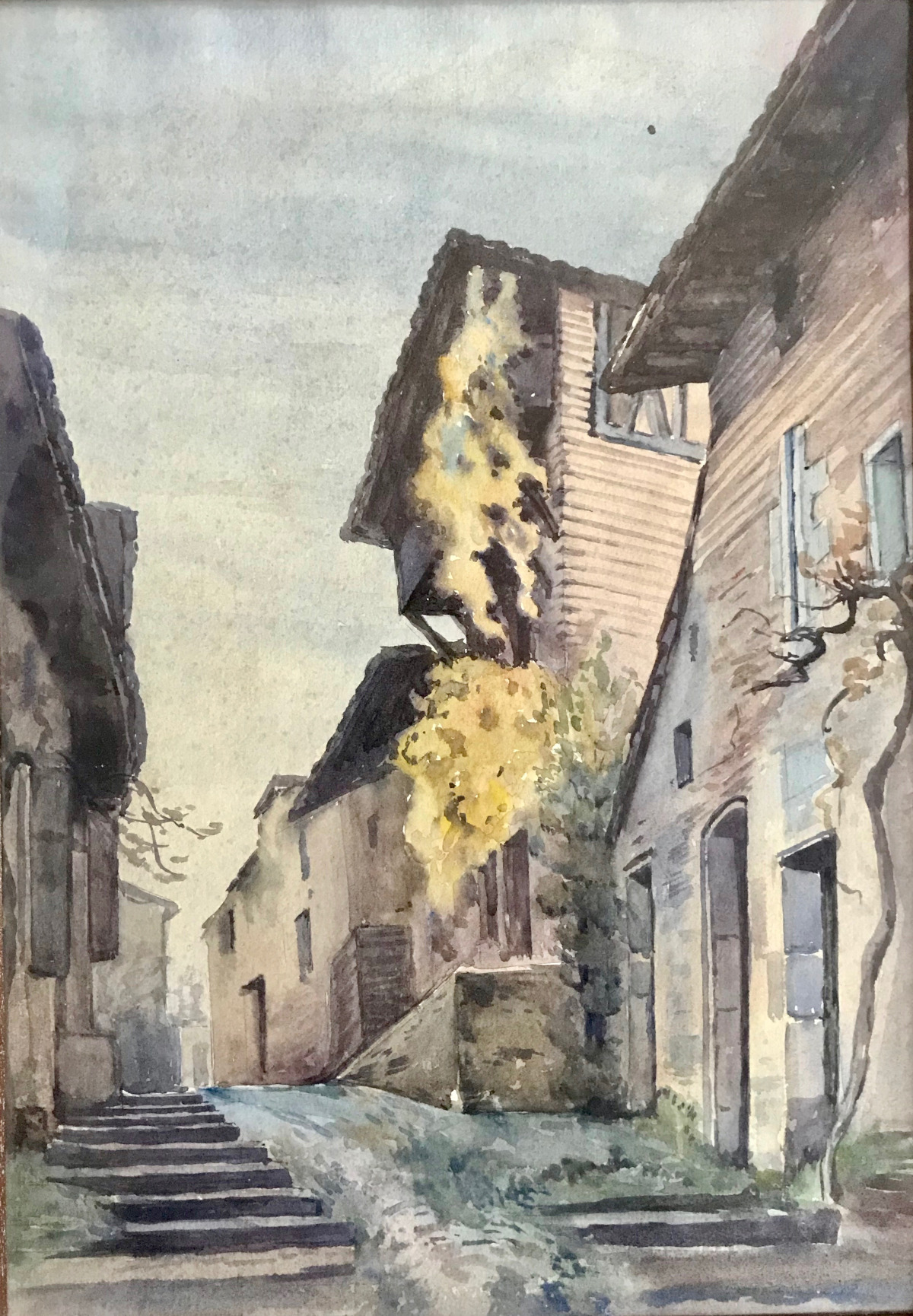
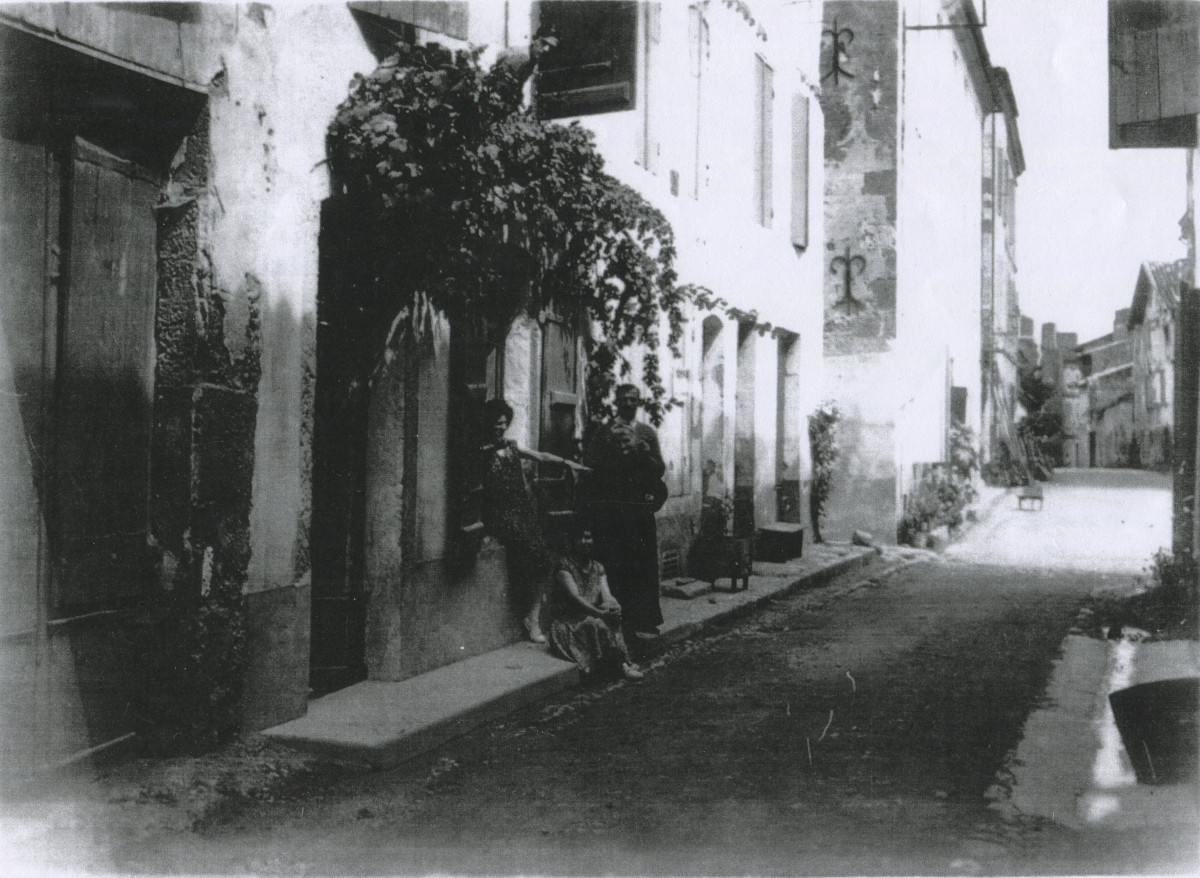
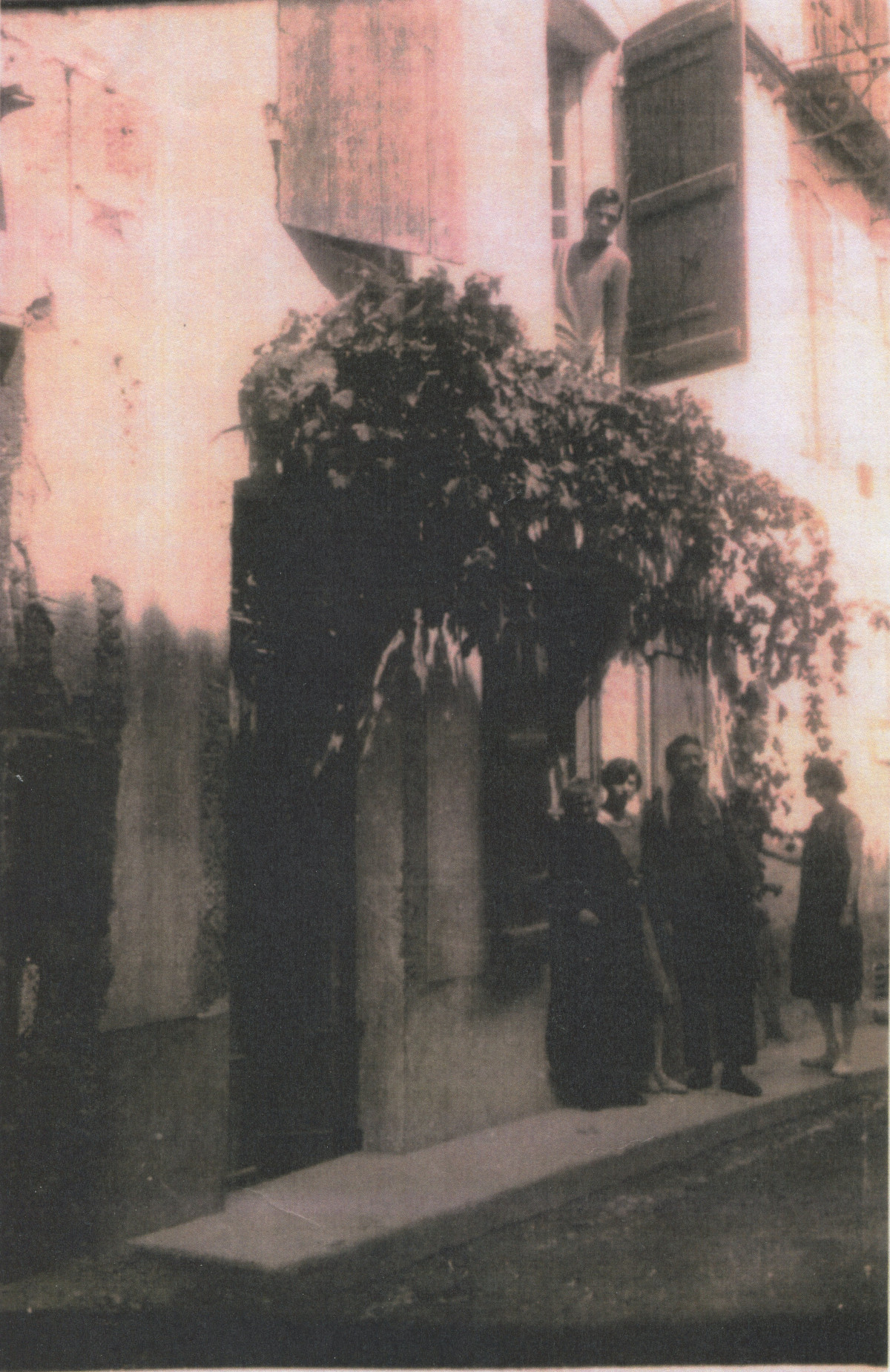
Rue Esclopière brought together many craftsmen. It takes its name from the esclops (clogs) that echoed on its stone steps. The popular language also called it the street “Pissebach” because, during heavy rains, the water ran down... like a “cow that pisses”!
Its picturesque appearance has always inspired artists.
Tailors, shoemakers, harquebusiers, carders, sock makers, rope makers, fur makers, weavers, nail makers formed the soul of the village.
Plaque affixed at the bottom of rue Esclopière.
There is now only one craftsman on Esclopière Street and no one remembers that it was called “Pissebach” or “Pichebaque”.
Rue Esclopière. Marguerite Sagrini.
Rue Esclopière. Marguerite Sagrini.
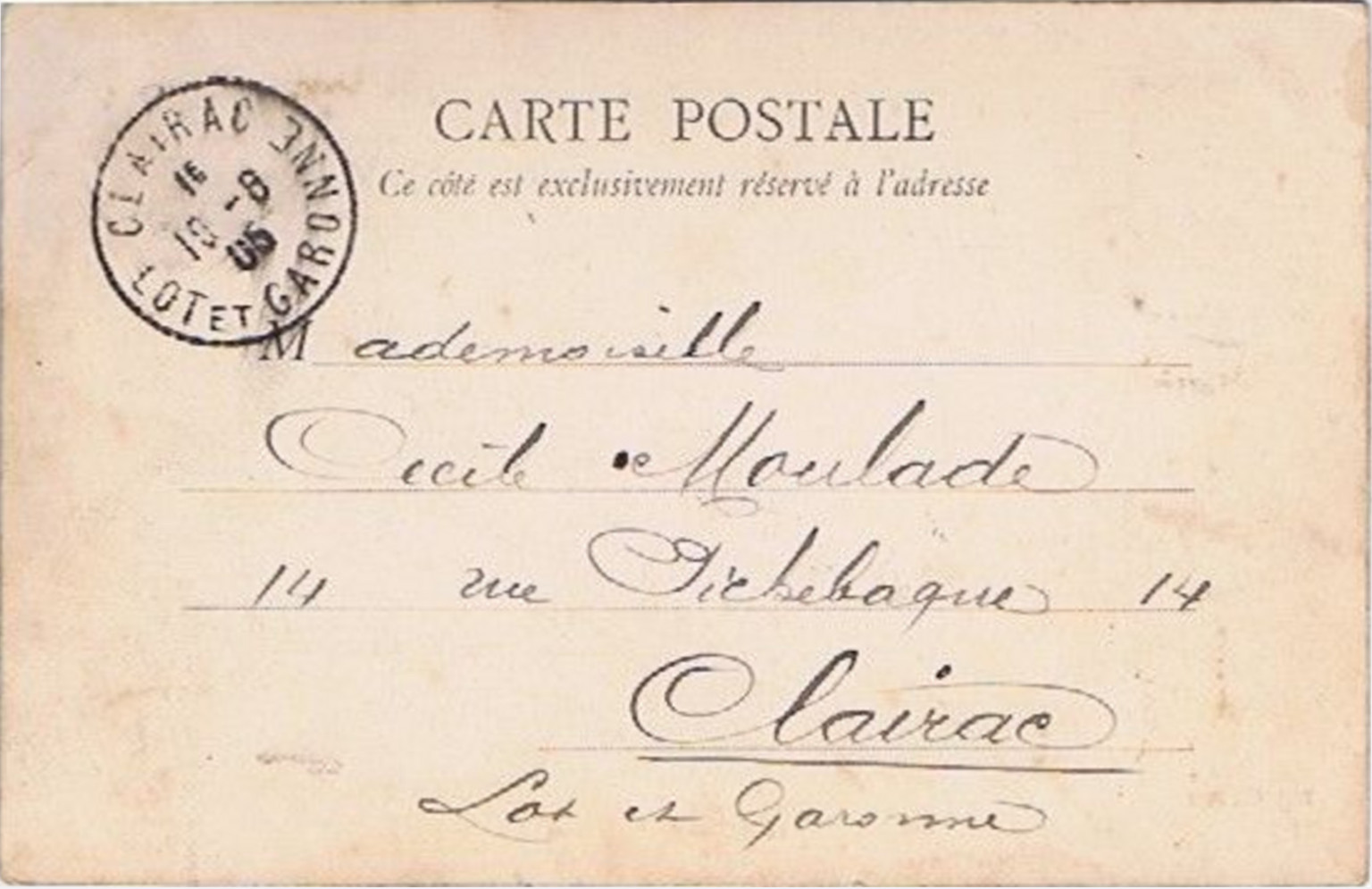
At the beginning of the 20th century, Cécile Moulade lived at 14 rue Pichebaque.
At the beginning of the 20th century, Cécile Moulade lived at 14 rue Pichebaque.
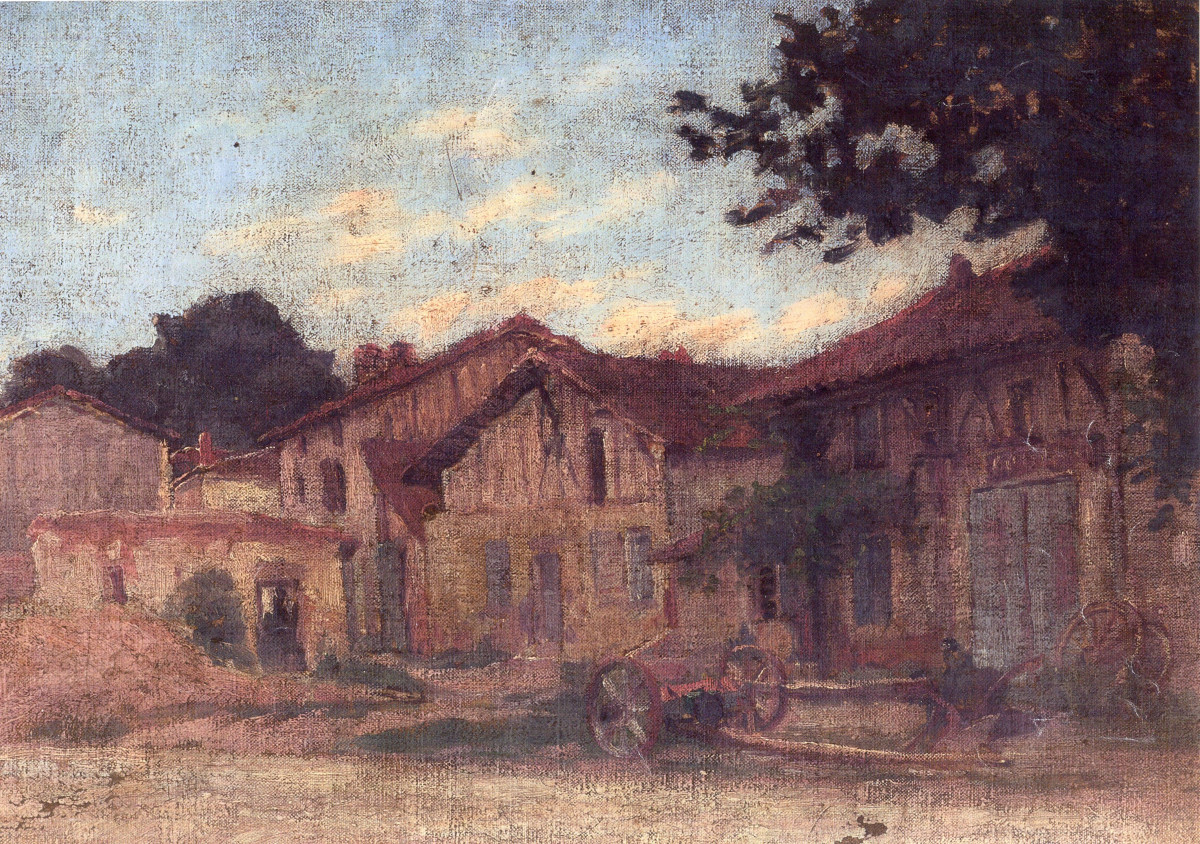
In the second half of the 19th century, there was a locksmith named S. Régade in “La Pause”.
Oil on canvas. On the right the locksmith Régade.
Oil on canvas. On the right the locksmith Régade.
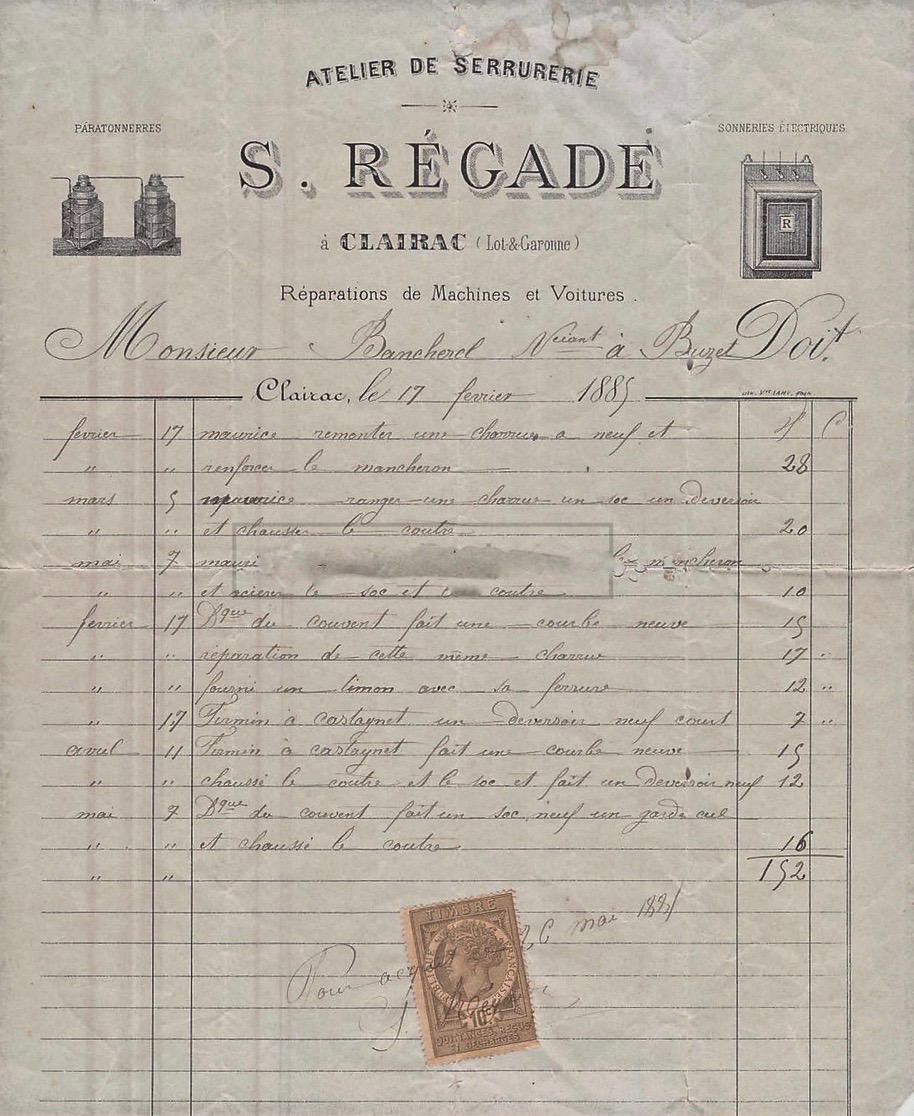
Invoice dated February 17, 1885.
Invoice dated February 17, 1885.
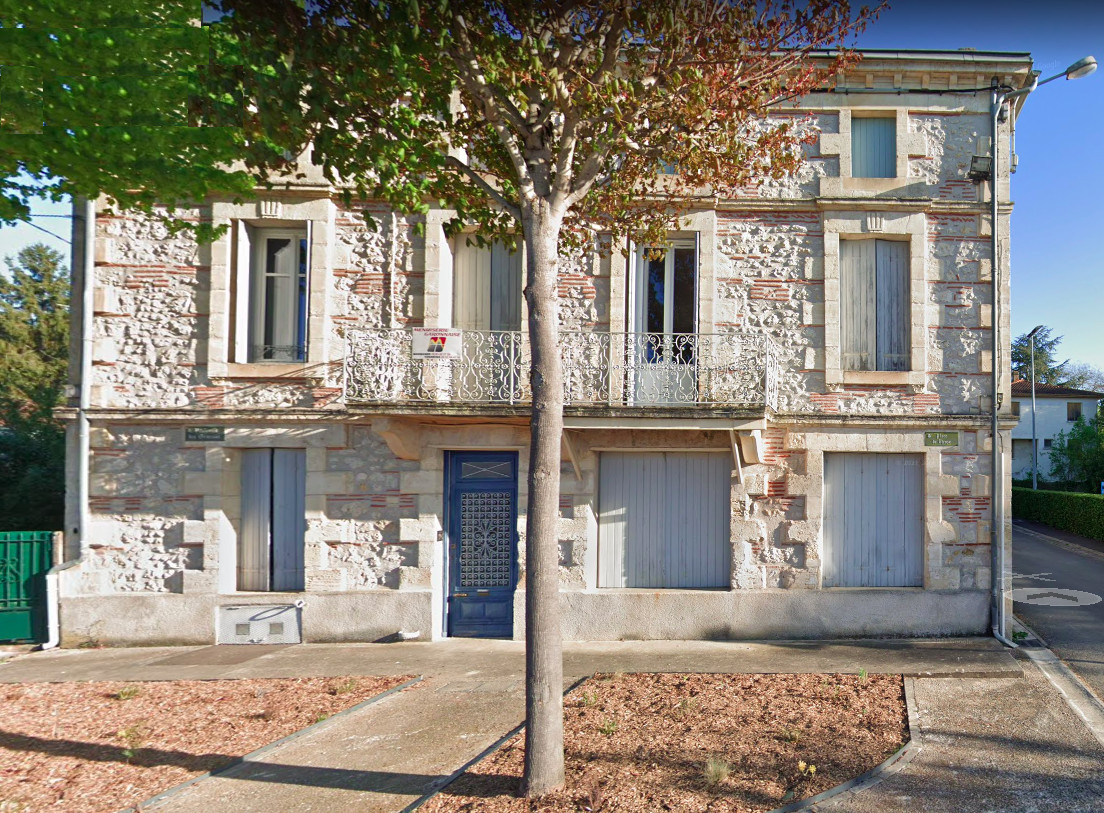
During the 19th century, the Régades had built the beautiful house on the Place Viçose.
House built “without borrowing” they liked to say!
House built “without borrowing” they liked to say!
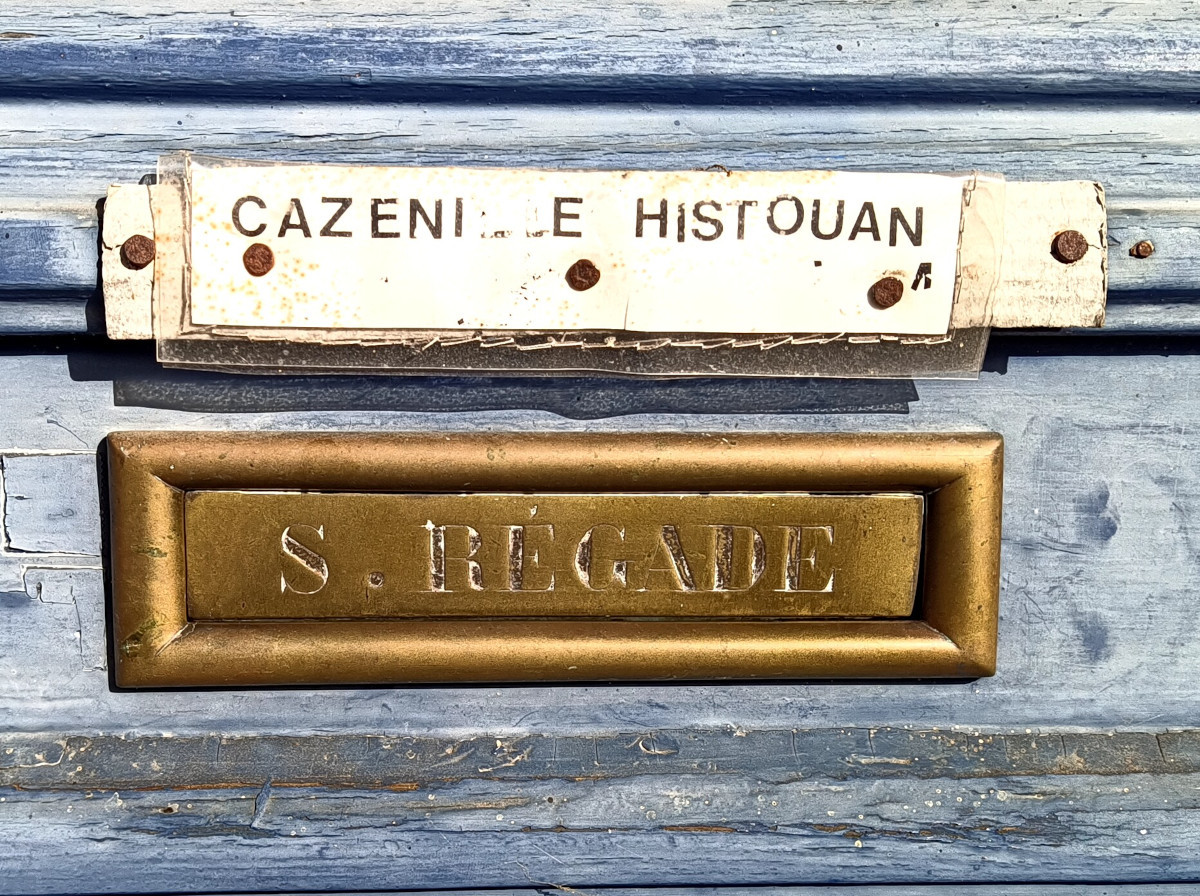
The mailbox is still in place.
The mailbox is still in place.
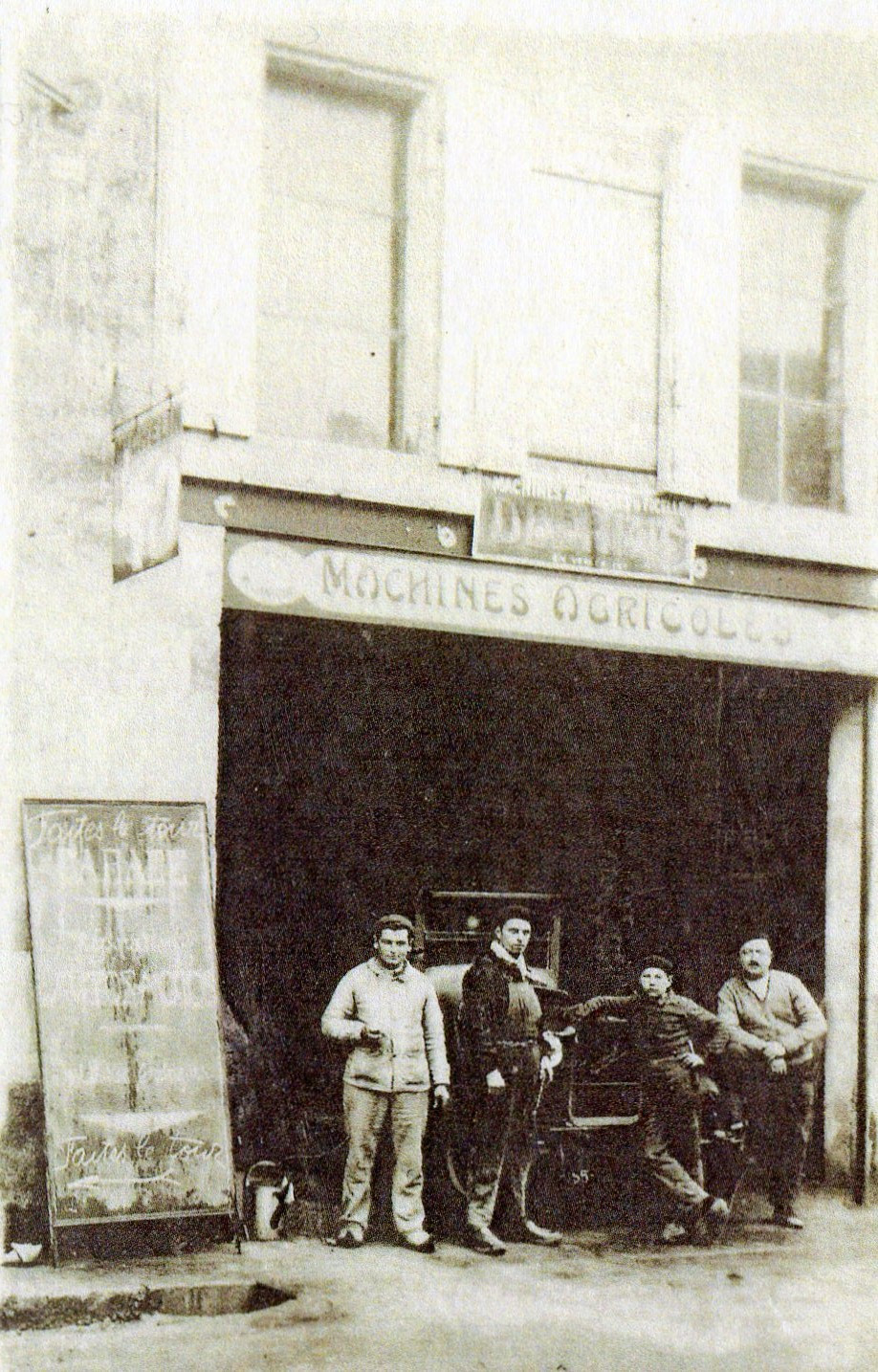
A gas station will be built near the workshop.
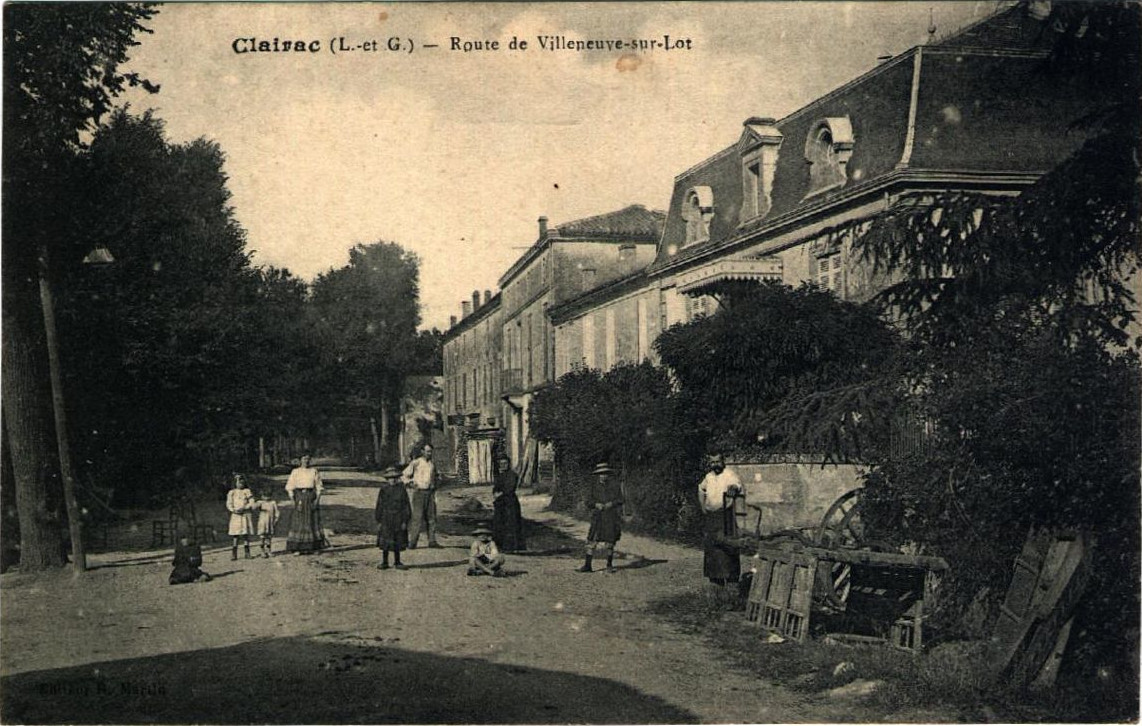
Beginning of the 20th century at “La Pause”. Repair of carts in front of the Régade locksmith.
Beginning of the 20th century at “La Pause”. Repair of carts in front of the Régade locksmith.
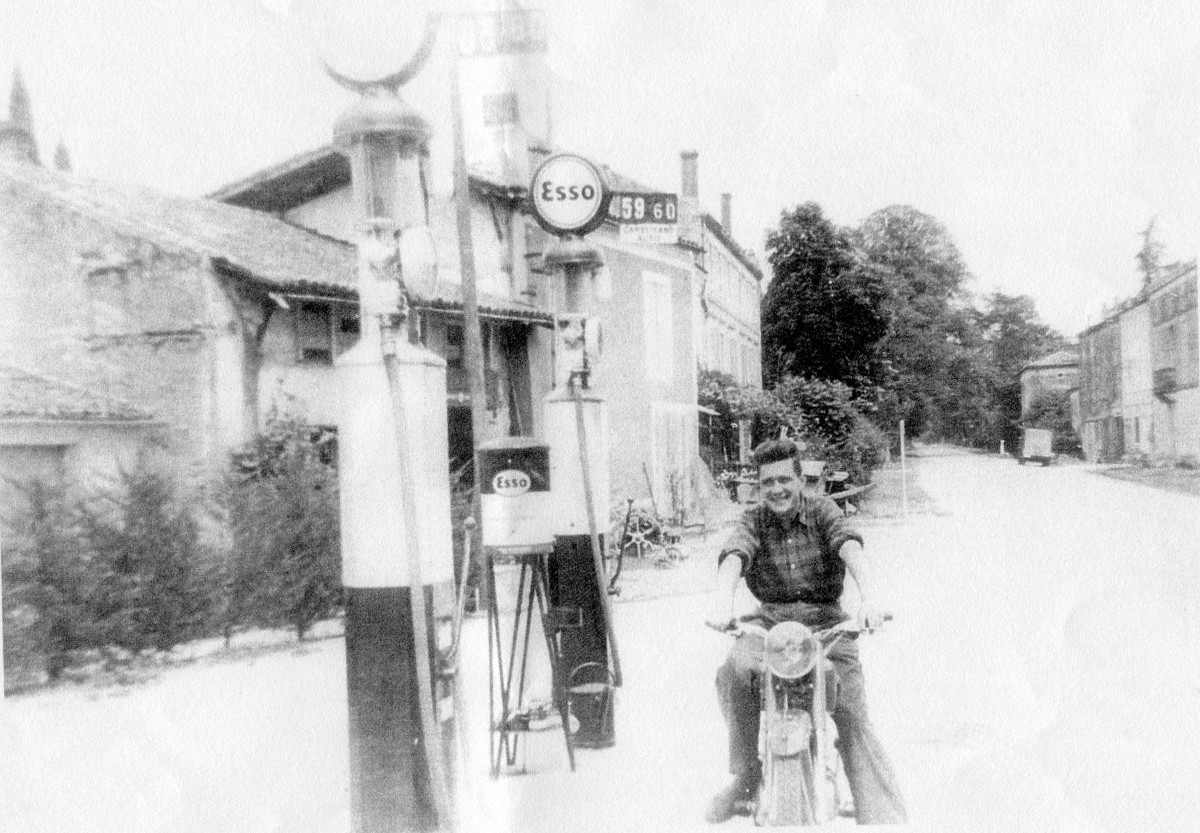
In the 60's, Denis Vigneau owner of the station on a Terrot motorcycle.
In the 60's, Denis Vigneau owner of the station on a Terrot motorcycle.
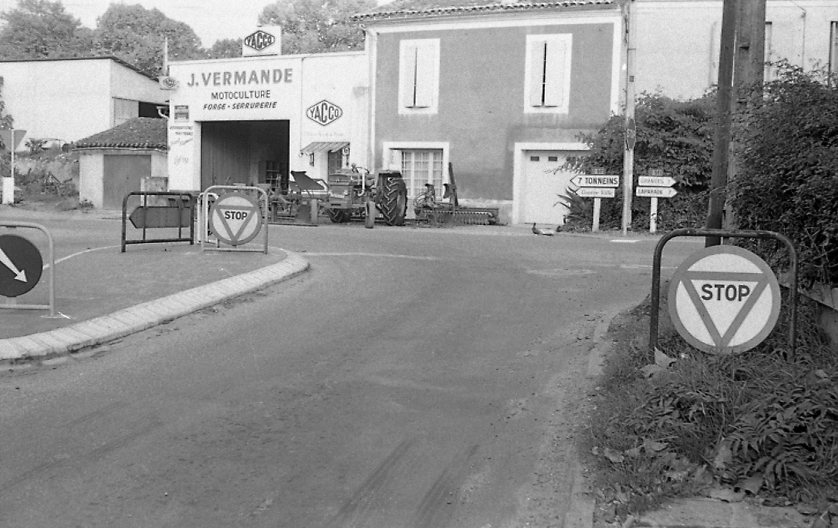
After having been occupied by the Vermande establishments, the workshop became today a secondhand trade.
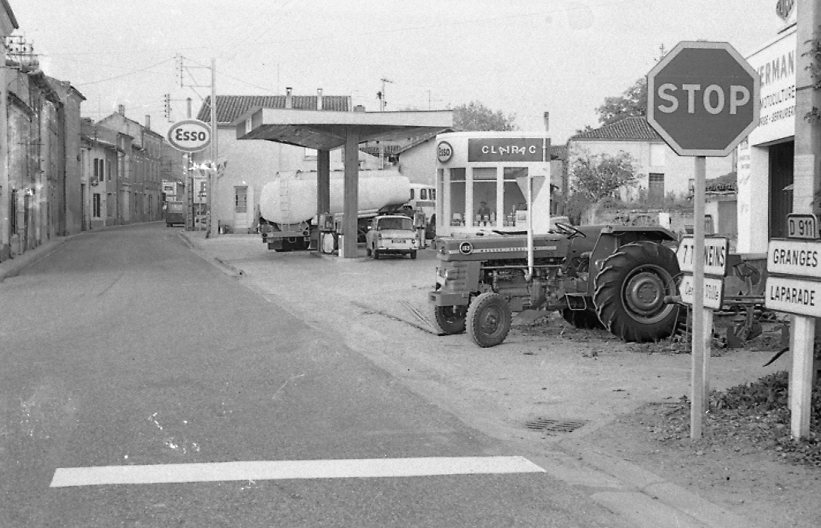
The Vigneau service station.
The Vigneau service station.
The Vermande forge and locksmith shop.
The Vermande forge and locksmith shop.
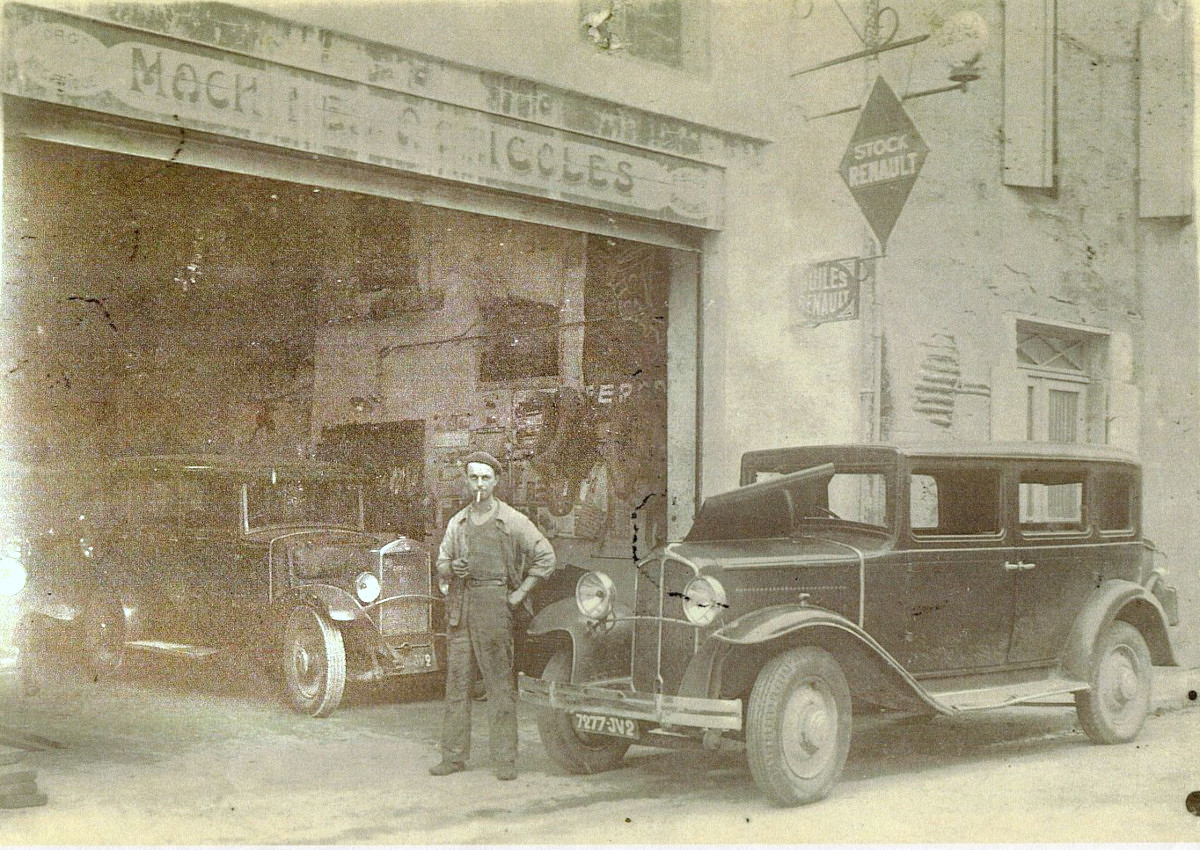
In the 1930s, Gilbert Cazenille, great grandson of the locksmith Régade, owned a car garage not far from there, at the corner of Saffin and Esclopière streets.
Gilbert Cazenille, known as “Cazeau”, in front of his garage on rue Saffin.
Gilbert Cazenille, known as “Cazeau”, in front of his garage on rue Saffin.
“Cazeau” and his supporters!
“Cazeau” and his supporters!
On the other side of the street, M. Laffargue, known as “Fayette”, delivered drinks and coal...
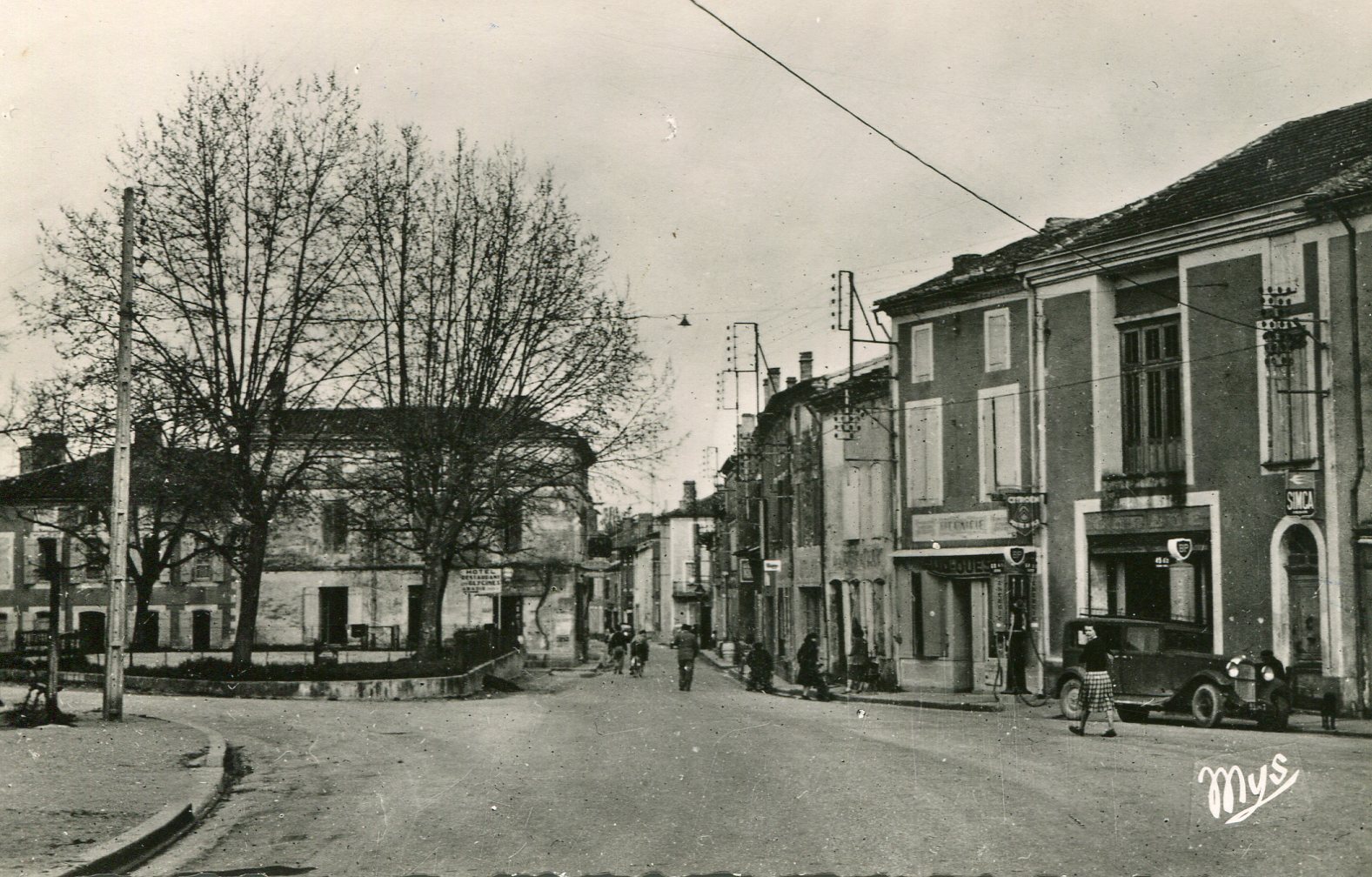
Rue Saffin at the level of the place Viçose and the rue Jean-Jaurès.
We are in the interwar period. The Girou grocery store has long since moved, replaced by a newspaper store. Just next door, a “Simca” car garage and its gas station have moved in. The Goubier garage remained in place until the 1980s, replaced then by a motorcycle garage and then by a bakery-patisserie.
Further on, in the rue Jean-Jaurès, two houses after the café National...
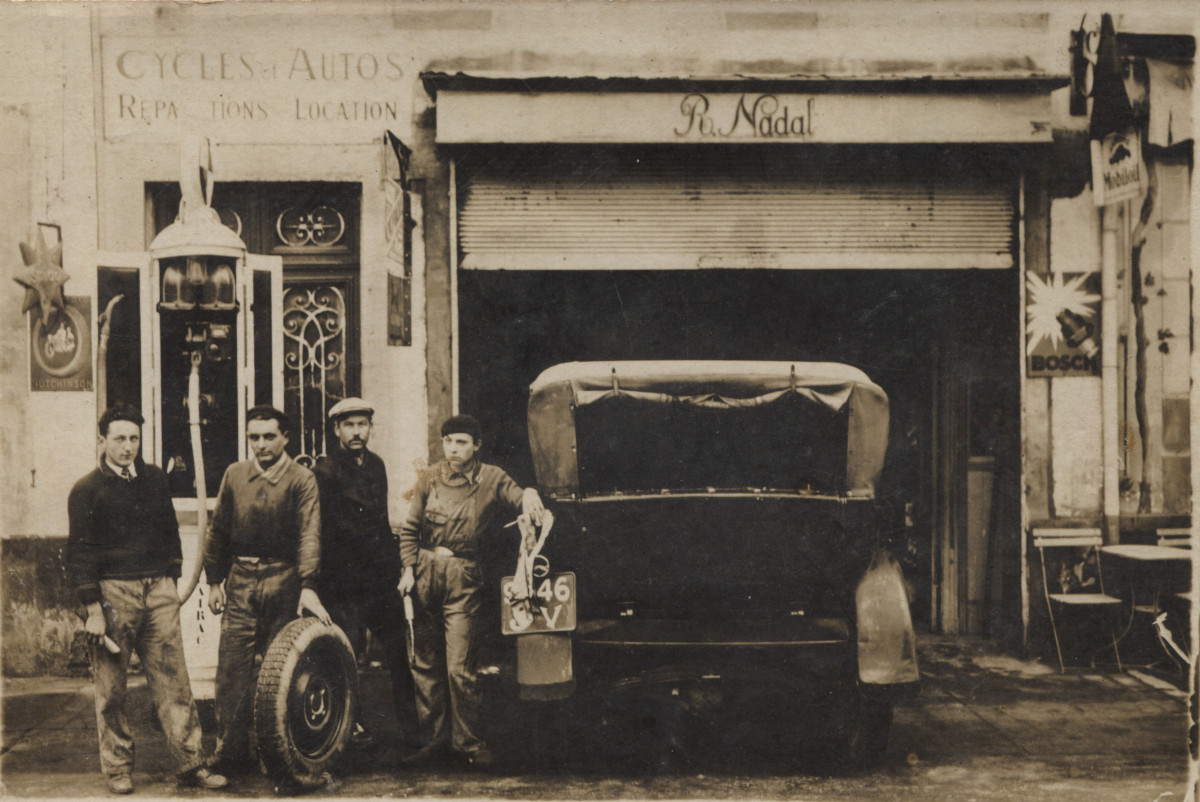
1933. The garage-station-service R. Nadal has just been taken over by Mr. Imbert (on the left on the picture). Next to him, the mechanic Aimé Constiaux, then Mr. Noallit, farmer and owner of the vehicle being repaired, and finally, the “gaffet” (apprentice) Jacques Lautard.
1933. The garage-station-service R. Nadal has just been taken over by Mr. Imbert (on the left on the picture). Next to him, the mechanic Aimé Constiaux, then Mr. Noallit, farmer and owner of the vehicle being repaired, and finally, the “gaffet” (apprentice) Jacques Lautard.
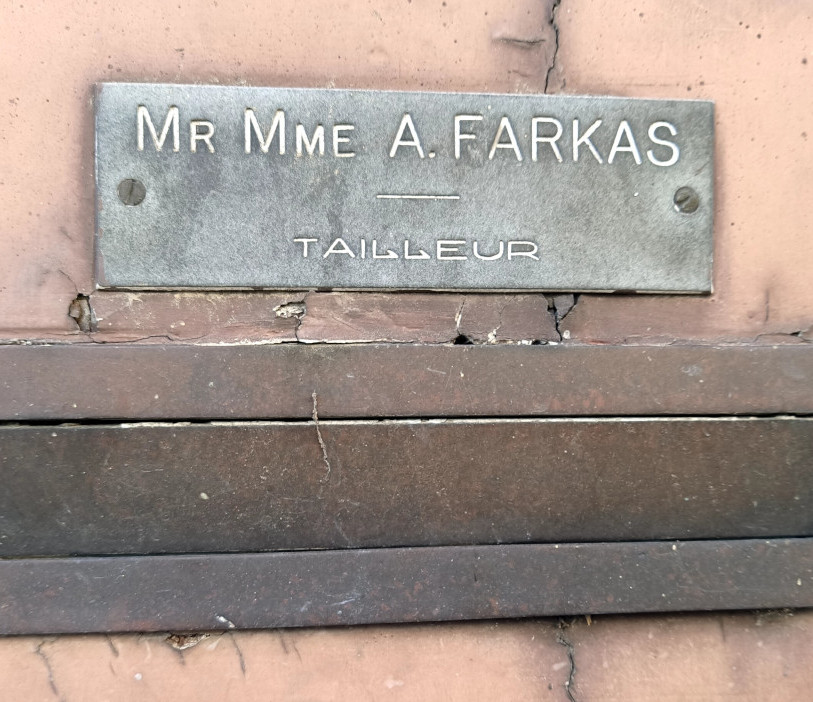
Around 1945, two houses further on (against what was to become “L'Épargne”, a general food store, and which was then the bistro-dancing of Mr. Cazella), a former legionnaire of Hungarian origin, Mr. A. Farkas and his wife, were installed. He worked as a tailor. Later, they lived on rue du Commandant-Reilhac, opposite the old post office, where their door plaque is still visible.
Around 1945, two houses further on (against what was to become “L'Épargne”, a general food store, and which was then the bistro-dancing of Mr. Cazella), a former legionnaire of Hungarian origin, Mr. A. Farkas and his wife, were installed. He worked as a tailor. Later, they lived on rue du Commandant-Reilhac, opposite the old post office, where their door plaque is still visible.
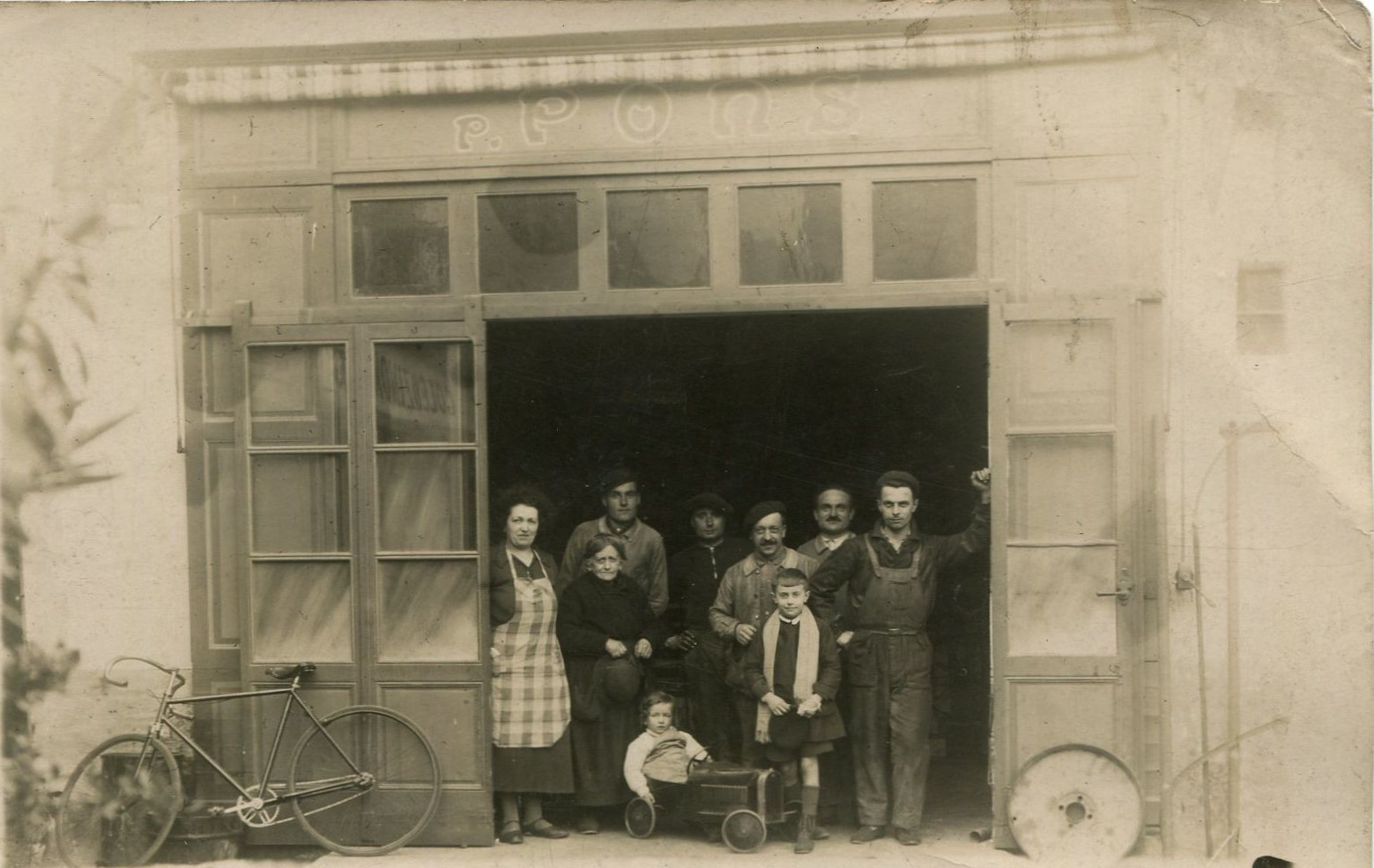
Place Serres, between the butcher's shop and the hardware store, was the Pons garage.
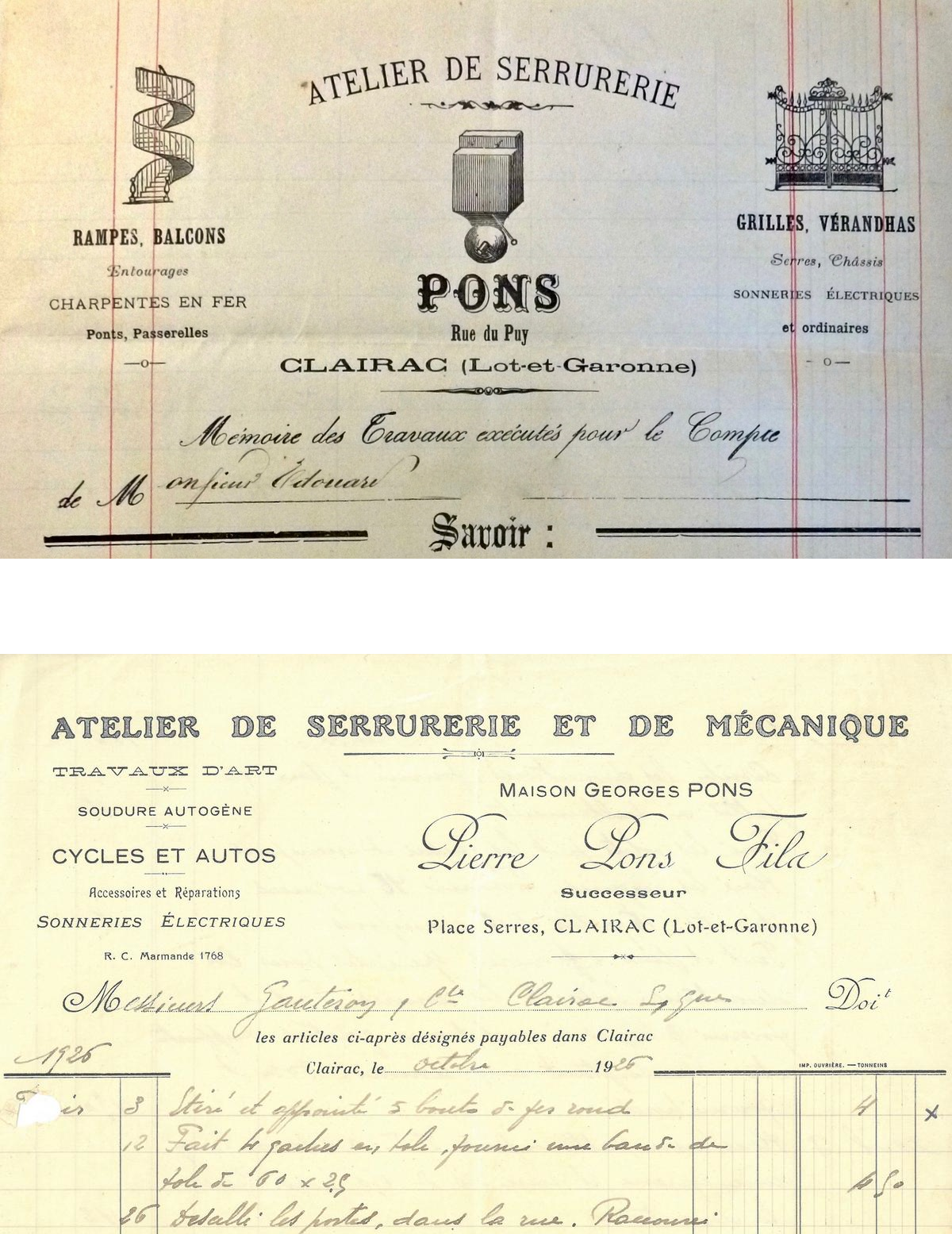
Invoices from the Pons locksmith shop from 1887 and 1926.
Invoices from the Pons locksmith shop from 1887 and 1926.
Early 1930s. Standing, from left to right: Marguerite Pons, Noémie Pons, Serge Constiaux, Yves Boulin, Pierre Pons, the young Etienne Laval, an unknown person and Gilbert Cazenille. In the foreground in the little car, Jean Pons.
Early 1930s. Standing, from left to right: Marguerite Pons, Noémie Pons, Serge Constiaux, Yves Boulin, Pierre Pons, the young Etienne Laval, an unknown person and Gilbert Cazenille. In the foreground in the little car, Jean Pons.
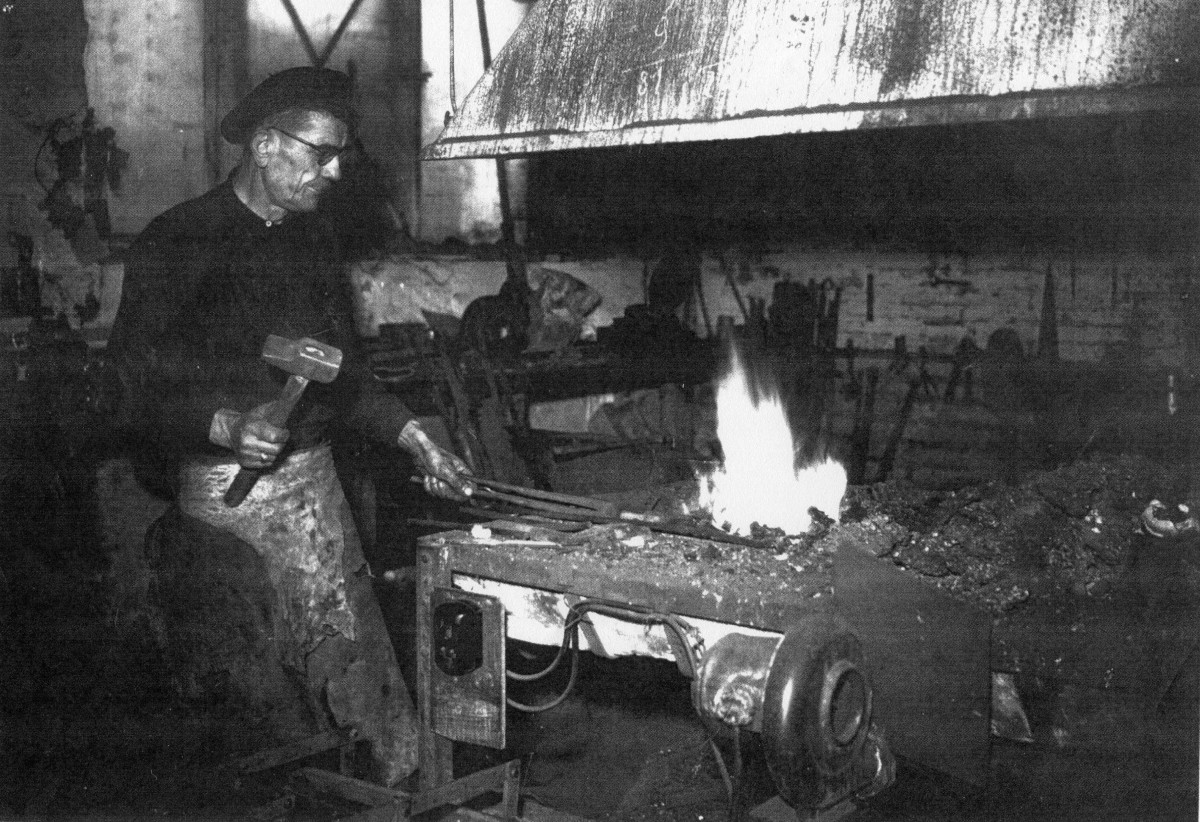
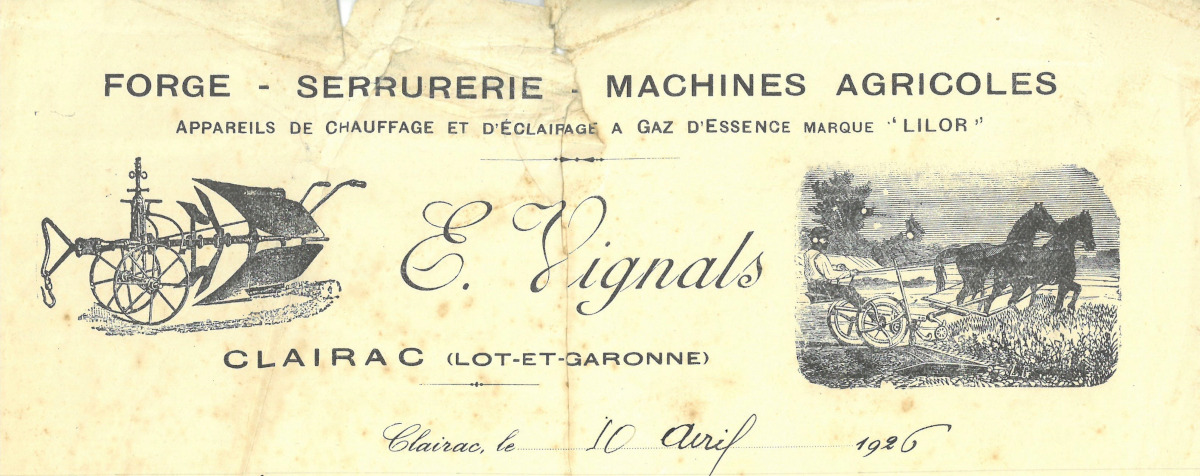
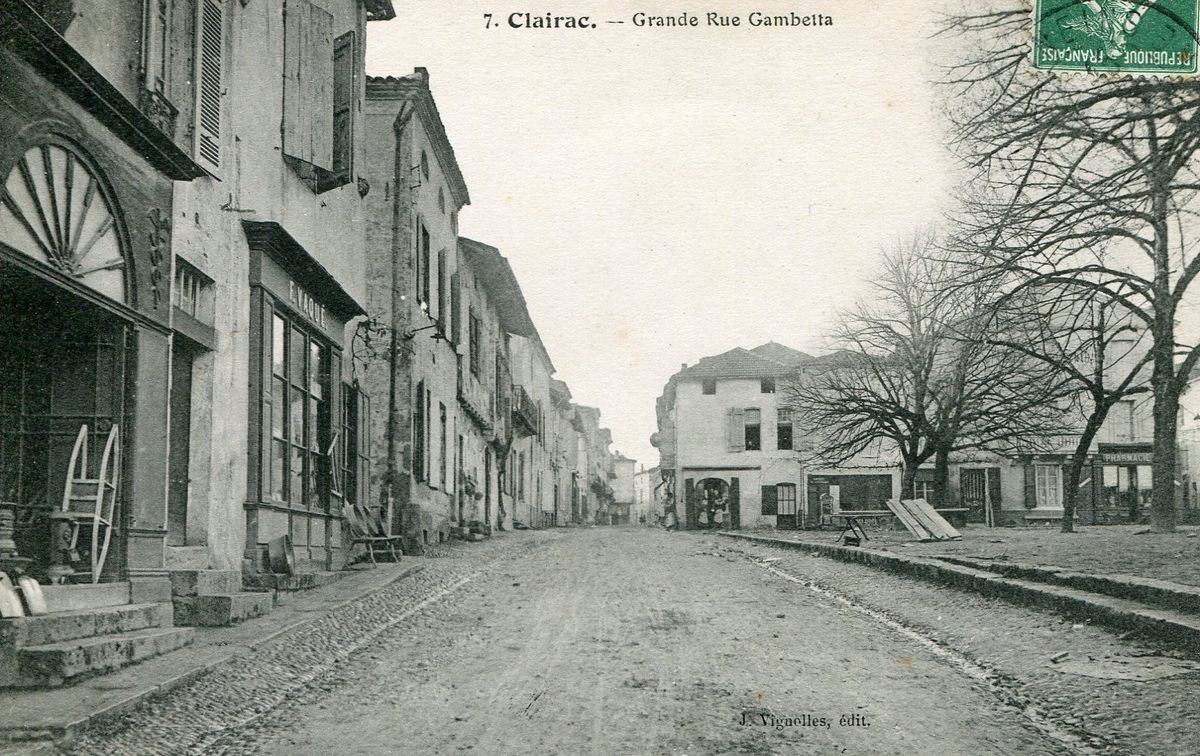
On the right, going down rue Gambetta, where there is now a parking lot, was the Edmond Vignals forge.
At the beginning of the XXth century, the streets are animated for the arrival of the photographer.
At the beginning of the XXth century, the streets are animated for the arrival of the photographer.
Edmond Vignals in his forge.
Edmond Vignals in his forge.
Invoice from 1926.
Further down at the level of the place de l'Ancien Temple (now place Aristide-Briand)...
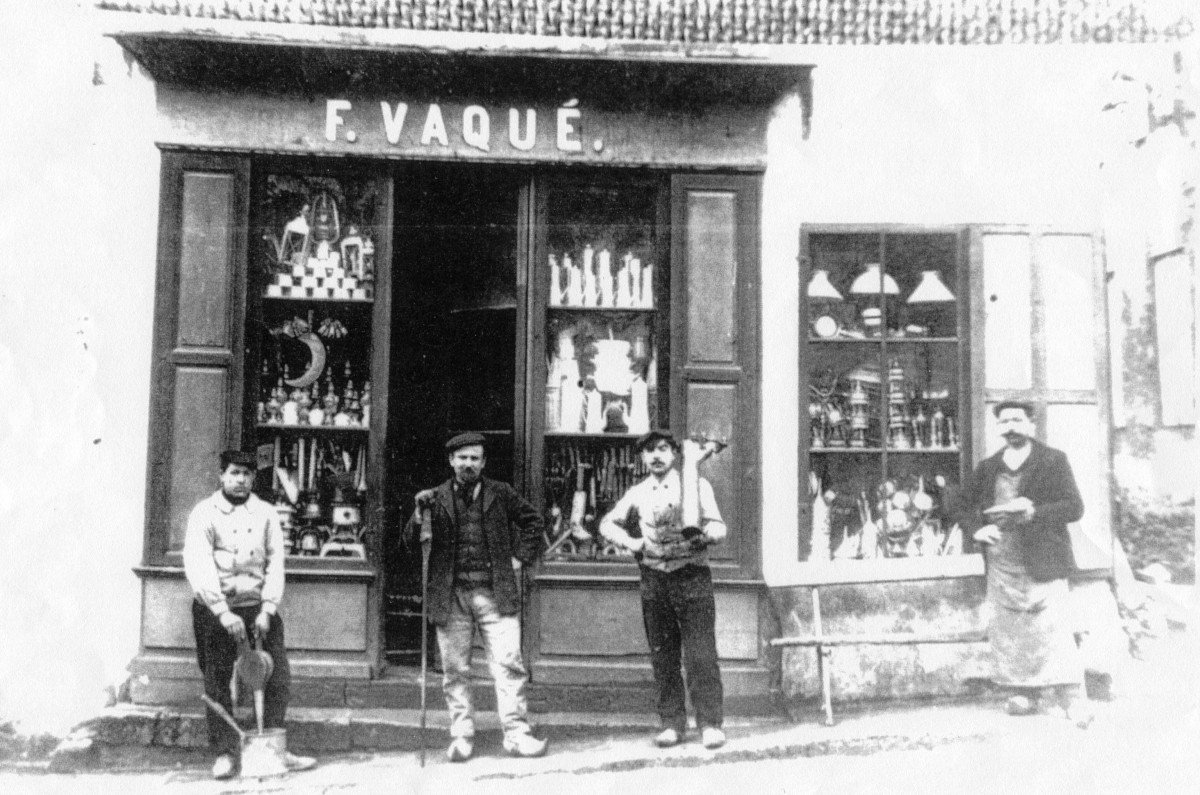
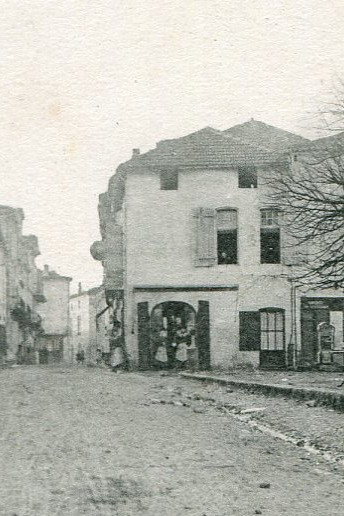
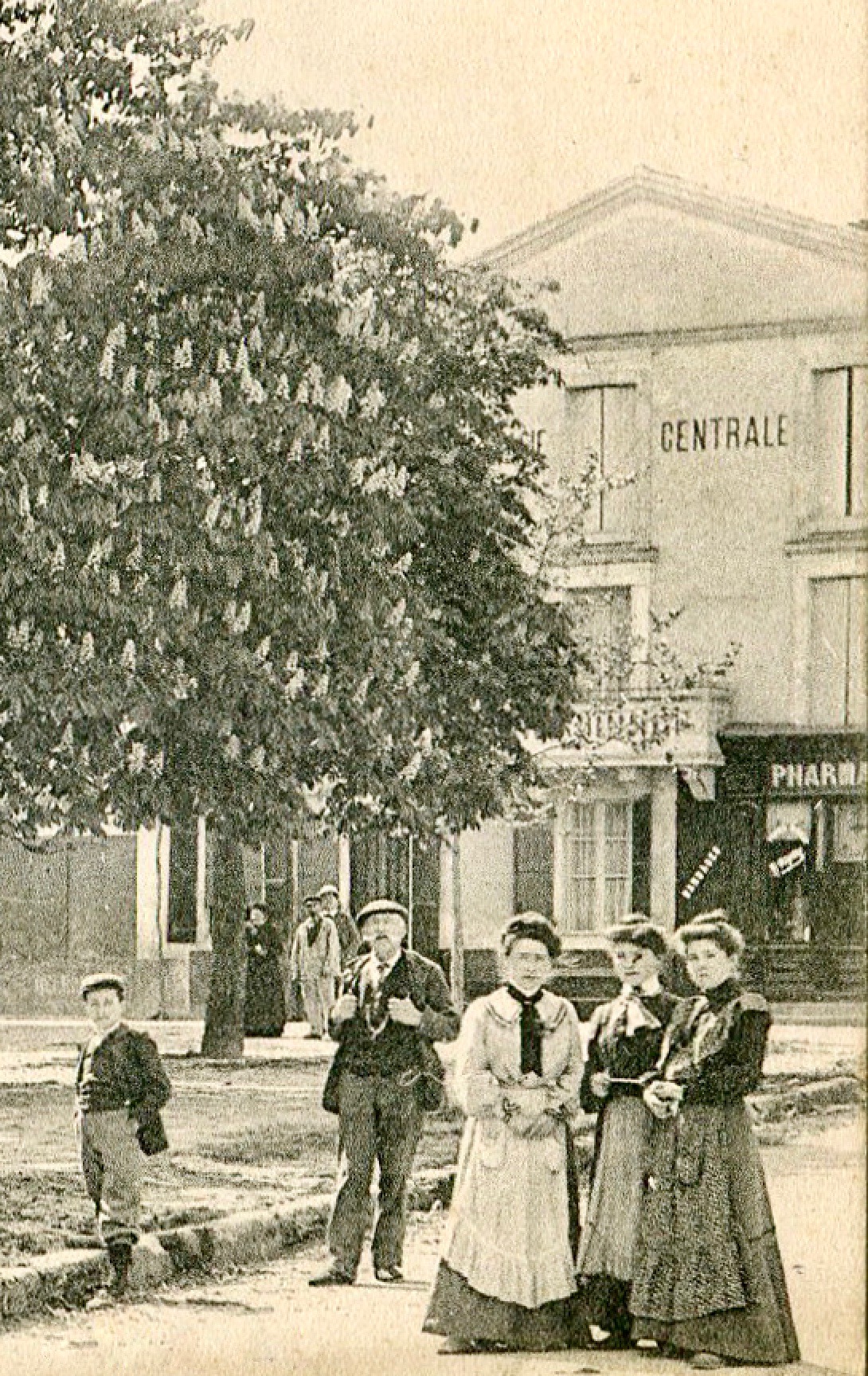
Beginning of the 20th century. On the left, in the Payrebrune pharmacy below the Vaqué tinsmithery, bed wagons are sold to heat the beds. At the bottom and in the middle, the carriage gate sheltered the ironing workshop of the Batcèque sisters. On the right, you can see the Central Pharmacy.
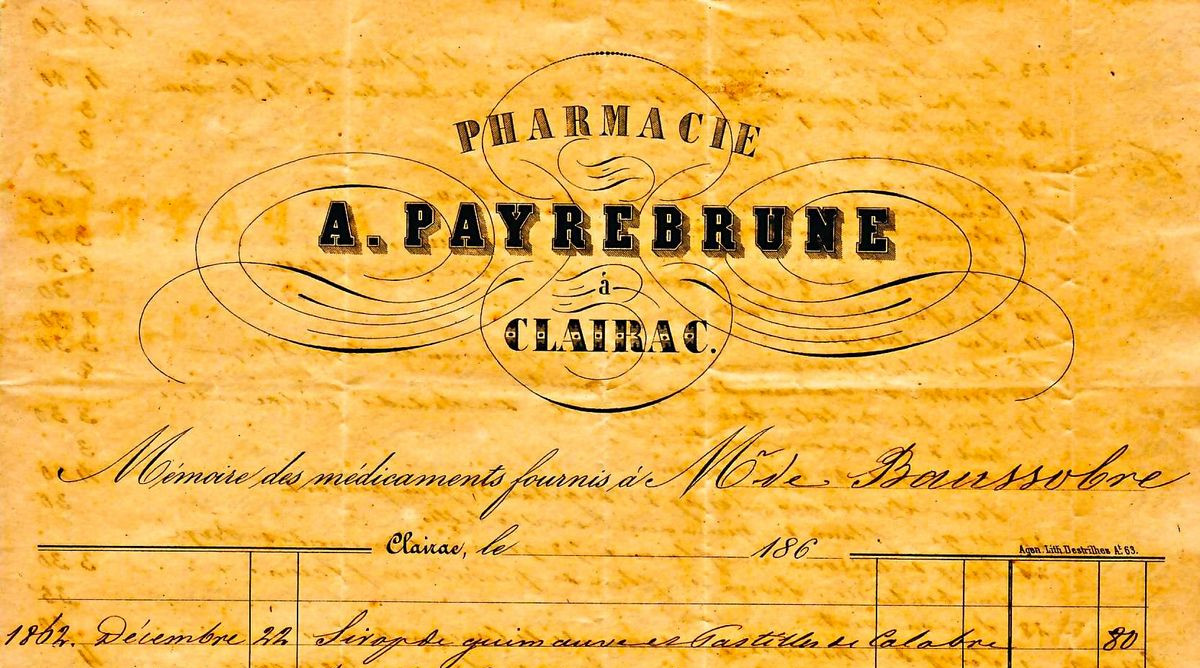
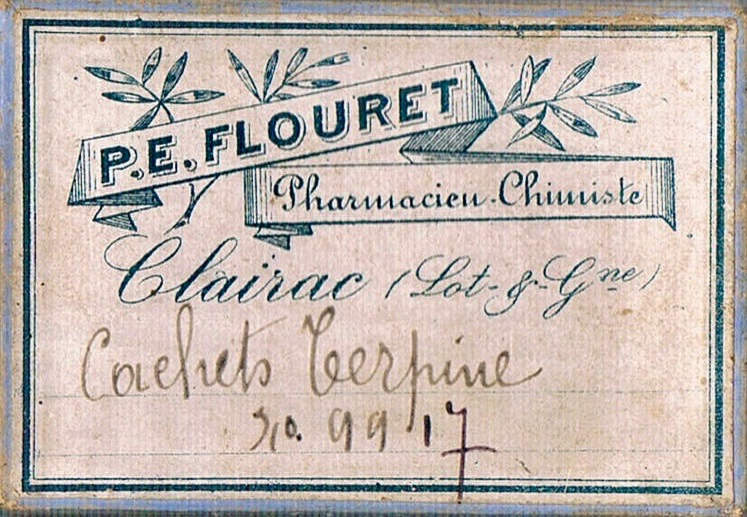
In 1862, the Payrebrune pharmacy was located at 50 rue Gambetta. It will move later to 52 (its current place). It was then the pharmacy Flouret. At the Liberation, it was taken over by Coiquaud who was a pharmacist near Bordeaux (he married the daughter of the miller Ladougne, owner of the chalet on the beach that some old Clairacais still call the “Chalet Coiquaud”).
Invoice 1862. Marshmallow syrup and pastilles of Calabria, against cough...
Invoice 1862. Marshmallow syrup and pastilles of Calabria, against cough...
Terpine tablets, to cure bronchitis...
Terpine tablets, to cure bronchitis...
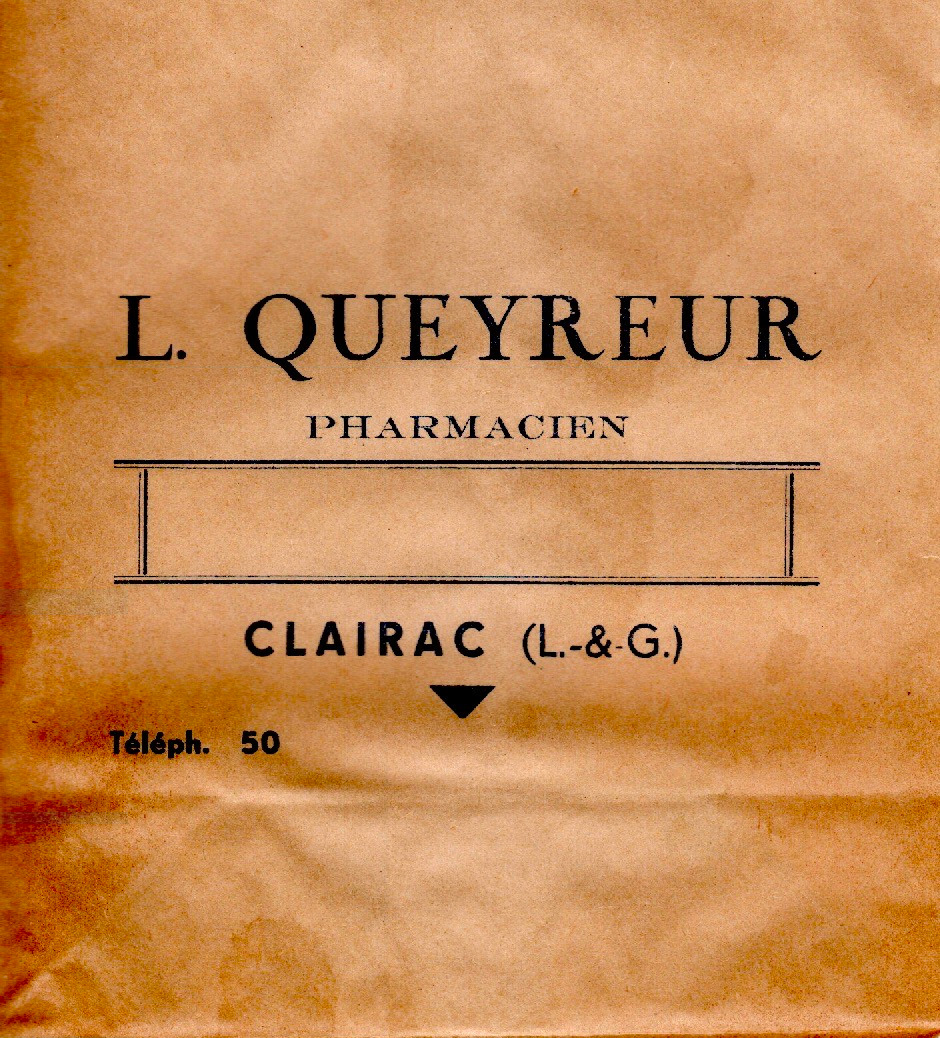
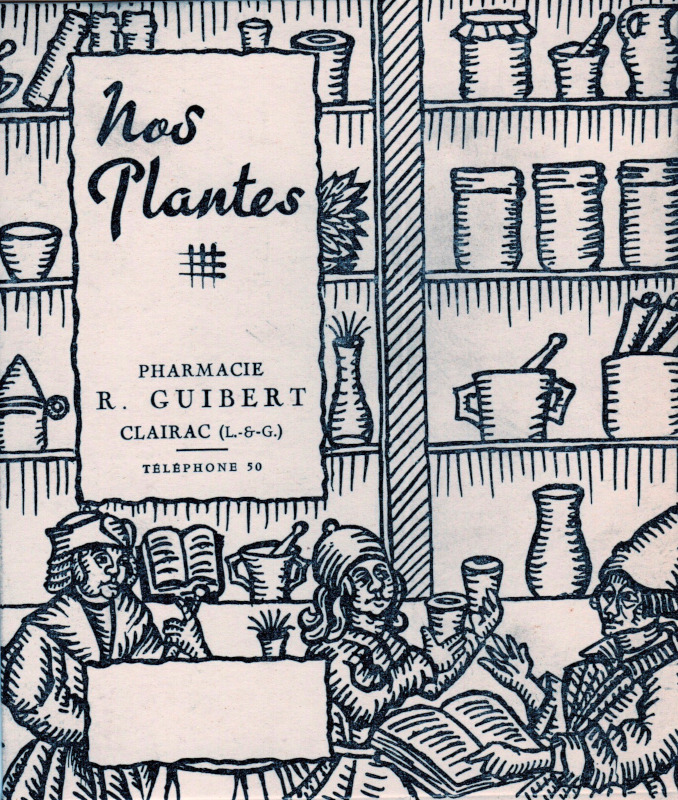
Queyreur and Guibert will follow.
The Vaqué house and the Batcèque sisters...
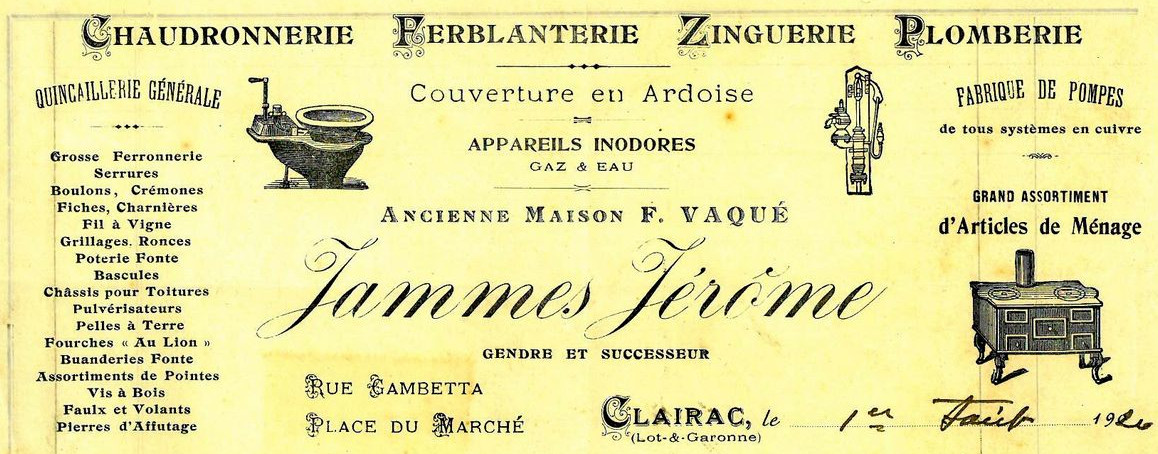
After the Great War, Jerome Jammes took over the Vaqué house. He was “son-in-law and successor” as he wrote on the header of his invoices...
After the Great War, Jerome Jammes took over the Vaqué house. He was “son-in-law and successor” as he wrote on the header of his invoices...
The Batcèque sisters were three orphans raised by their uncle. One of them, Marie, was the wife of Pierre Hugon, who died for France in 1917.
The Batcèque sisters were three orphans raised by their uncle. One of them, Marie, was the wife of Pierre Hugon, who died for France in 1917.
Robert Maisonneuve took over from Jérôme Jammes by marrying his daughter (history repeats itself). His son Roger will work with him while his daughter Jacqueline, wife of Courant, will transform the old pharmacy into a clothing and knitting wool store called “Caprice”. As for his other son Claude, he will enchant the whole world with his oboe.
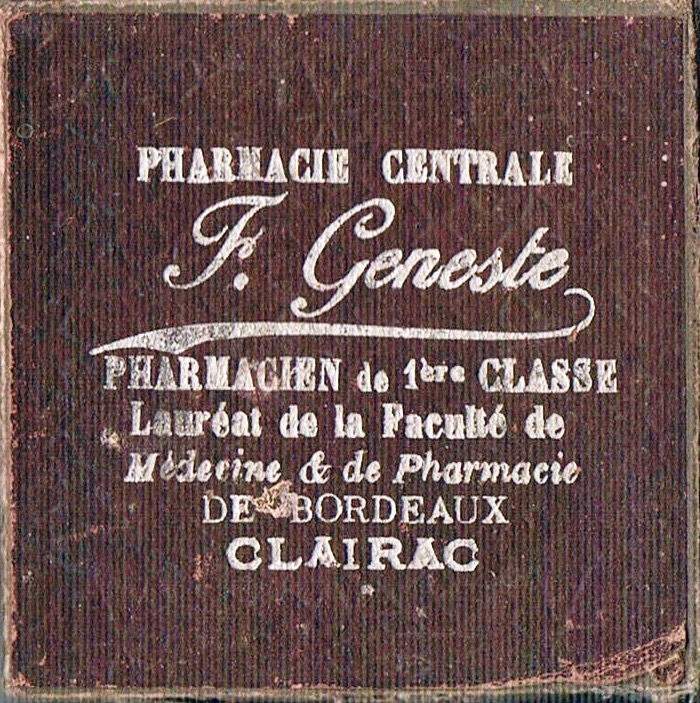
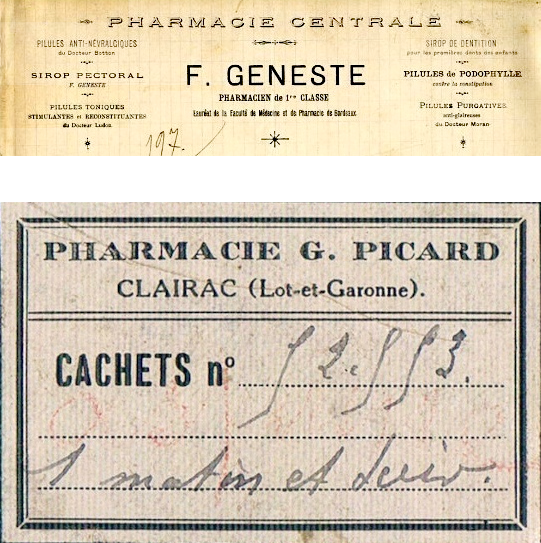
Next to the Batcèque sisters, at the level of the rue des Treilles, there was in the 1830s/1850s a wigmaker named Messines. Around 1900, it was the Geneste pharmacy (the initials FG are still visible on the balcony). It was called “pharmacie Centrale”. It was then bought by the pharmacist Picard; when Picard moved to rue Jean-Jaurès (at the current number 6), it became the home of the Martin family; Claude, our Clairacais historian, was born there in 1927.
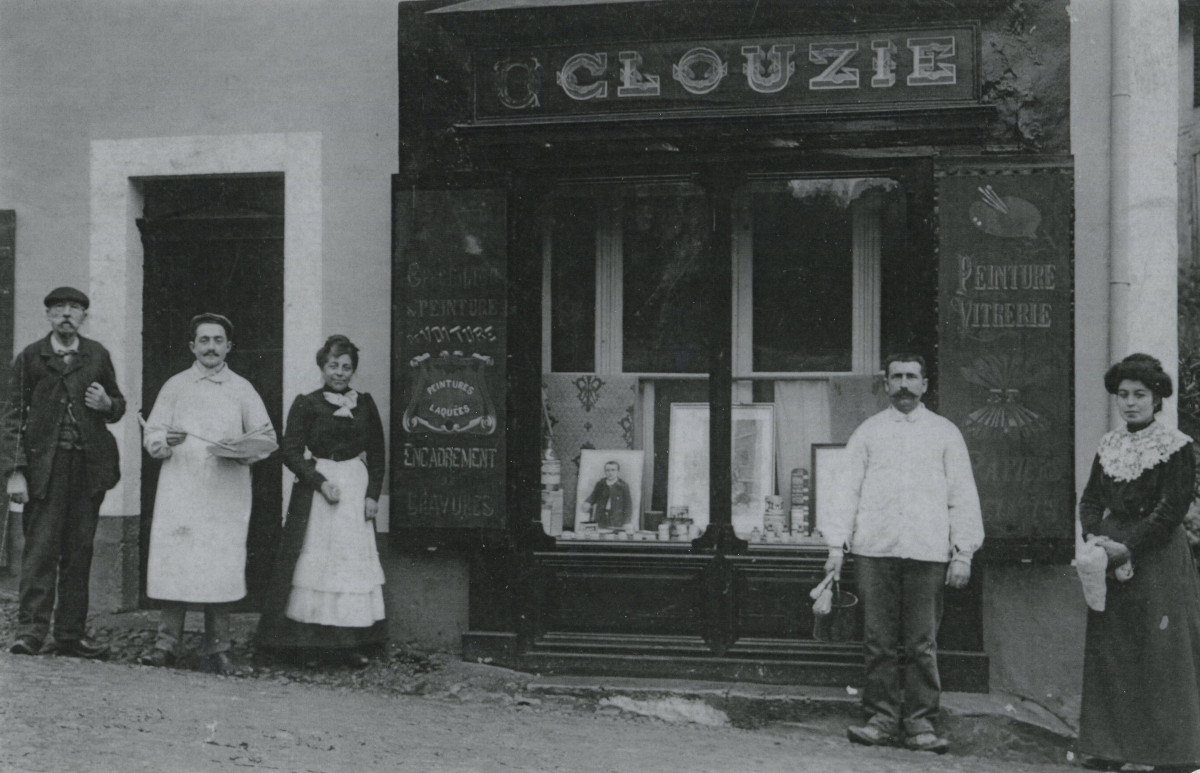
Rue Anatole-Larrat, at the corner of rue des Treilles, the Clouzié father and son house.
From left to right : Alfred Vigneau, Jean Couzié, Emilie Clouzié - Olivier Clouzié and his wife.
From left to right : Alfred Vigneau, Jean Couzié, Emilie Clouzié - Olivier Clouzié and his wife.
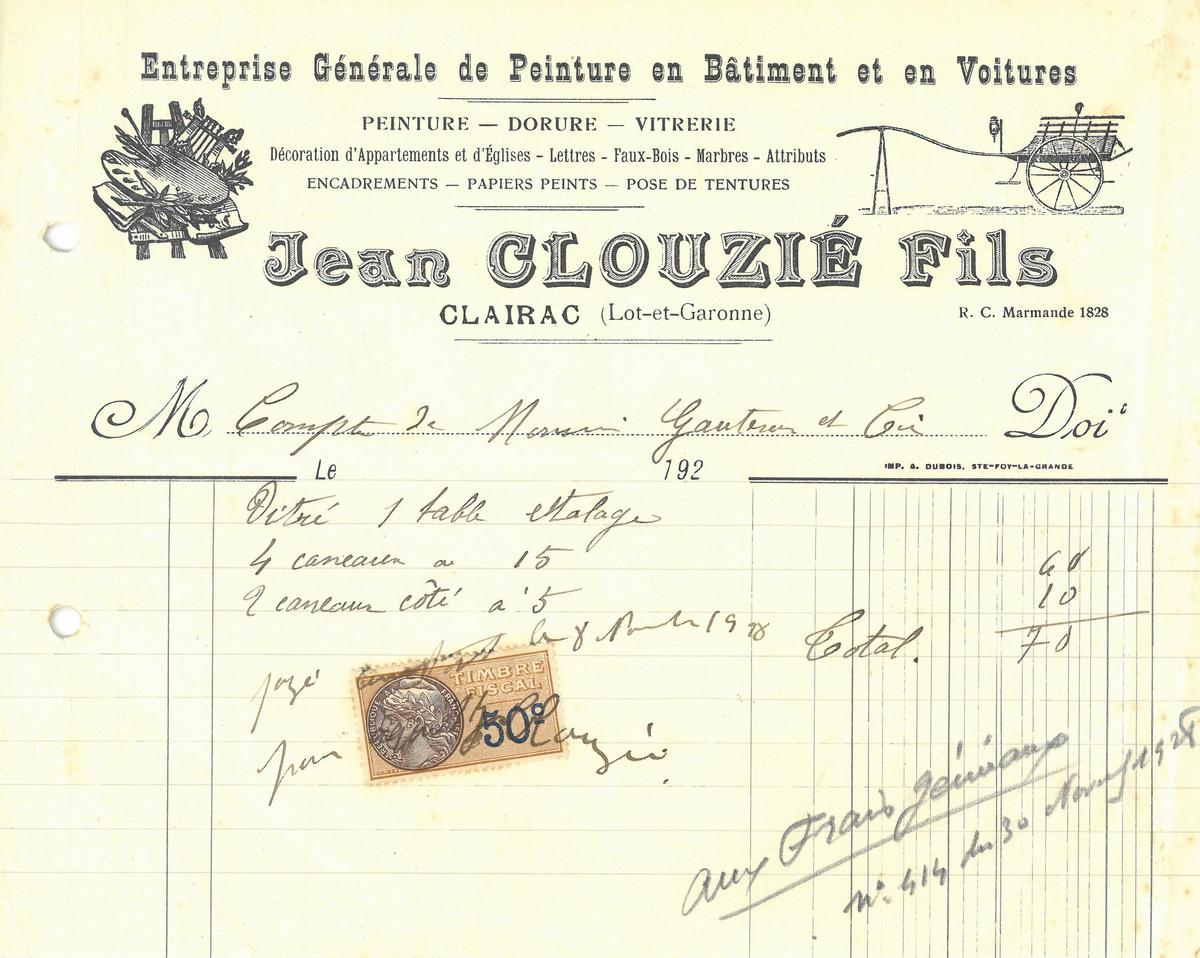
Invoice of 1928.
Invoice of 1928.
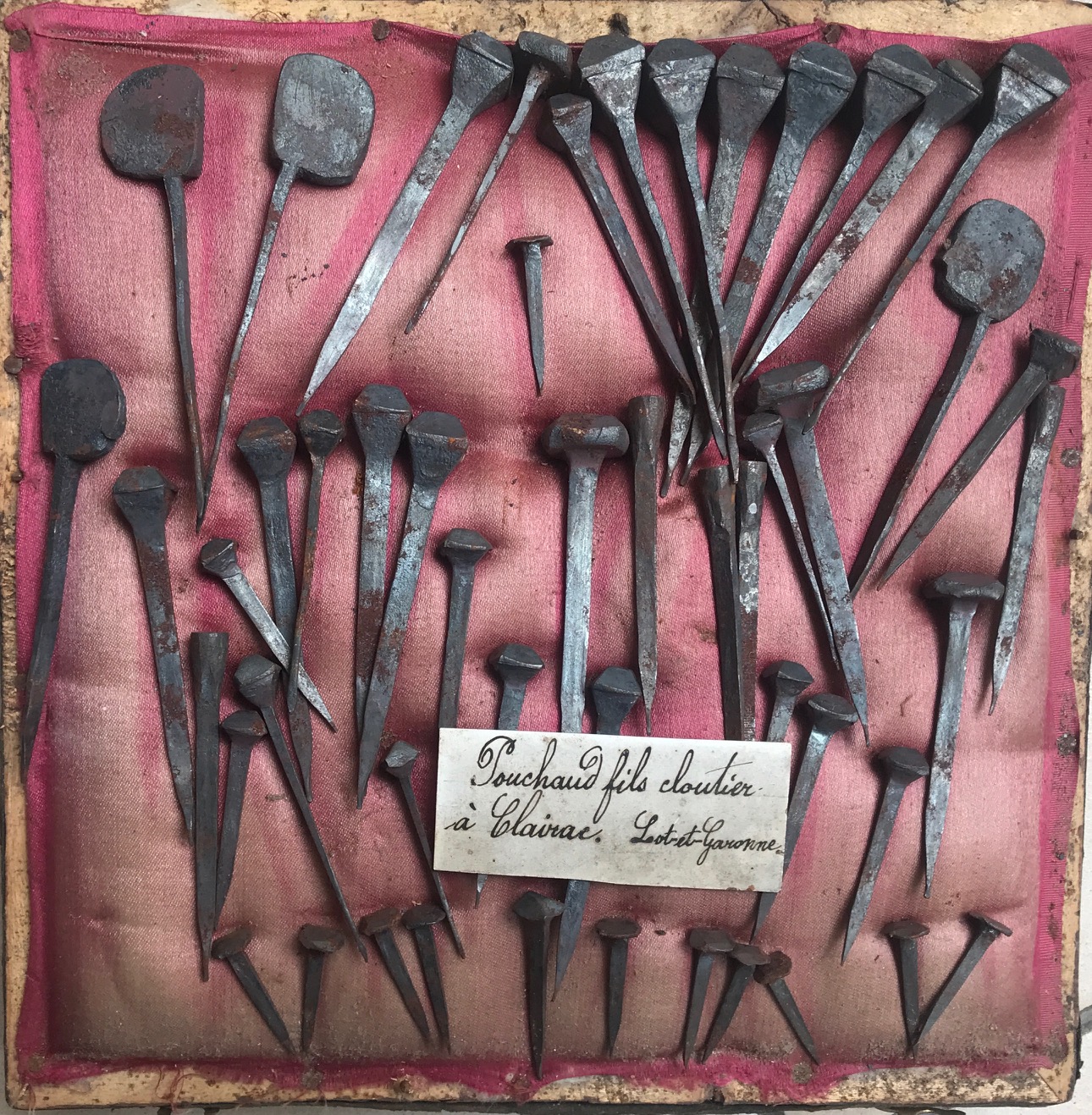
Great grandfather of Solange Lacombe wife Santiago, Pierre Pouchaud, born in 1842, exercised the trade of nail maker, now forgotten. Below a presentation of his work realized for an exhibition in Bordeaux.
Pierre Pouchaud, nail maker in Clairac.
Pierre Pouchaud, nail maker in Clairac.
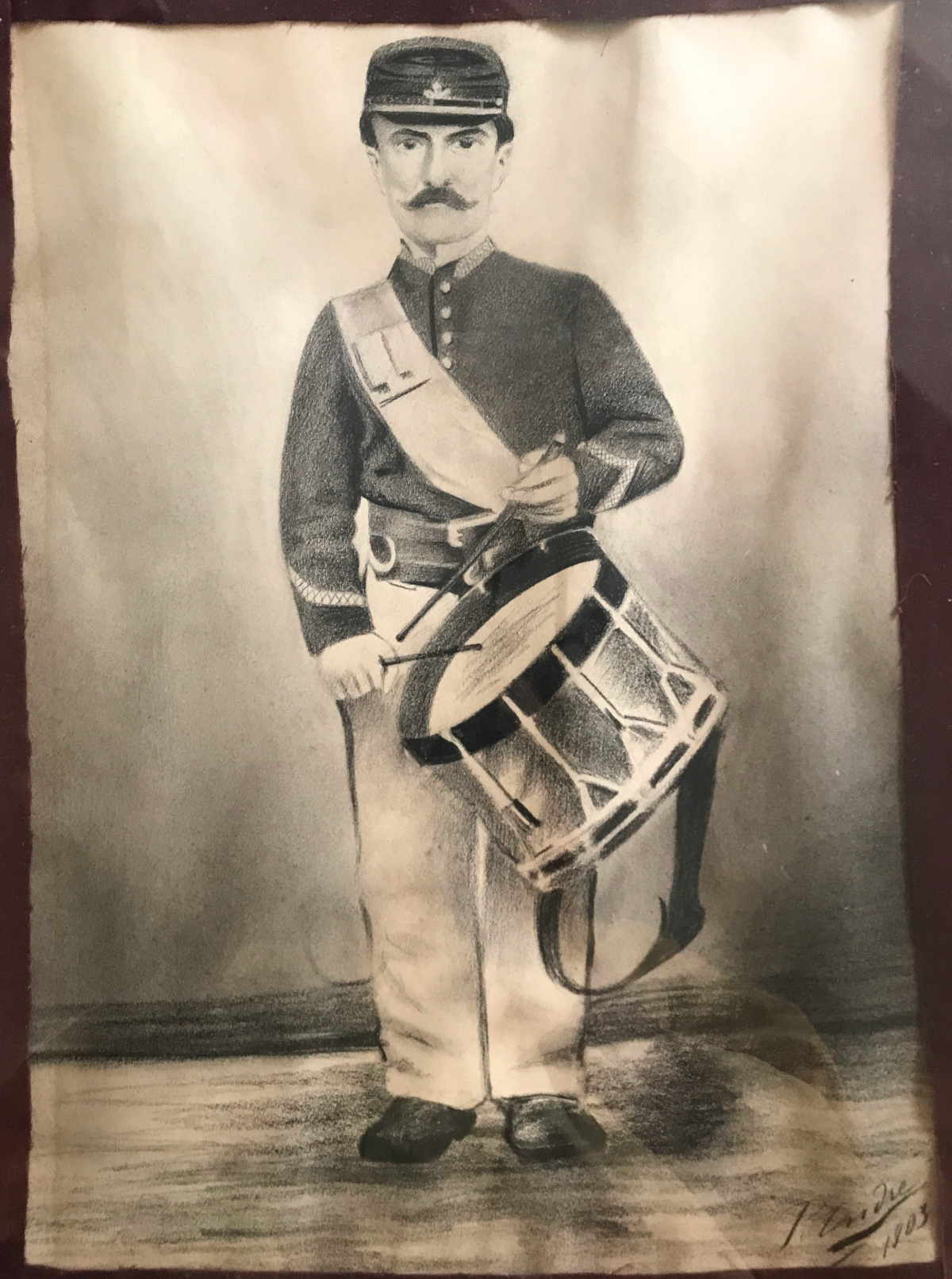
Drawing, 1903. Nail maker and country guard!
Drawing, 1903. Nail maker and country guard!
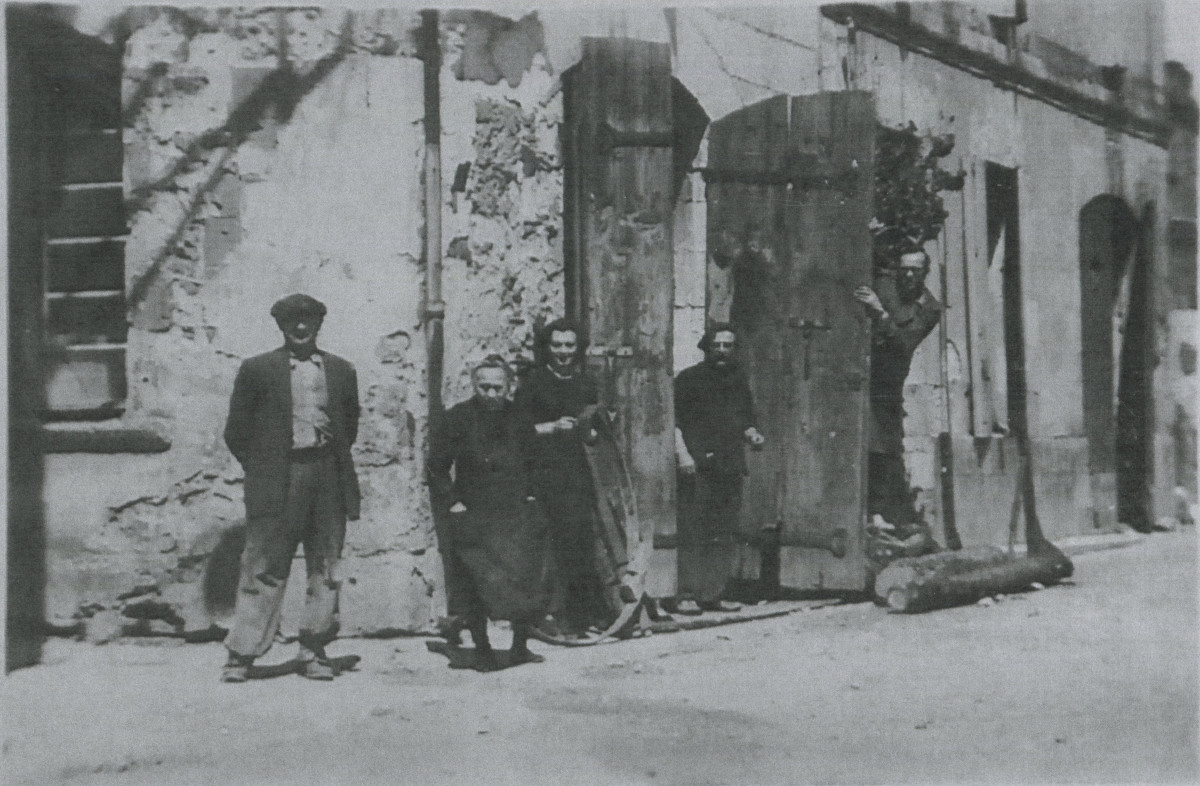
At the corner of rue des Couteliers and rue Puzoque there was a wheelwright.
Cartwright's workshop.
Cartwright's workshop.
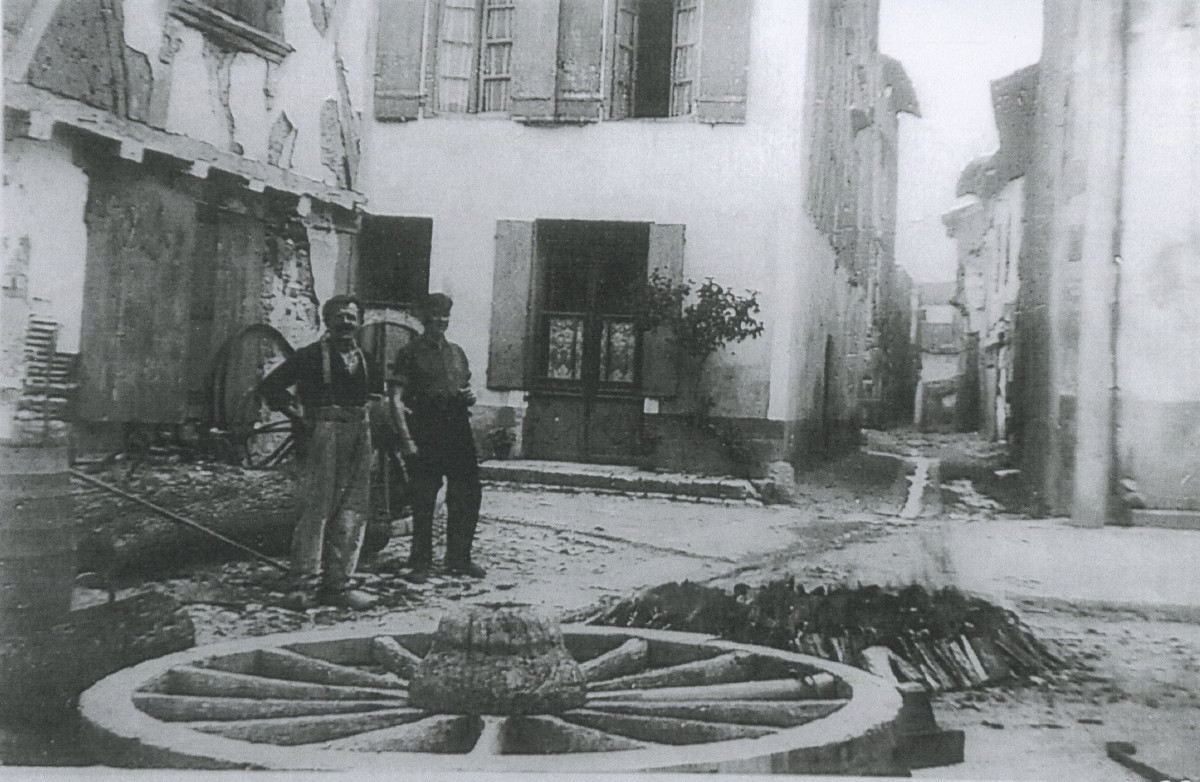
Cartwheels strapped to the ground on the Place de la Halle in front of the house of Olympe.
Cartwheels strapped to the ground on the Place de la Halle in front of the house of Olympe.
And in the street Porte Pinte...
The dressmaker Nelly Lalaurie in front of her workshop.
The dressmaker Nelly Lalaurie in front of her workshop.