The oldest trace of the abbey dates from 1068. Welcoming a Benedictine community, it was one of the most important in the Agenais, drawing its income from the fertile lands of the Lot valley. Victim of the Hundred Years War and the Wars of Religion, it was in ruins when Henri IV offered it in 1604 to the chapter of Saint-Jean-de-Latran. It was administered by an abbot appointed by Rome, until it was sold during the Revolution.
It is through this gift that the President of the French Republic is still an honorary canon of Saint-Jean-de-Latran today.
Plaque affixed Place de l'Eglise, at the entrance to the abbey.
If the legend claims that it was founded by Pepin-le-Bref, it is only from the 11th century that we know about the Benedictine abbey of Clairac, one of the most important in the Agenais. It was also one of the richest abbeys, because of the land it farmed in the valley and on the hillsides: the valley was rich in alluvial deposits, and the south-facing slopes of the hillsides ripened the grapes which, along with plums and tobacco, made the town's reputation.
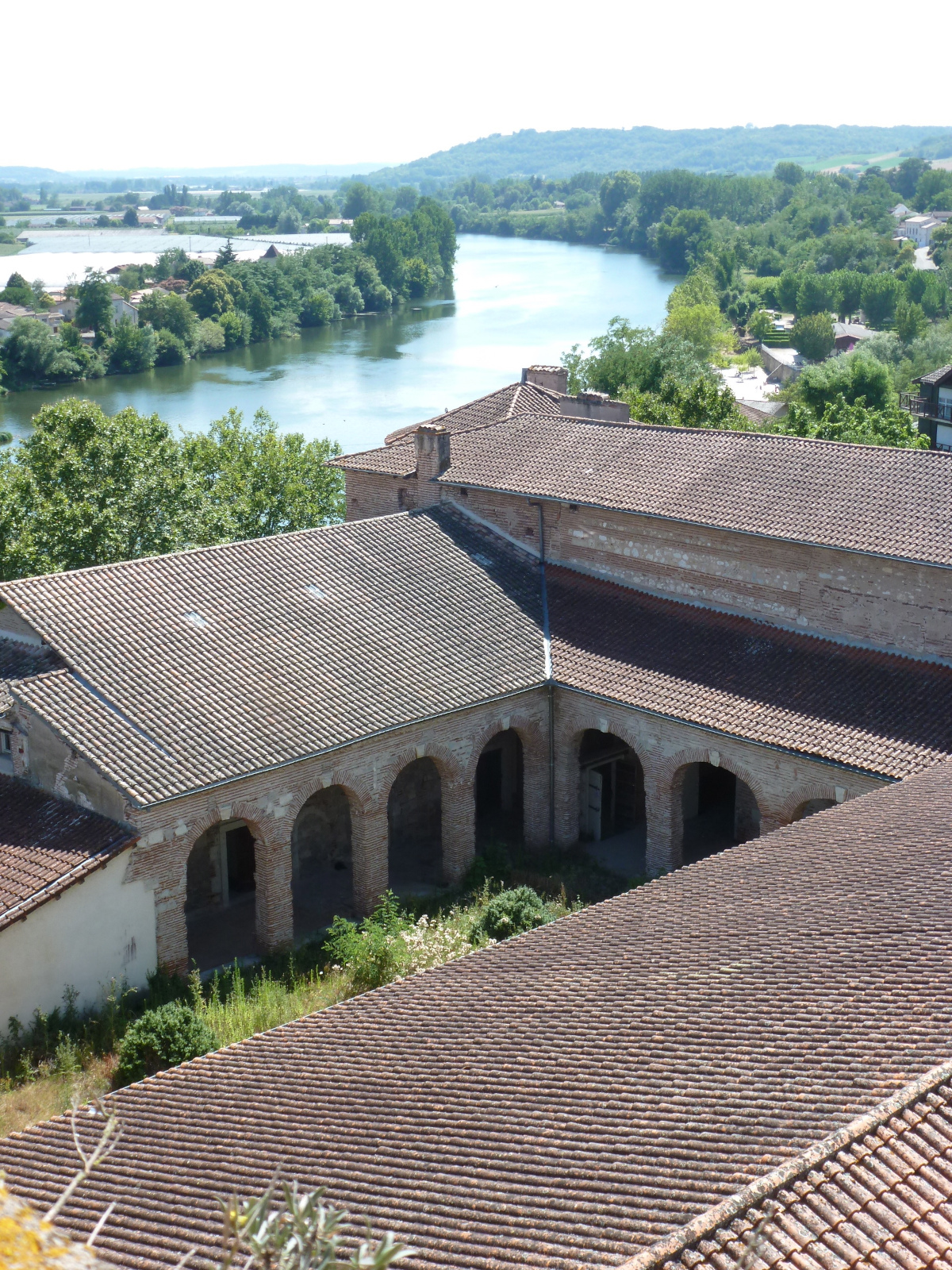
The cloister of the abbey facing the Lot valley and its green hillsides.
Although the Hundred Years' War partially ruined it, it nevertheless recovered. With the appointment of Gérard Roussel as abbot by Marguerite d'Angoulême in 1530, the abbey opened up to the ideas of the Reformation, which became a reality in 1568 when Abbot Geoffroy de Caumont switched to the new religion, taking all his monks with him.
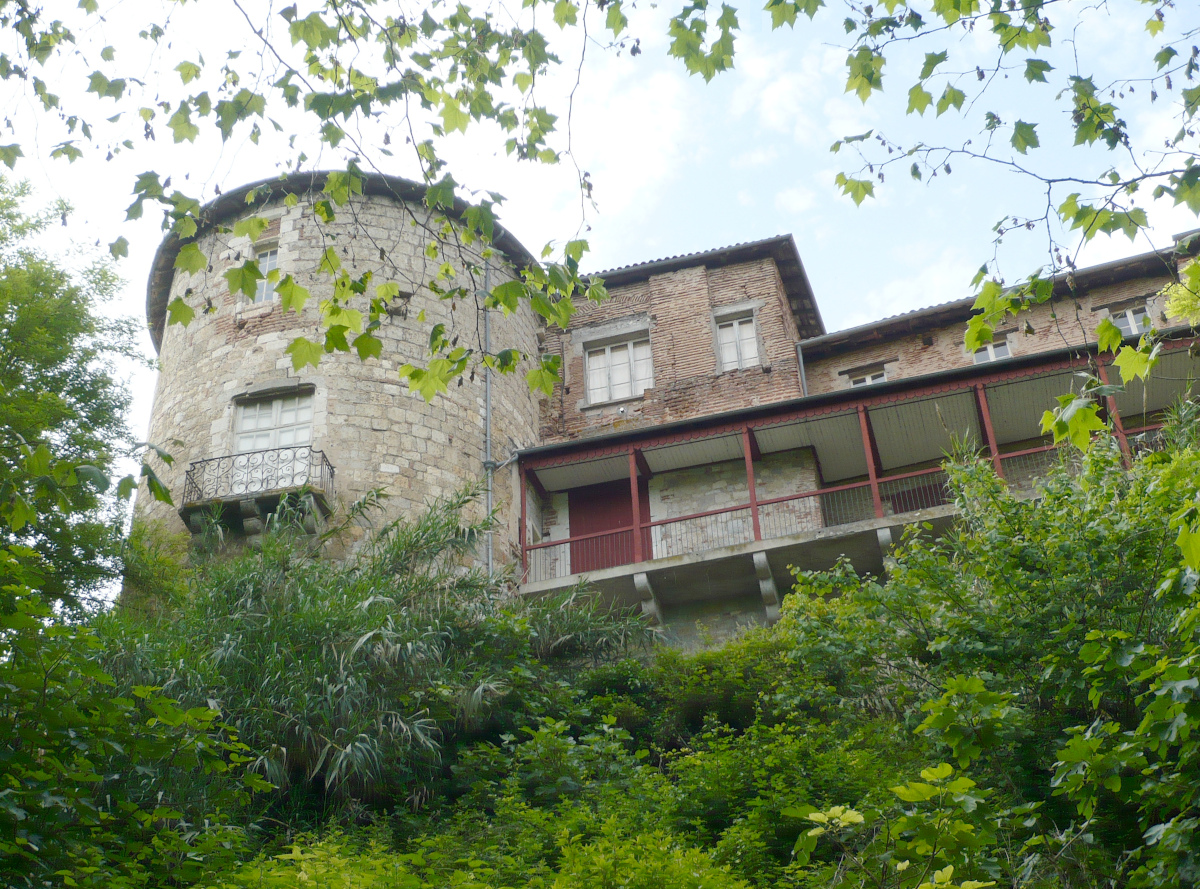
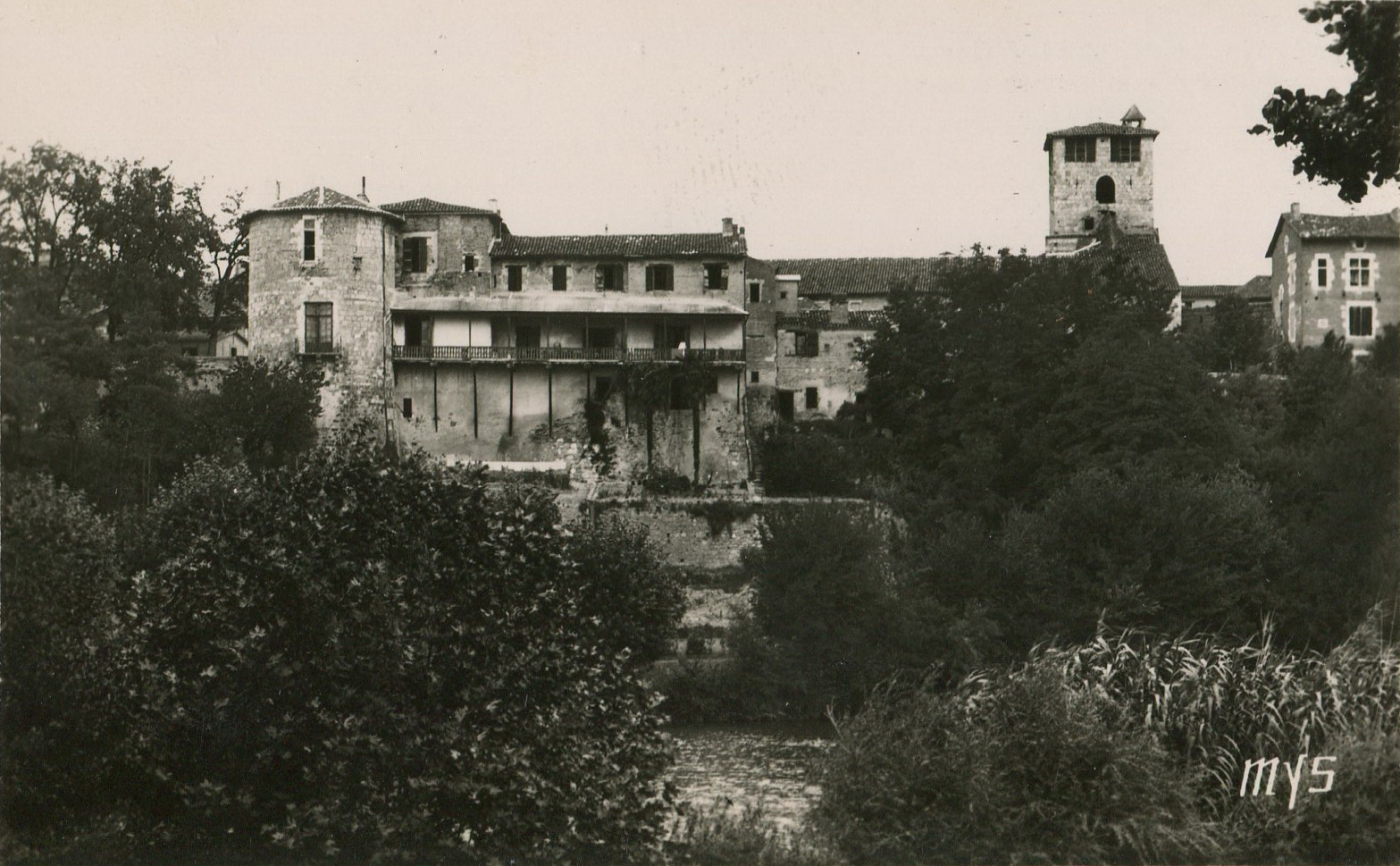
The “Calvin” tower and the balcony overlooking the Lot.
The “Calvin” tower and the balcony overlooking the Lot.
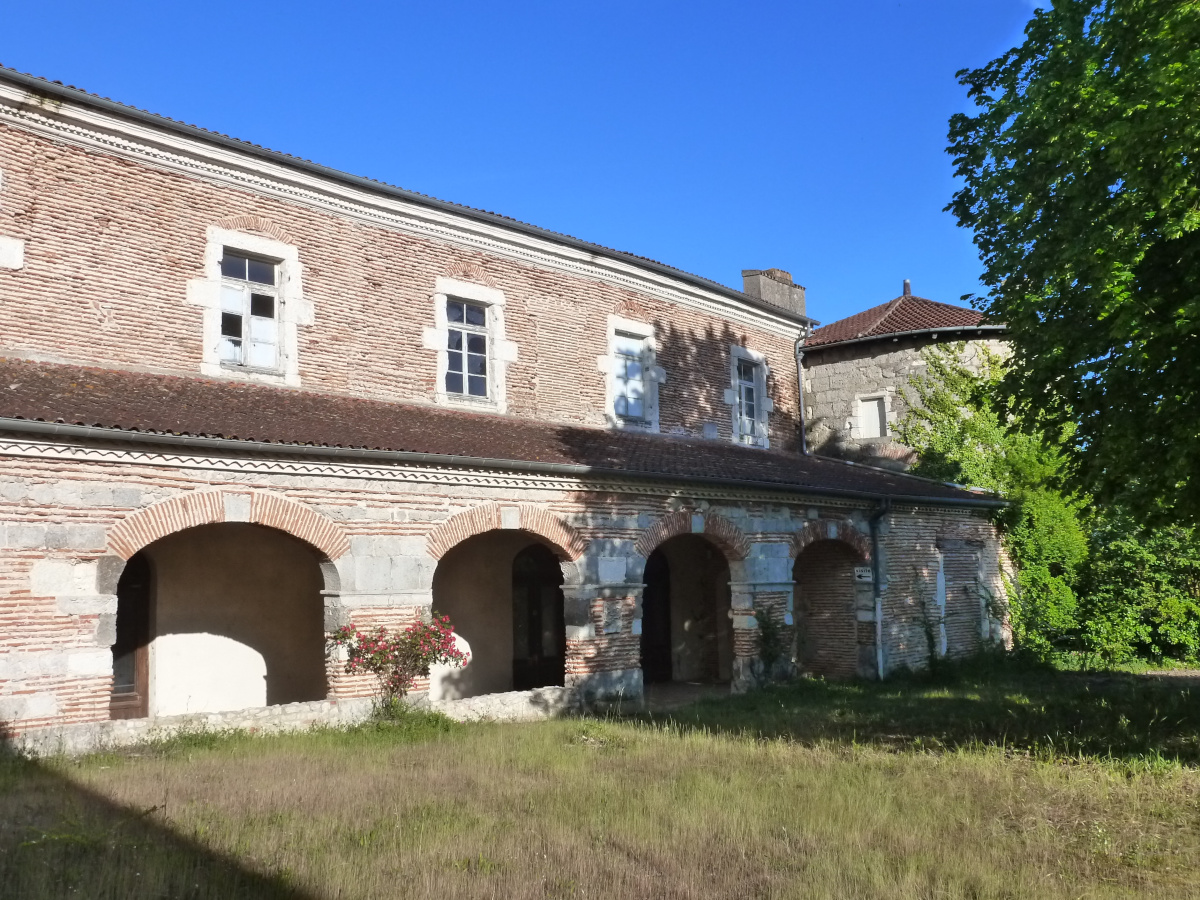
The esplanade of the abbey today invaded by weeds.
The esplanade of the abbey today invaded by weeds.
Abandoned for several decades, it was given to the chapter of St John Lateran by Henry IV in 1604. From then on, the abbots were appointed by Rome until the Revolution when it was sold as national property.
The west cloister.
The west cloister.
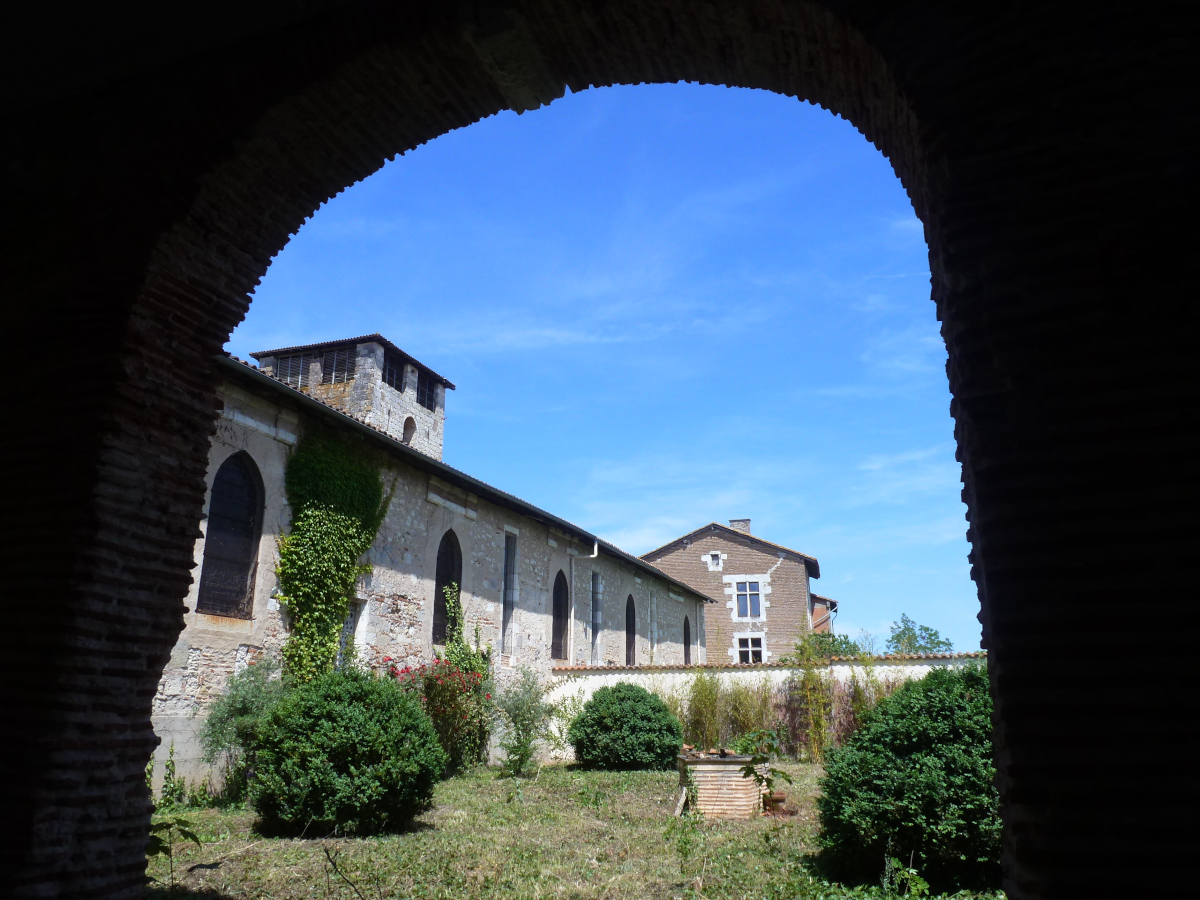
The interior cloister.
The interior cloister.
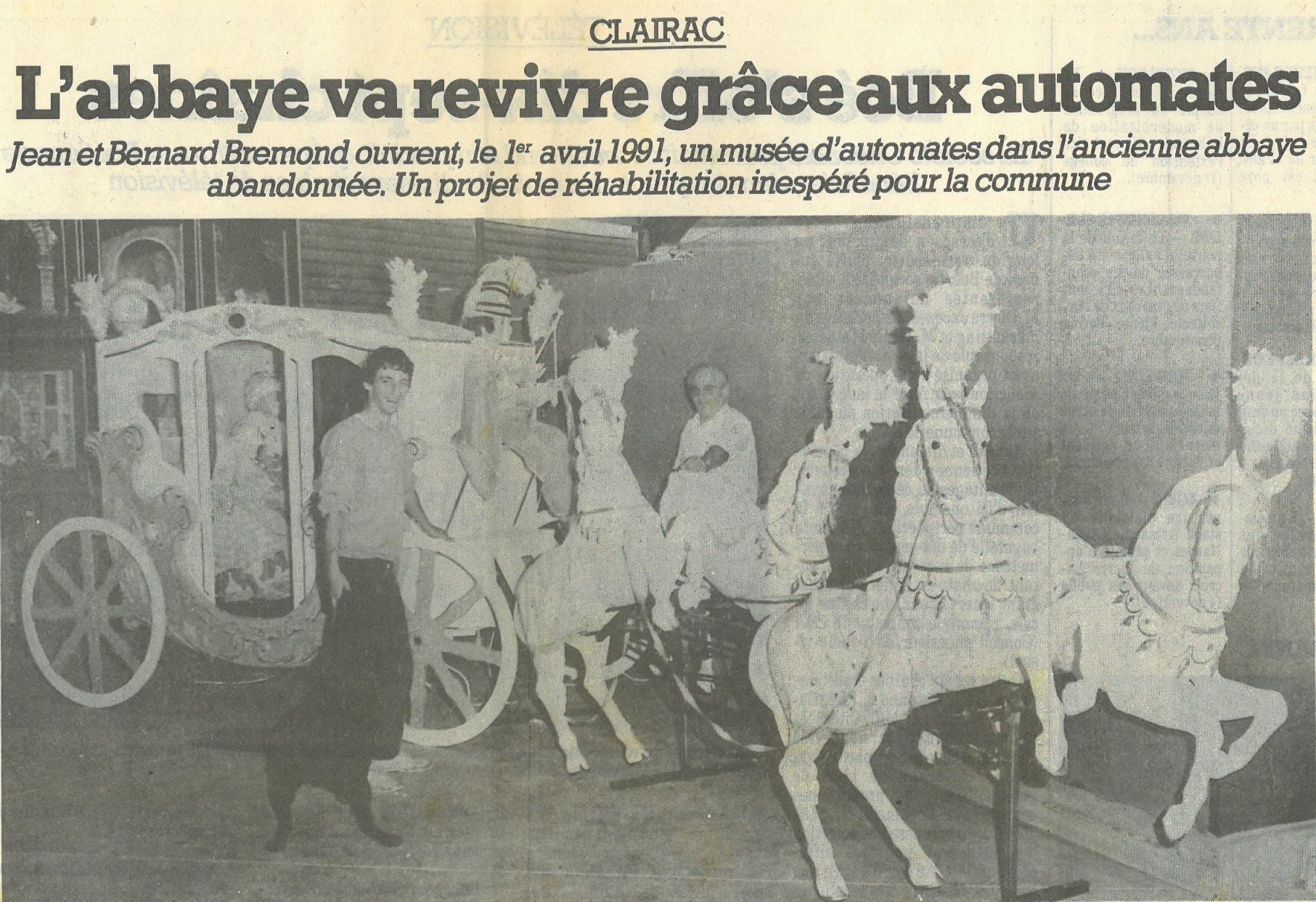
Private property in the 19th and 20th centuries, it housed the Naval Academy from autumn 1943 to the end of January 1945, then the Technical College. At the end of the 20th century, you could visit a collection of automatons. It is listed in the supplementary inventory of historical monuments.
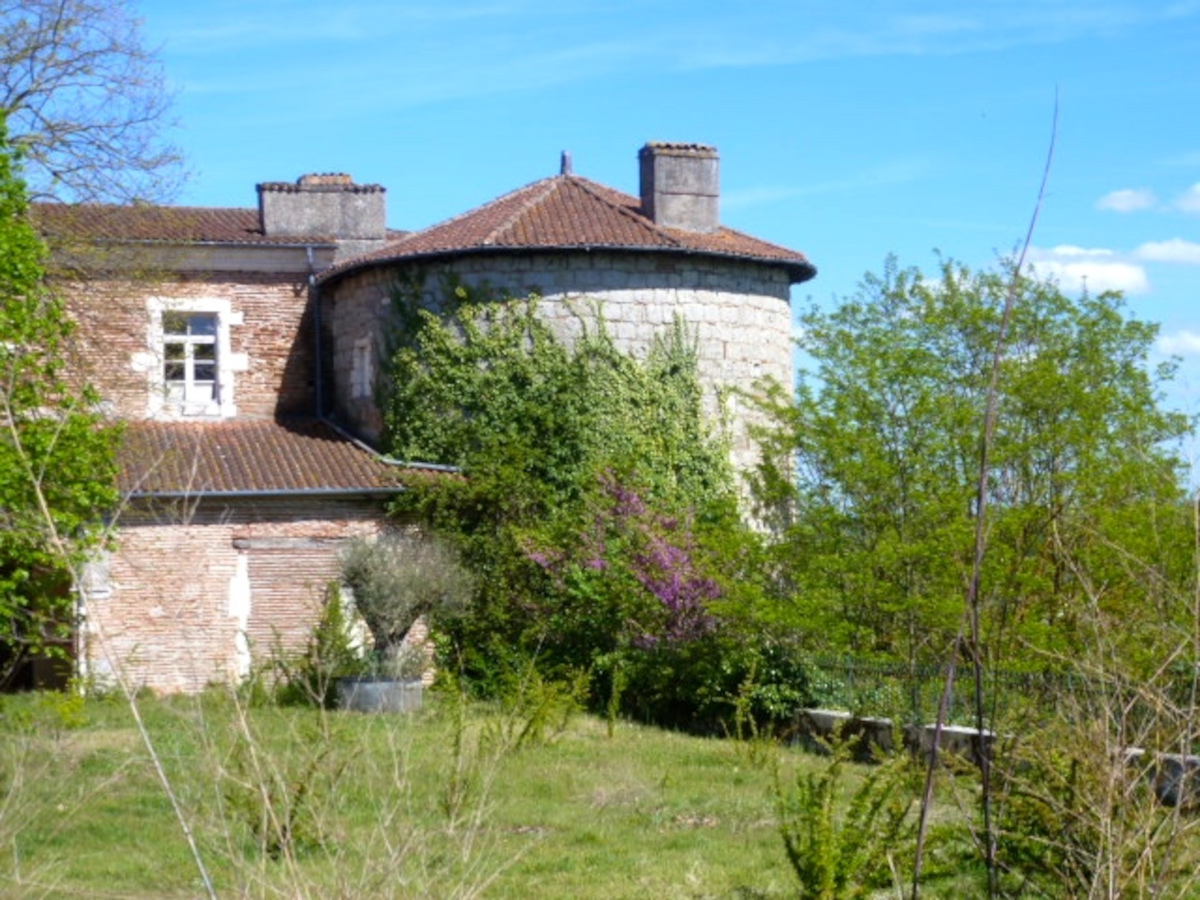
The abbey and the fortified bell tower above the Lot.
The abbey and the fortified bell tower above the Lot.
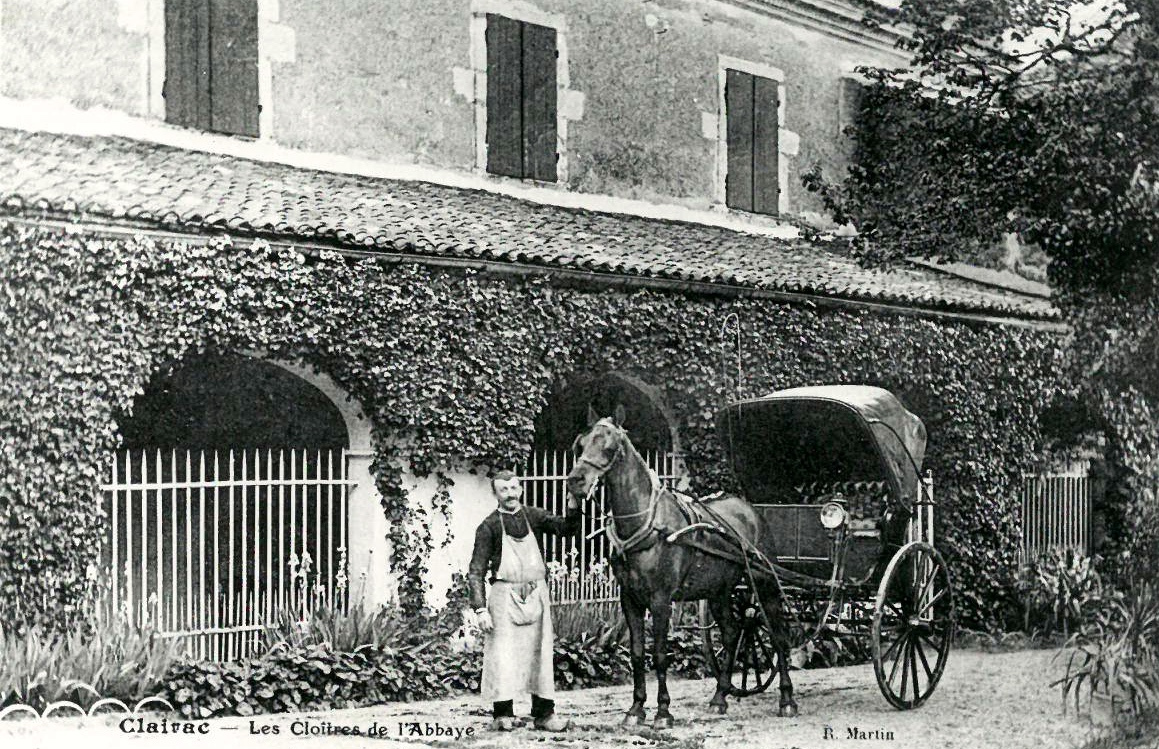
Horse-drawn cabriolet at the beginning of the 20th century in front of the west cloister.
Horse-drawn cabriolet at the beginning of the 20th century in front of the west cloister.
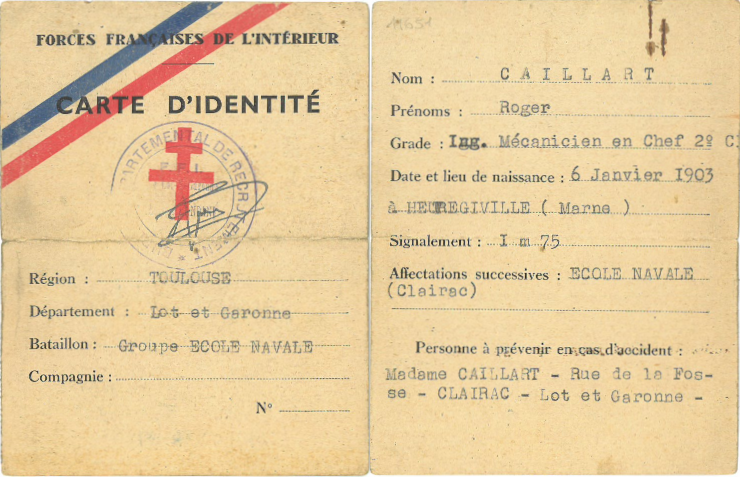
1944. As indicated on his FFI id-card, the future Admiral Roger Caillart, then chief mechanical engineer at the École Navale, lived with his family in the rue de la Fosse. The administration and machinery courses were held at the abbey. The navigation courses were given on the Lot, quai de la république. Theoretical courses were given at the Castille castle.
1944. As indicated on his FFI id-card, the future Admiral Roger Caillart, then chief mechanical engineer at the École Navale, lived with his family in the rue de la Fosse. The administration and machinery courses were held at the abbey. The navigation courses were given on the Lot, quai de la république. Theoretical courses were given at the Castille castle.
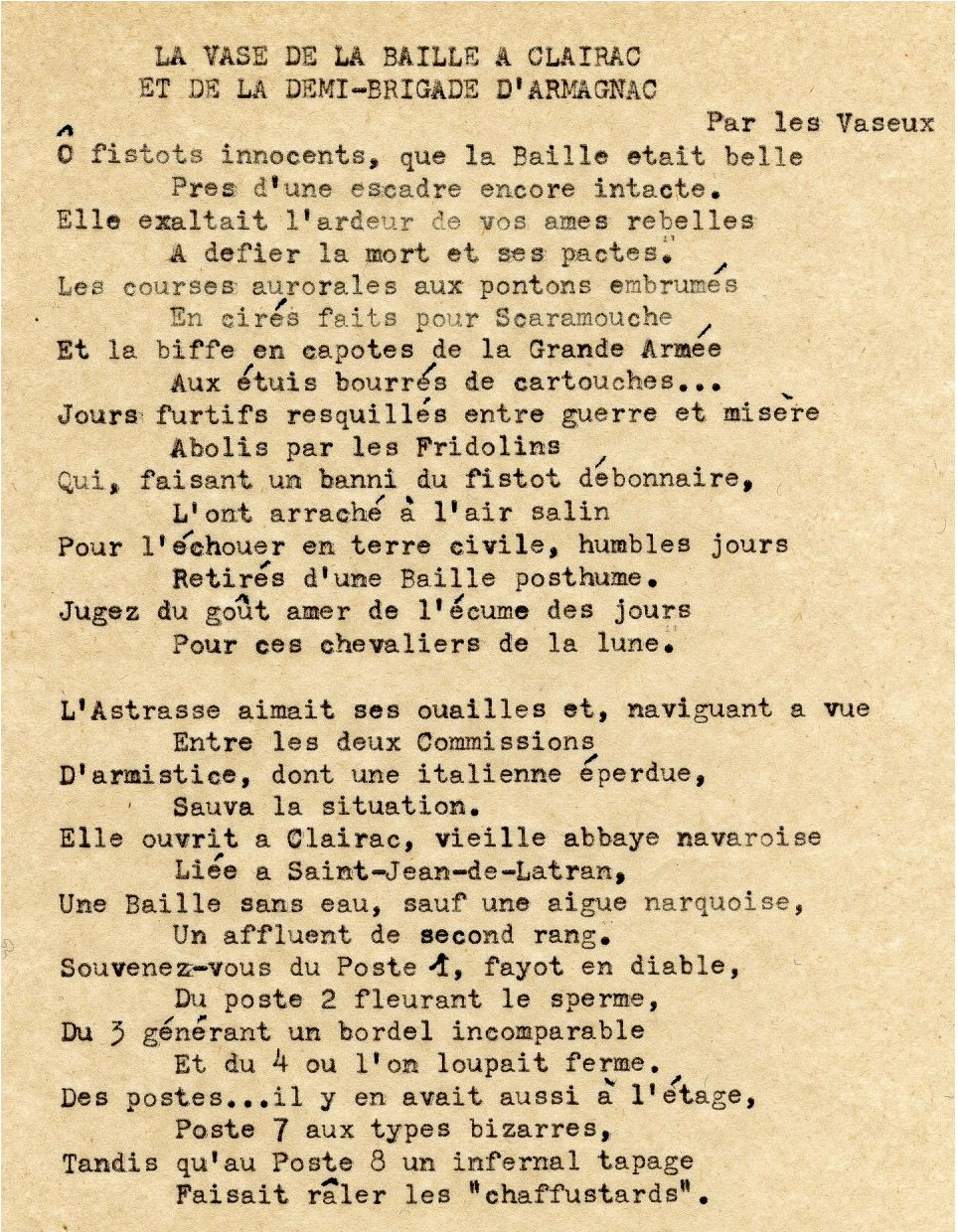
1944. The first two stanzas of a poem written by the Naval School students (class of 1942). This poem, written in the slang of the “Baille” (the Naval School) evokes the epic of the sailors between Toulon, Clairac and the Pointe de Grave.
1944. The first two stanzas of a poem written by the Naval School students (class of 1942). This poem, written in the slang of the “Baille” (the Naval School) evokes the epic of the sailors between Toulon, Clairac and the Pointe de Grave.
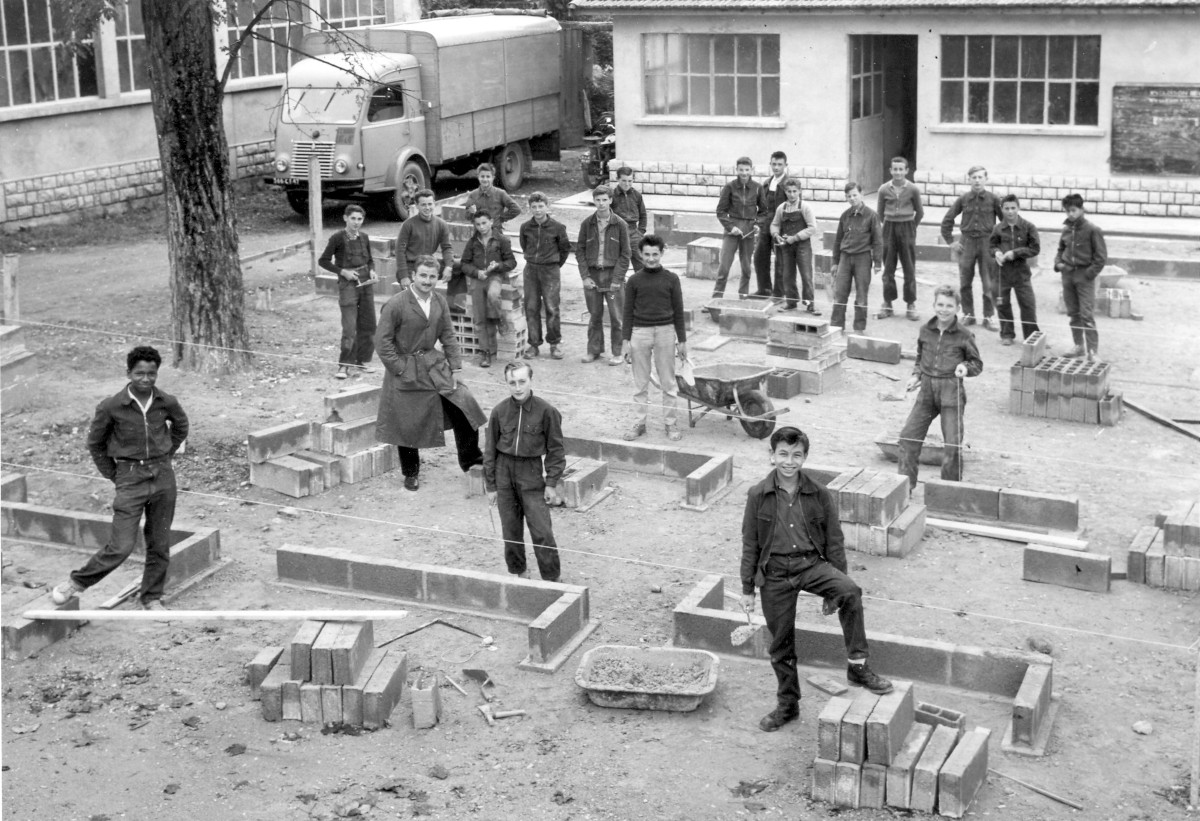
The 1960s. On the current Place du Fort, masonry lessons given by Mr. Martinez, a teacher at the technical College.
The 1960s. On the current Place du Fort, masonry lessons given by Mr. Martinez, a teacher at the technical College.
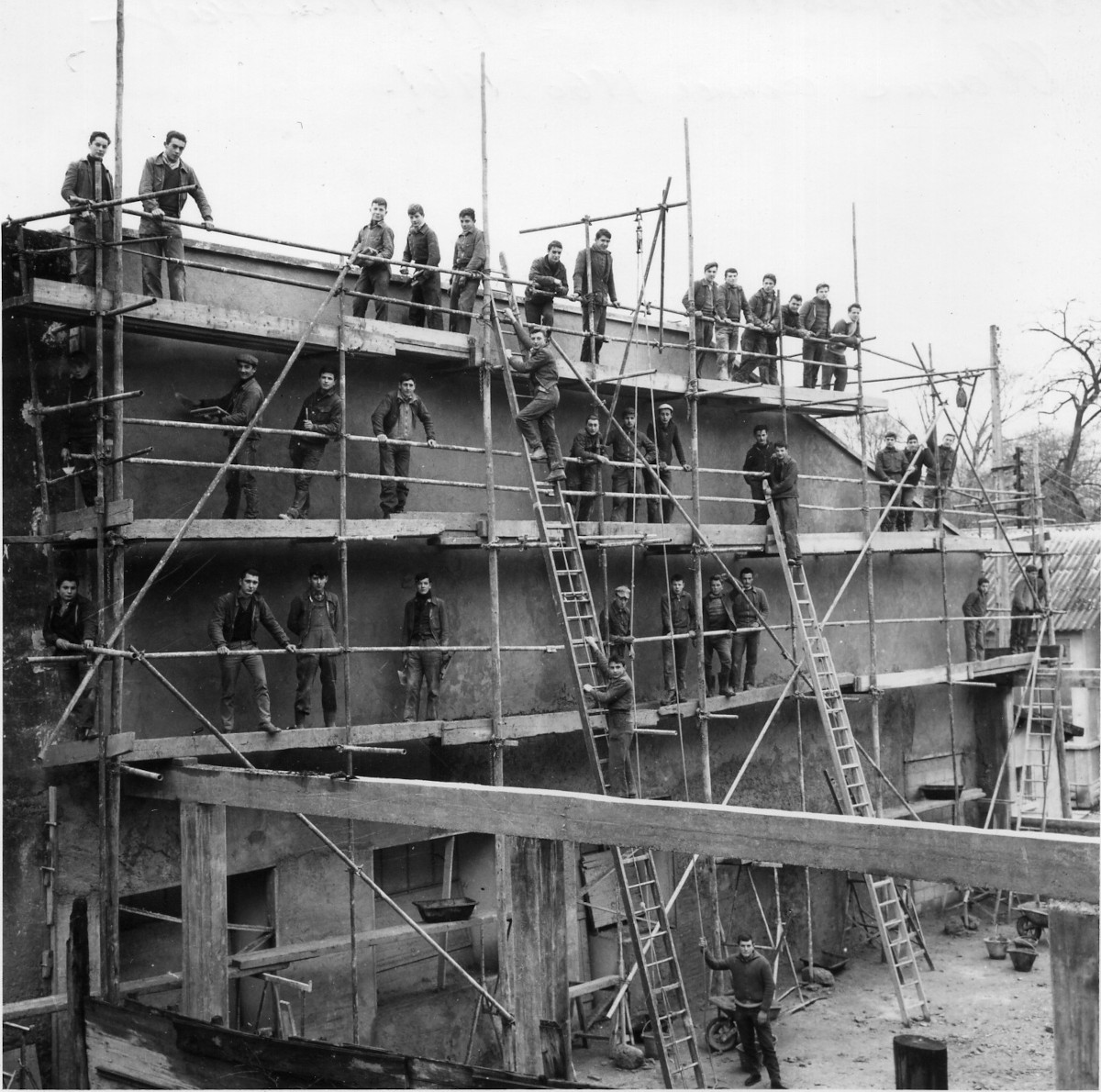
1960s. The students of the technical College on the construction site of the future mechanical workshop.
1960s. The students of the technical College on the construction site of the future mechanical workshop.