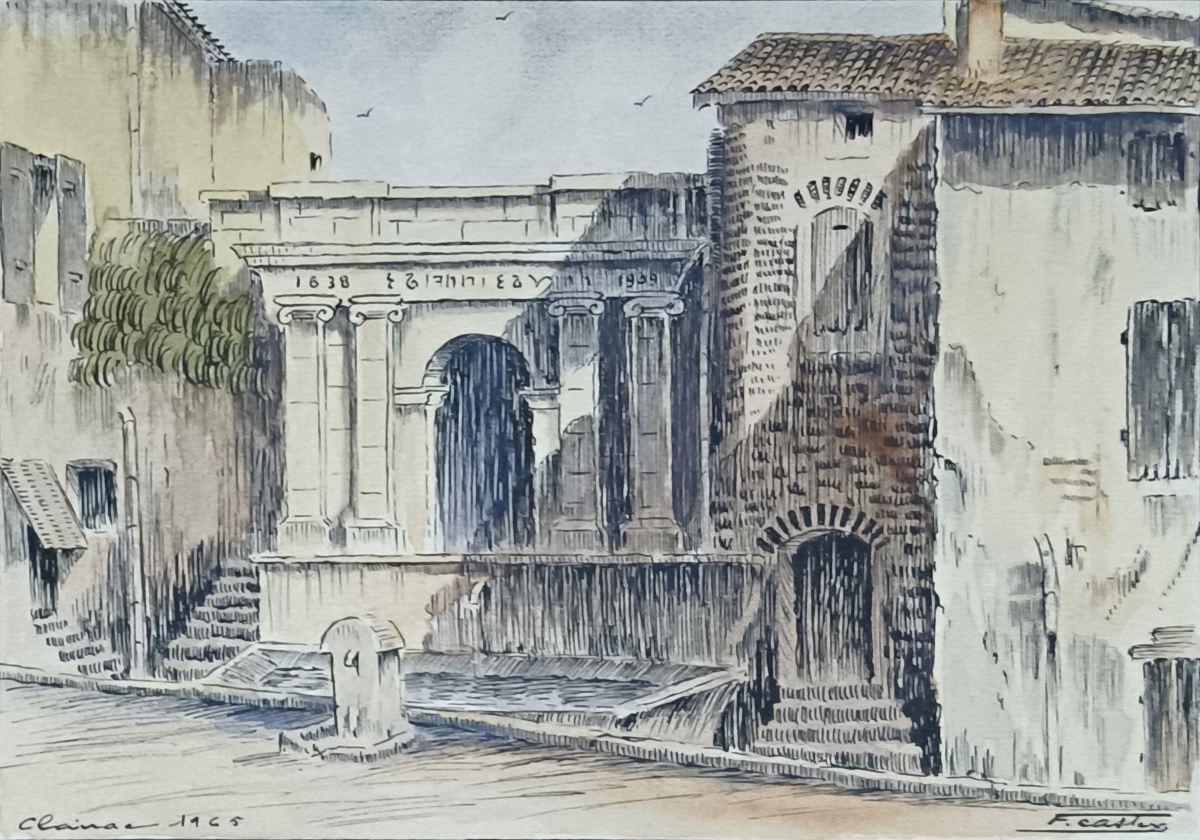
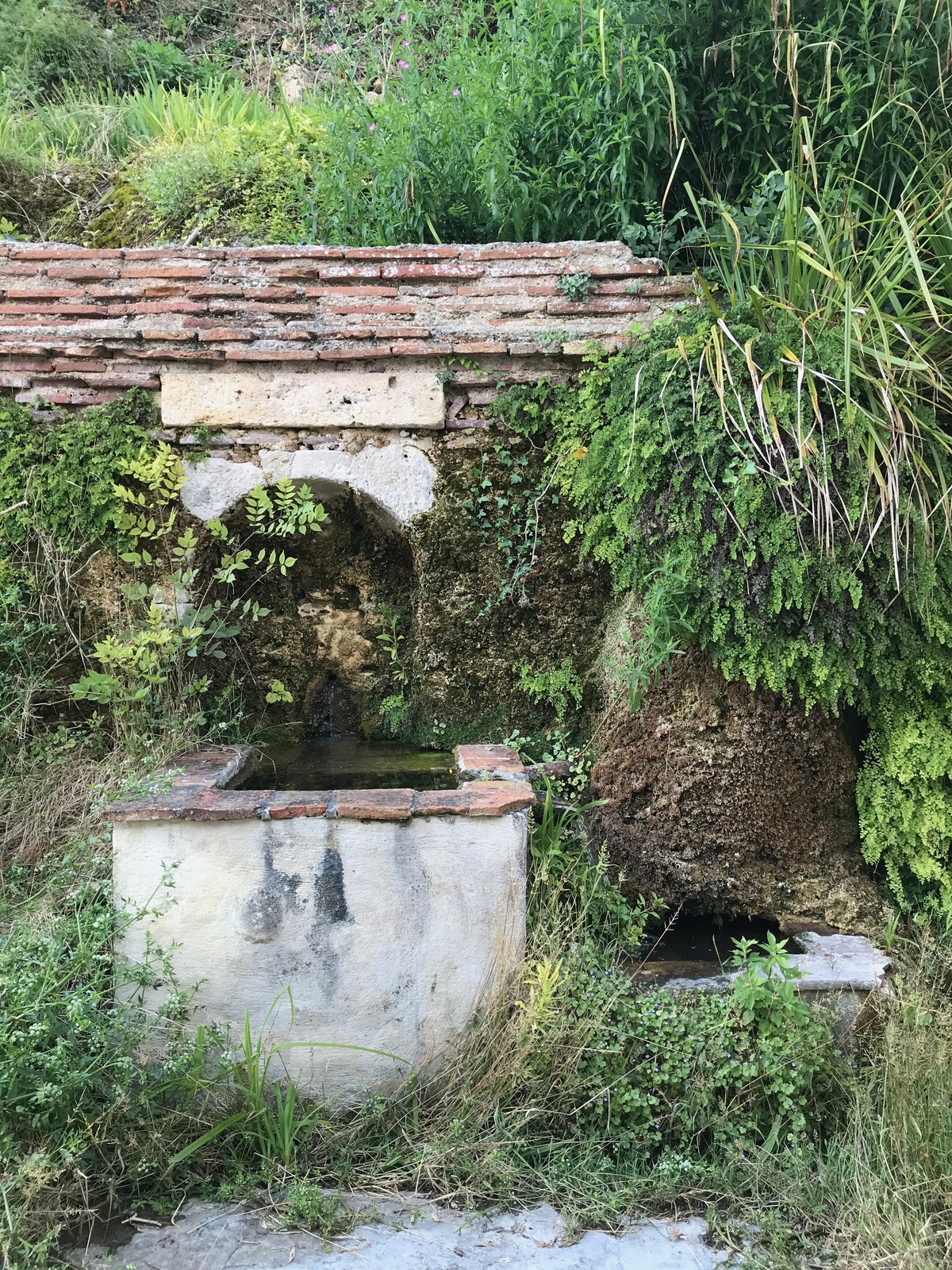
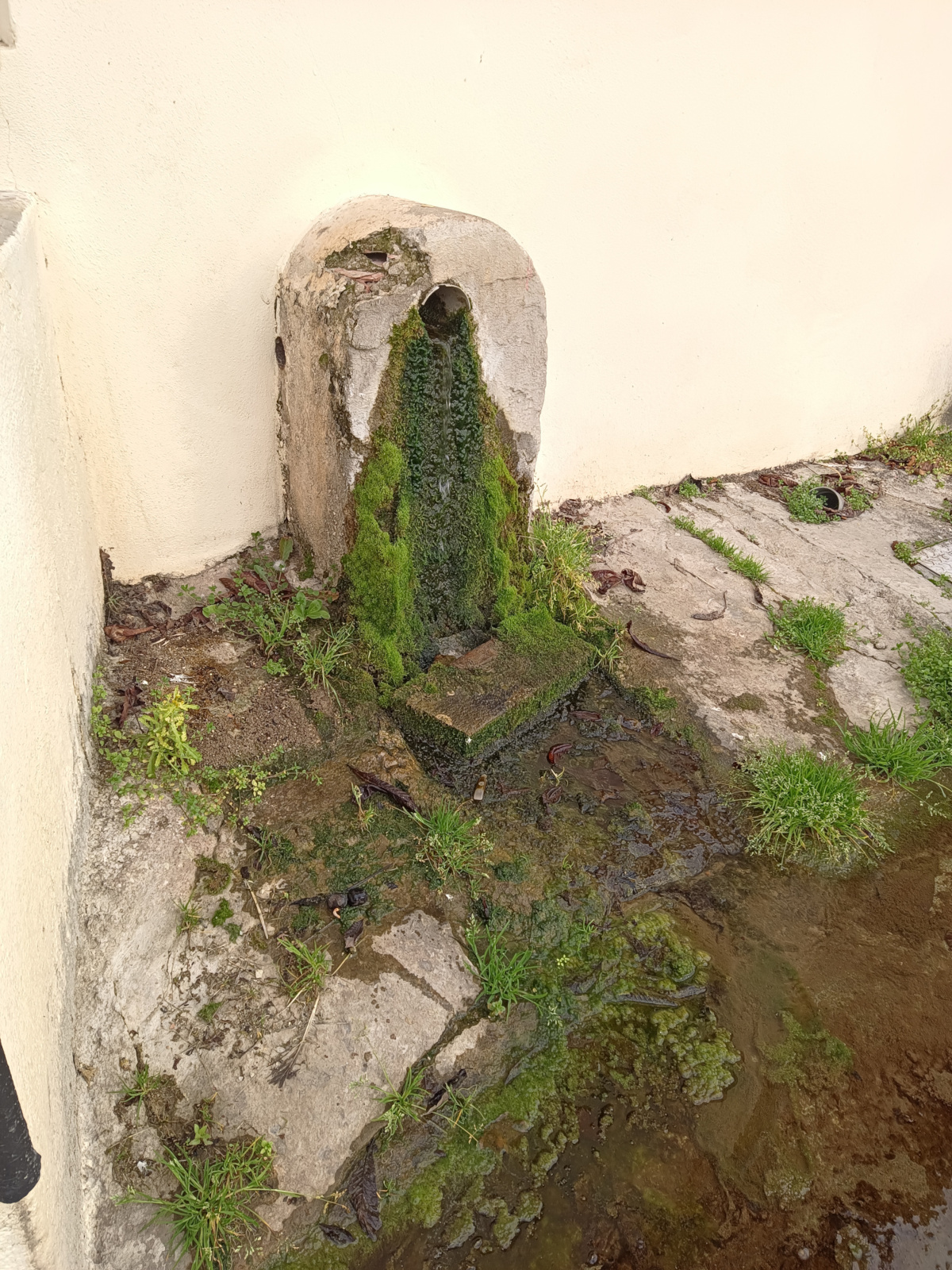
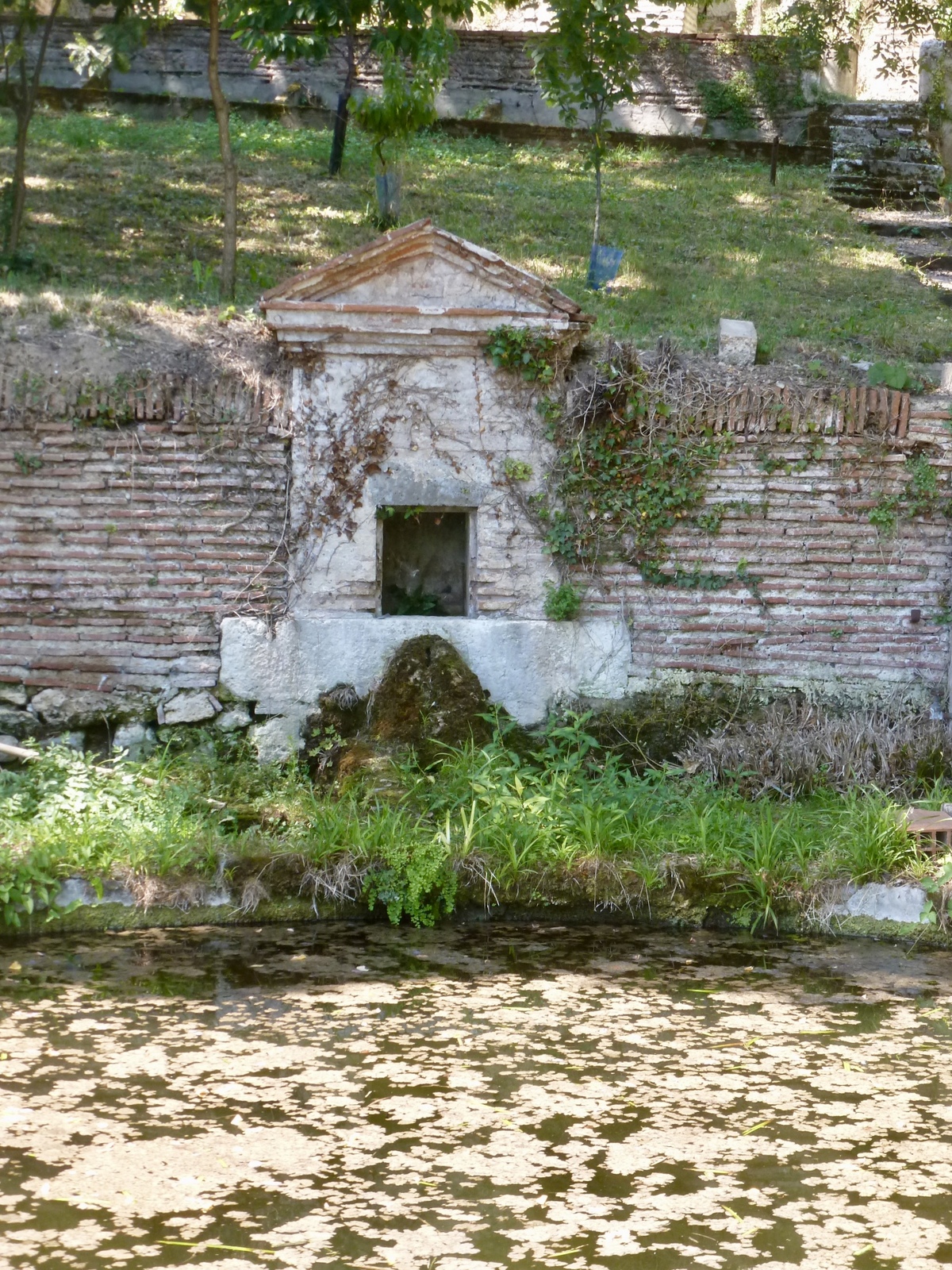
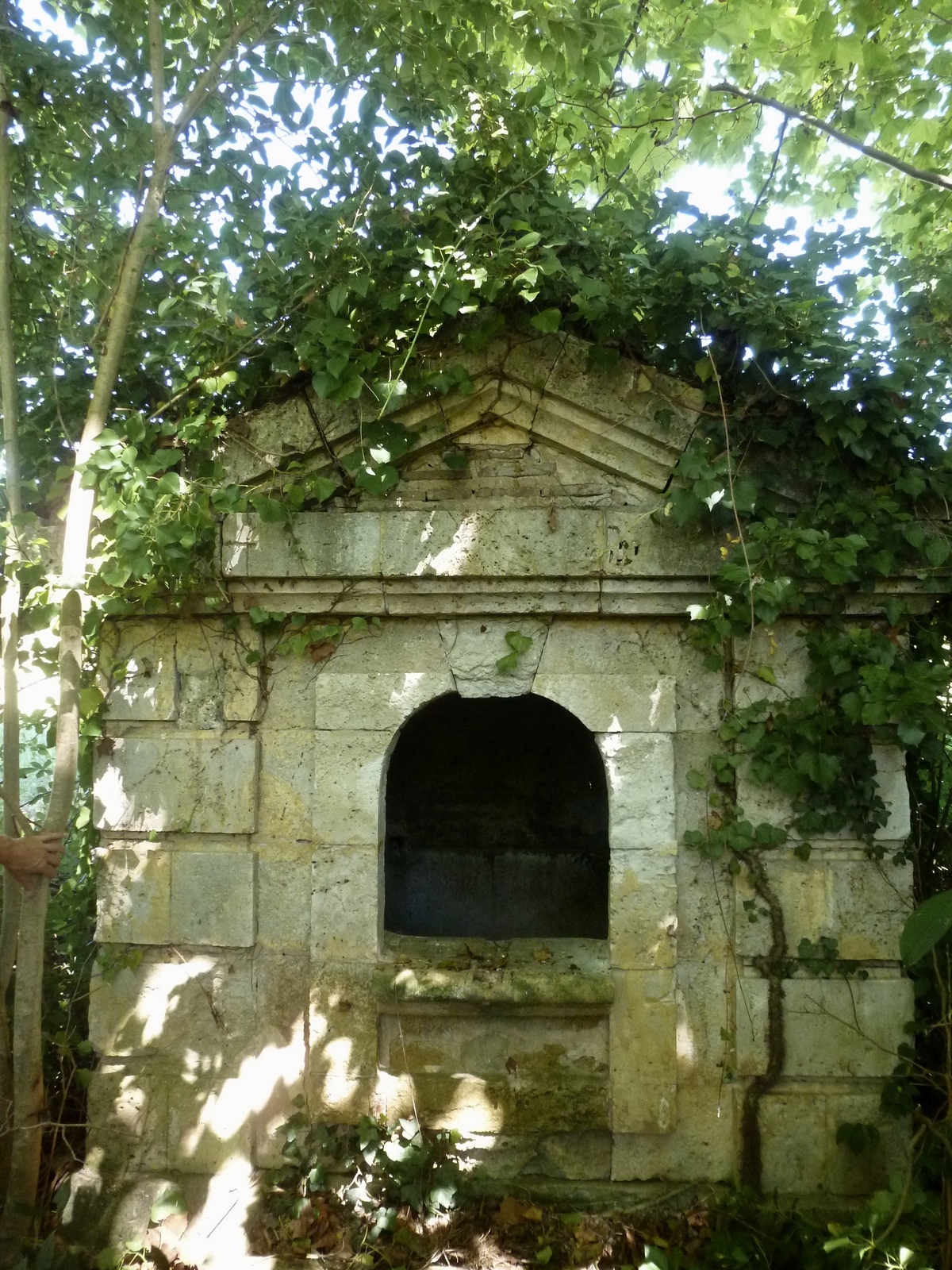
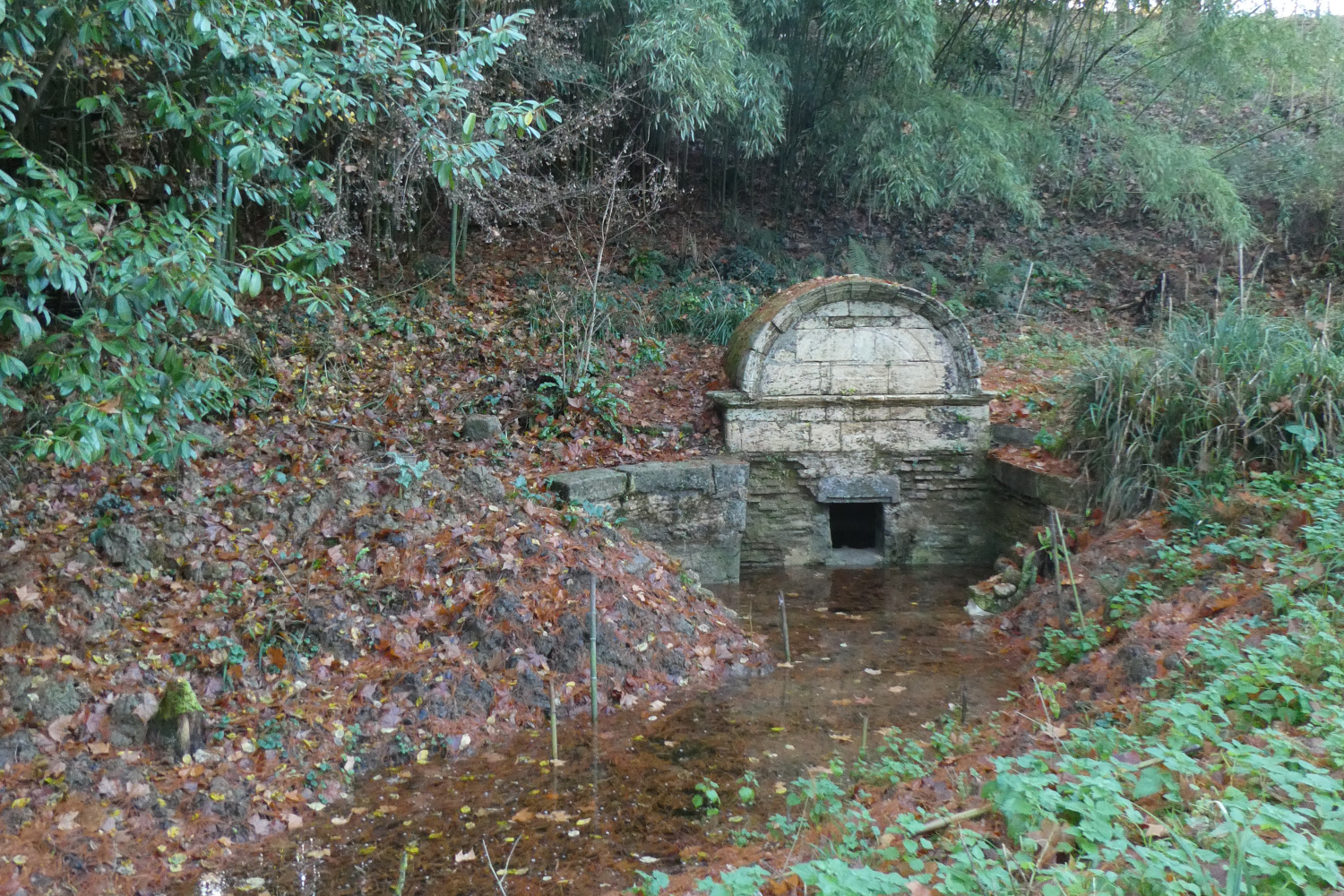
Fontaine Font grand, at the bottom of Esclopière and Gambetta streets
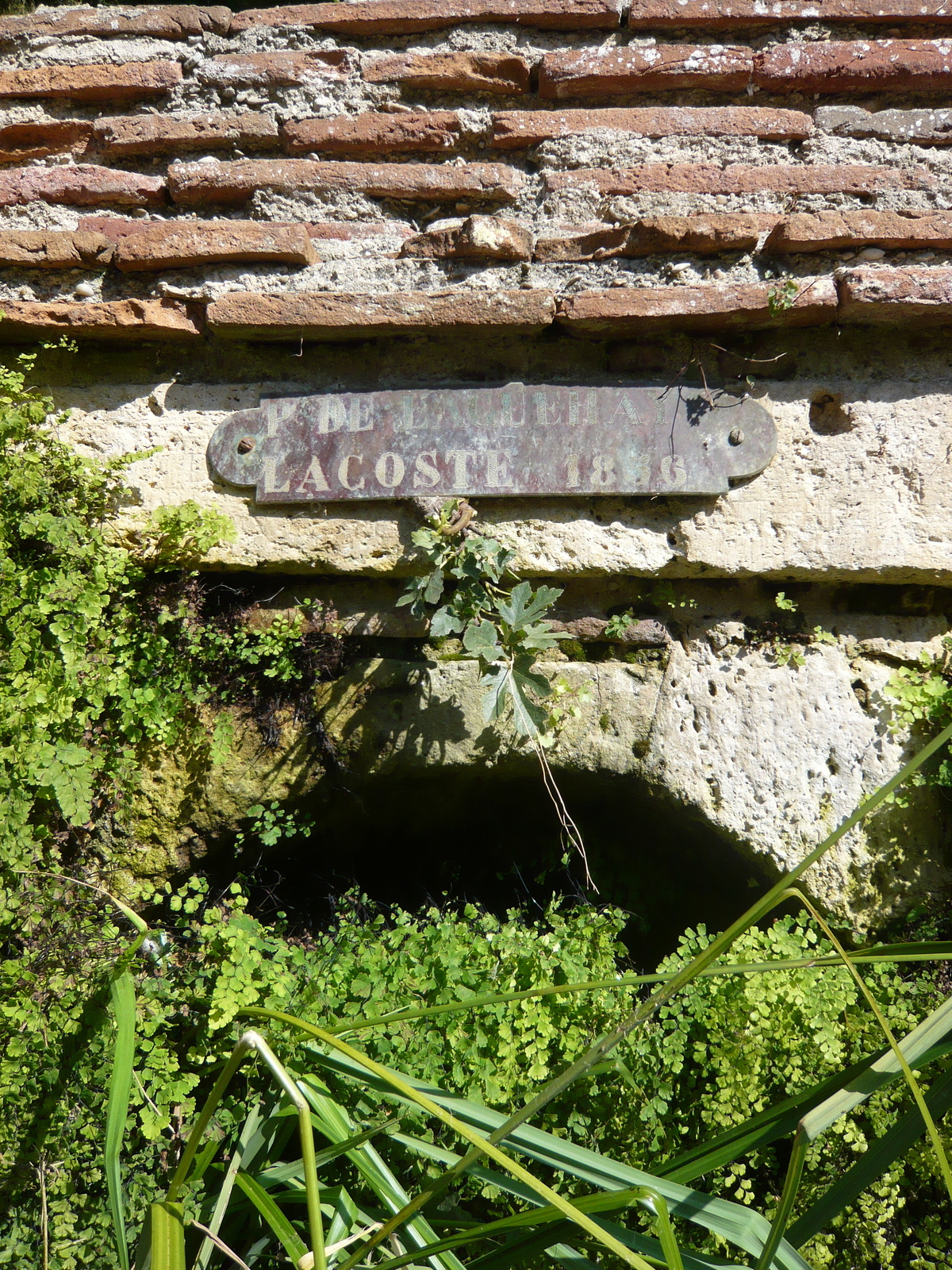
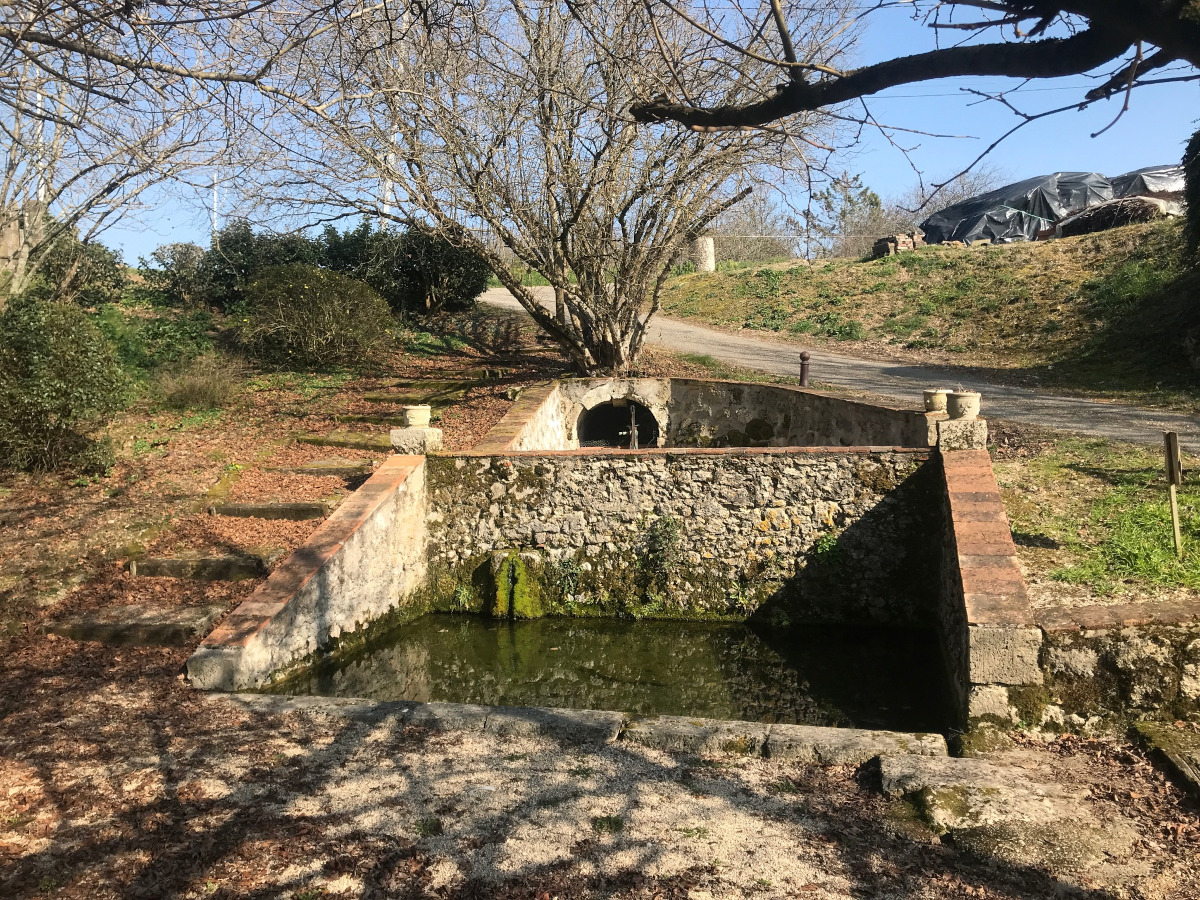
If the Lot is an essential asset for Clairac, allowing the development of trade, the many springs and fountains that irrigate the village and the bank are also a wealth available to all. The finest example is Font grand, the main fountain in the village, located at the bottom of the street that led to the Lot. Its reservoir is covered with a beautiful Gothic vault. Its neoclassical facade dates from 1638, restored in 1909. The water was distributed by channels located on both sides. In the 20th century, a washhouse was added to it.
Plaque affixed to the pediment of the Font grand.
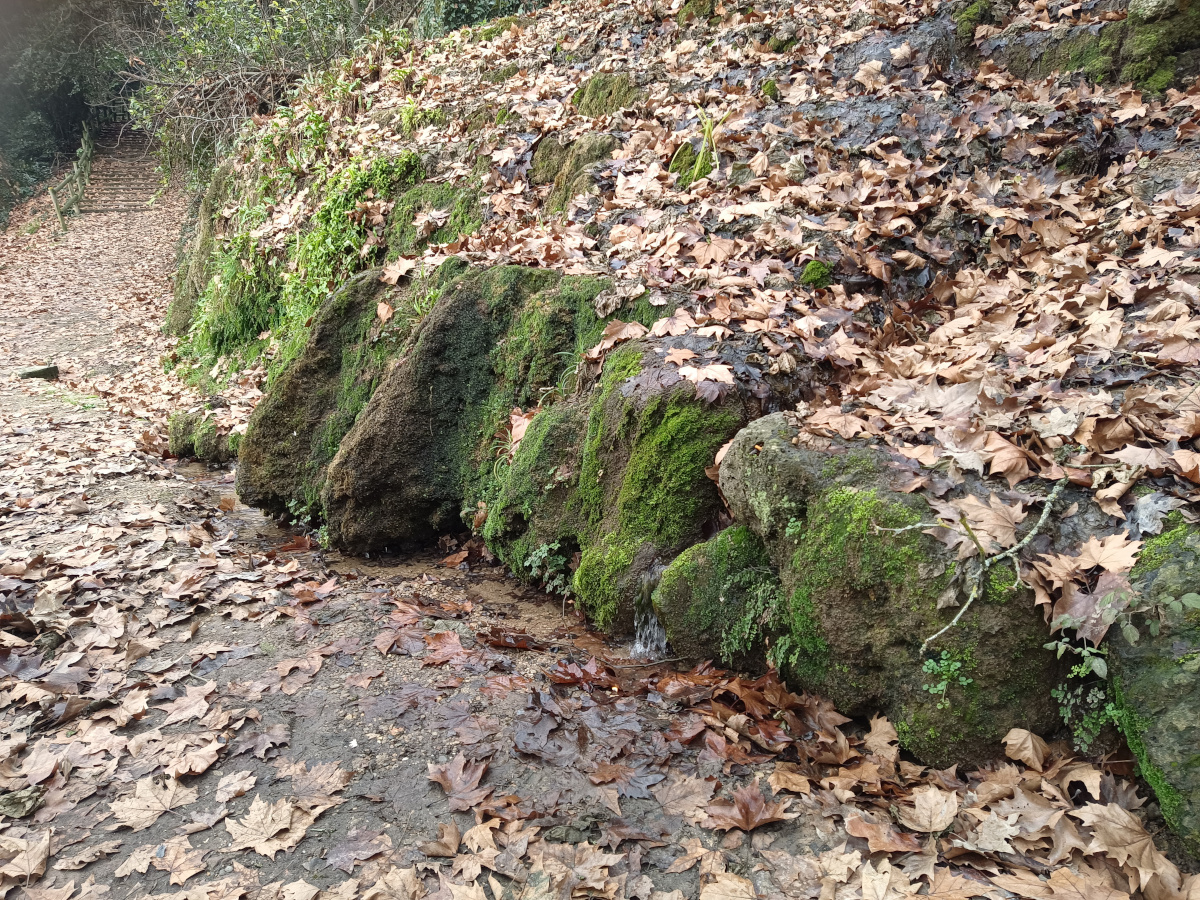
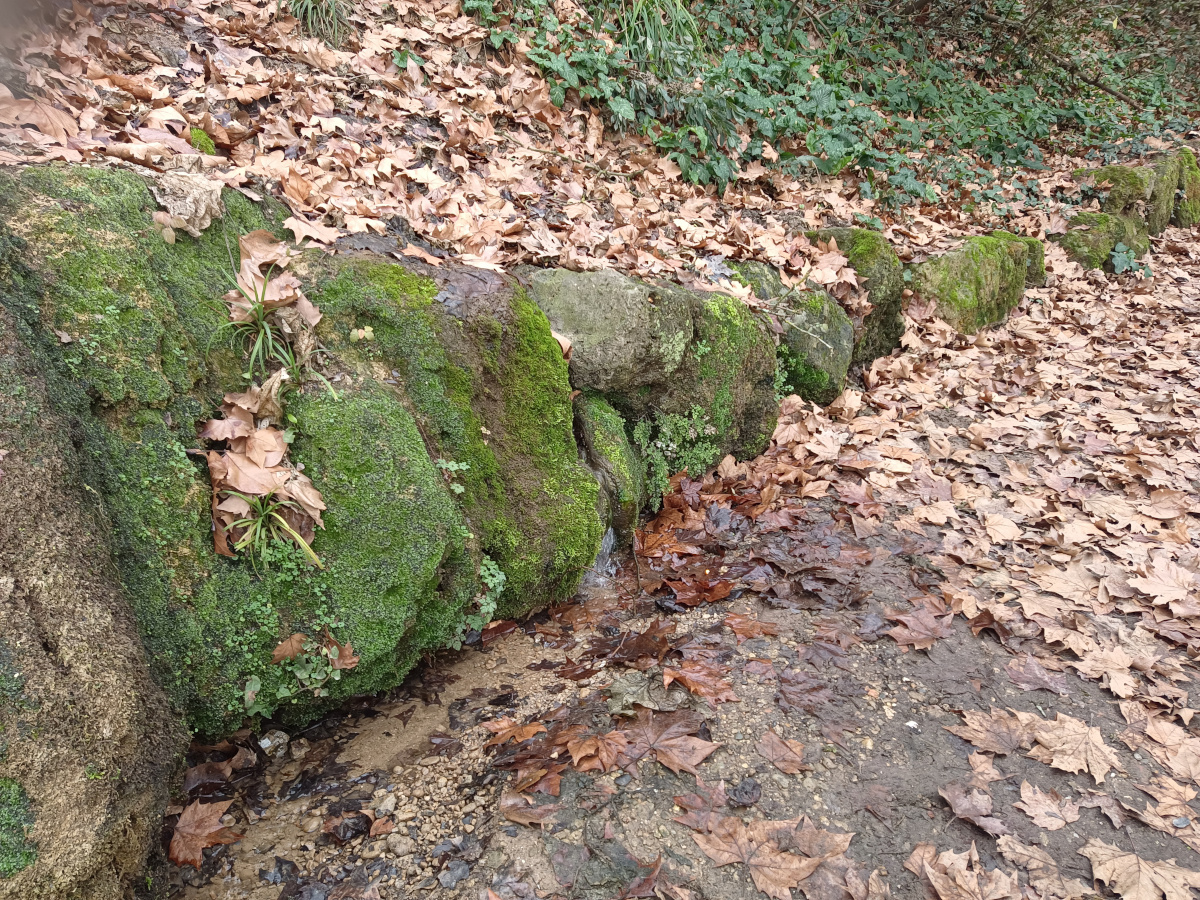
Although the abbey and the medieval part of Clairac are built on a rocky base overlooking the Lot, this feature is not the town's only asset. A precious good is hidden about 12m deep: a vast groundwater table, fed by the surrounding hillsides, ensures the survival of the inhabitants. From this table flow, below the abbey, many springs from the mill to the suburb of Maubourguet along the river.
Under the Calvin tower...
Under the Calvin tower...
... the springs flow onto the towpath.
... the springs flow onto the towpath.
Halfway up, between the abbey and these springs, the abbots' fishpond still exists: fed by another spring, it allowed these gourmets to preserve the products caught in the river.
Several fountains, built at points of resurgences, have provided vital water to the people of Clairac for centuries.
Let's start with the most famous, the Font Grand fountain.
Called Font Grand, nicknamed “Las canelles”, this fountain dates from the 16th or 17th century. Vaulted with warheads, the tank room hides a face in its keystone. The facade dated 1638 was restored in 1909 as the dedication reminds us. It is listed in the supplementary inventory of historical monuments.
To put you in the mood for bygone days, here's an extract from the novel “Des eaux de cristal” by Gabrielle Janniard* published in 1912.
Chapter 14, page 107
« La fontaine est captive au flanc d’un coteau que Clairac couvre du lacis de ses rues.
Un fronton de pierre y porte l’inscription savante : « Et anni et undæ » et la date 1638 qui montre l’ancienneté de la petite ville aux ressources de la vie civilisée. L’eau prisonnière chante dans un bassin où des femmes du peuple lavent le linge, tandis que d’autres emplissent aux cannelles de limpide cristal leurs cruchons de grès jaune et vert.
La fontaine et le bord du Lot où les laveuses s’installent également sont le lieu d’élection des racontars, des calomnies, aussi de ces gaies inventions gasconnes dont ceux qui les trouvent sont les premiers à s’éjouir. Mais la fontaine, le long d’une rue fréquentée, fournit plus de matières aux réflexions et aux bavardages que les rives du Lot. On s’y sent au cœur de la ville, parmi les intérêts qui l’agitent et dans le mouvement de sa population, au lieu d’être à l’écart, en face du ciel et de l’eau. »
* Gabrielle Janniard, daughter of the hatter Pierre Janniard, born in 1866 died in 1961.
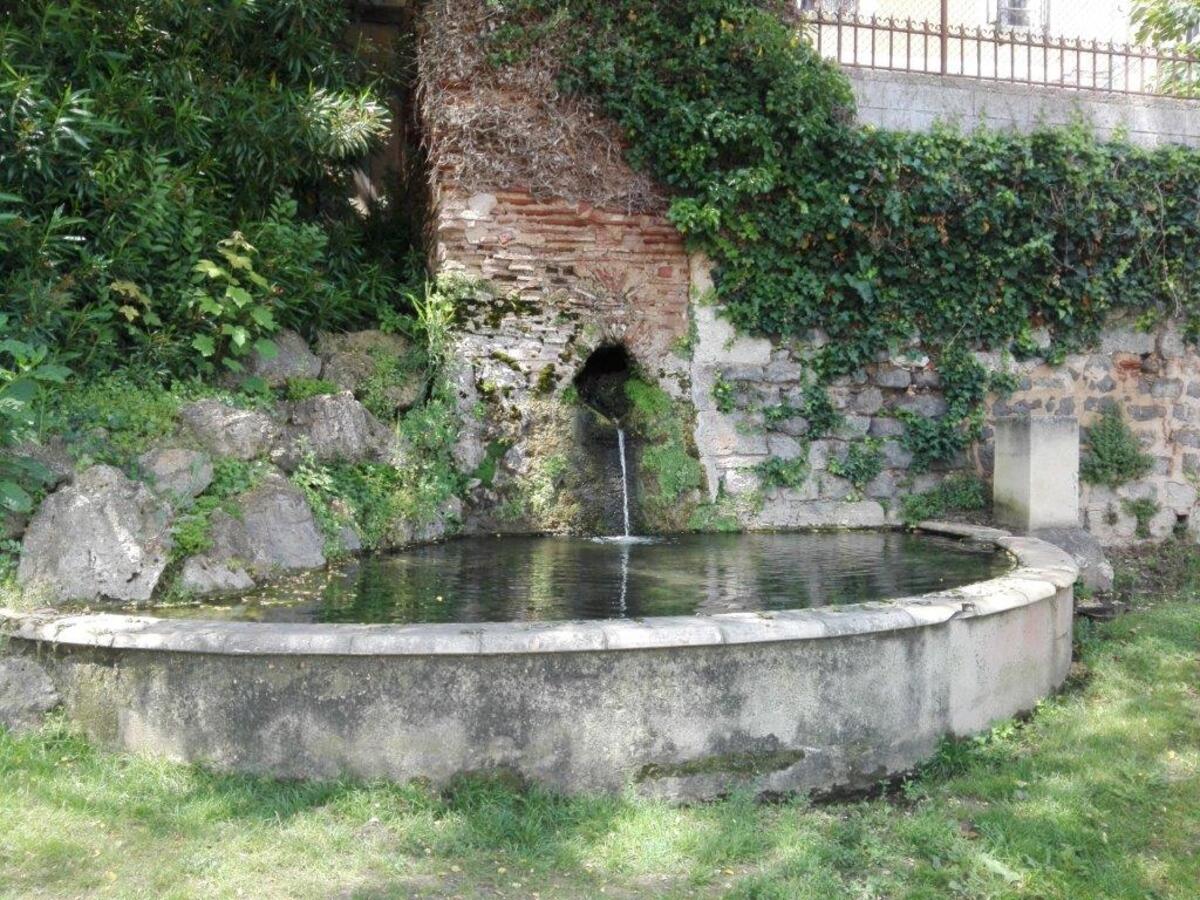
Laguehay-Lacoste fountain source (named after the mayor of Clairac during the Revolution); the copper plate was recently stolen.
Laguehay-Lacoste fountain source (named after the mayor of Clairac during the Revolution); the copper plate was recently stolen.
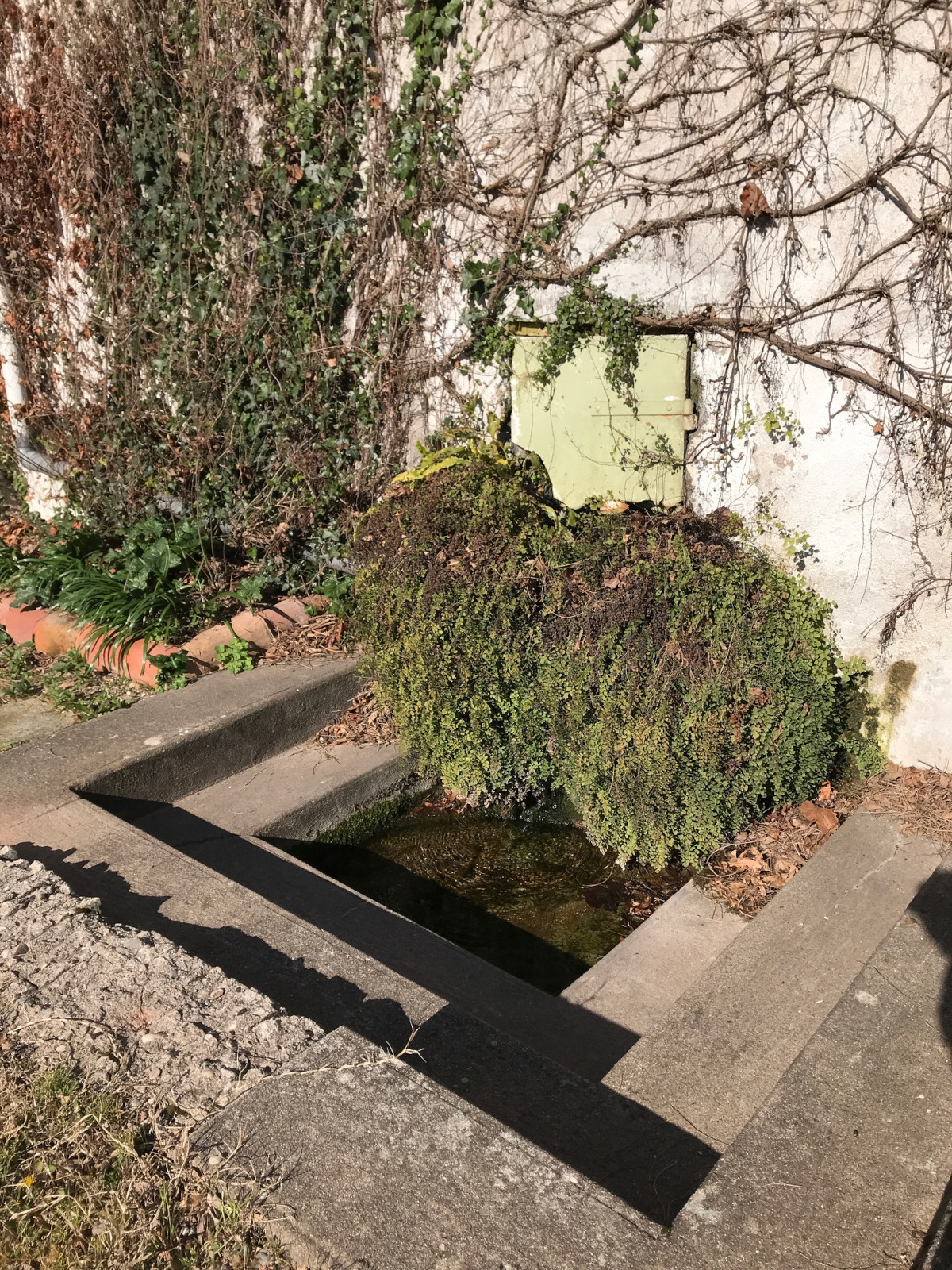
Laguehay-Lacoste fountain source, with its plaque.
Laguehay-Lacoste fountain source, with its plaque.
Source fountain of the captaincy.
Source fountain of the captaincy.
The aptly named Rue des Sources...
The aptly named Rue des Sources...
Source fountain of the Bretons on the quay of the Republic.
Source fountain of the Bretons on the quay of the Republic.
Fountain source of Vivens.
Fountain source of Vivens.
Source fountain of the castle of Larouy.
Source fountain of the castle of Larouy.
Spring fountain called “Madame Cottin”, Sinange castle. It was so named because tradition says that it was there that the famous novelist Sophie Cottin (1770-1807), originally from Tonneins, came to draw inspiration when she visited her cousin Laffargue, who lived in the hamlet of Barutet.
The spring of the wash house of La Molère.
The spring of the wash house of La Molère.
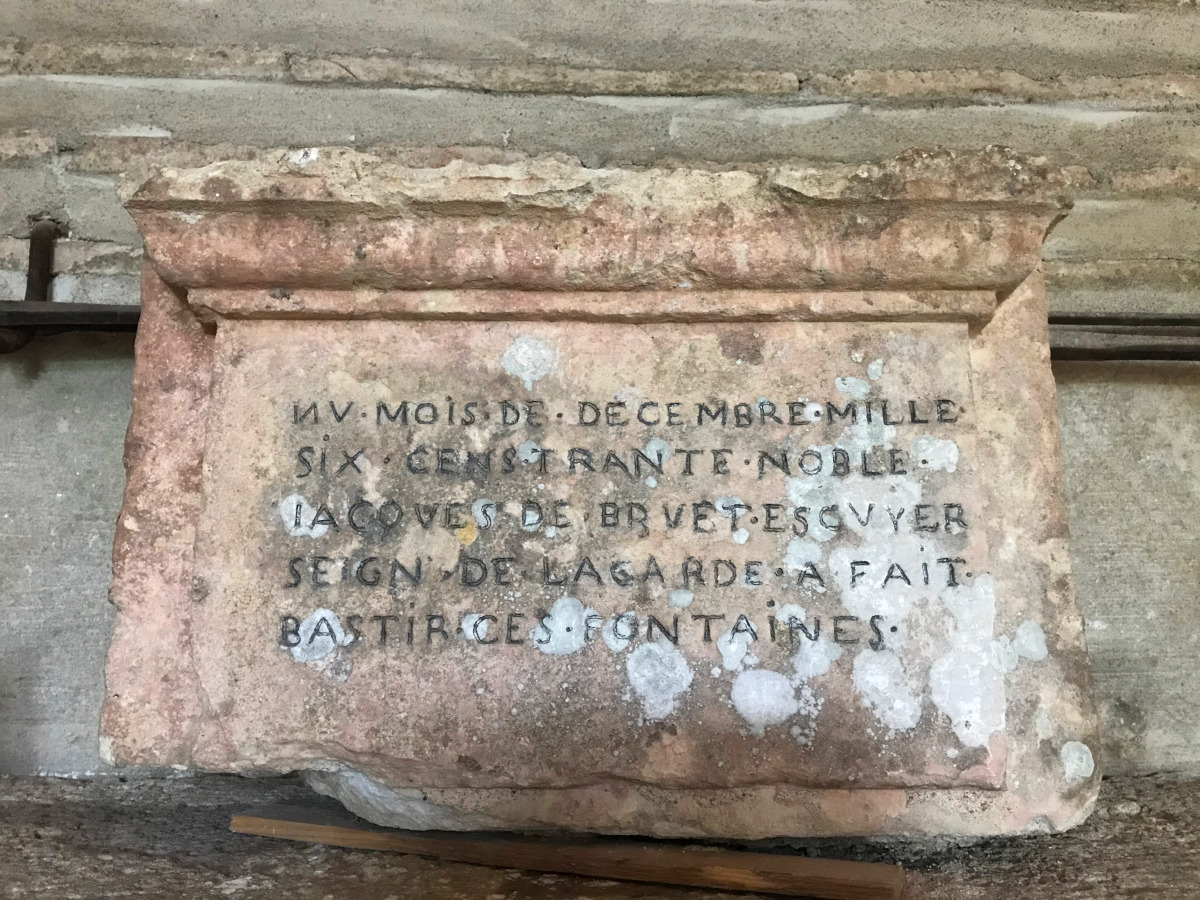
Dedication plaque of the fountain of the Château de Lagarde.
Dedication plaque of the fountain of the Château de Lagarde.
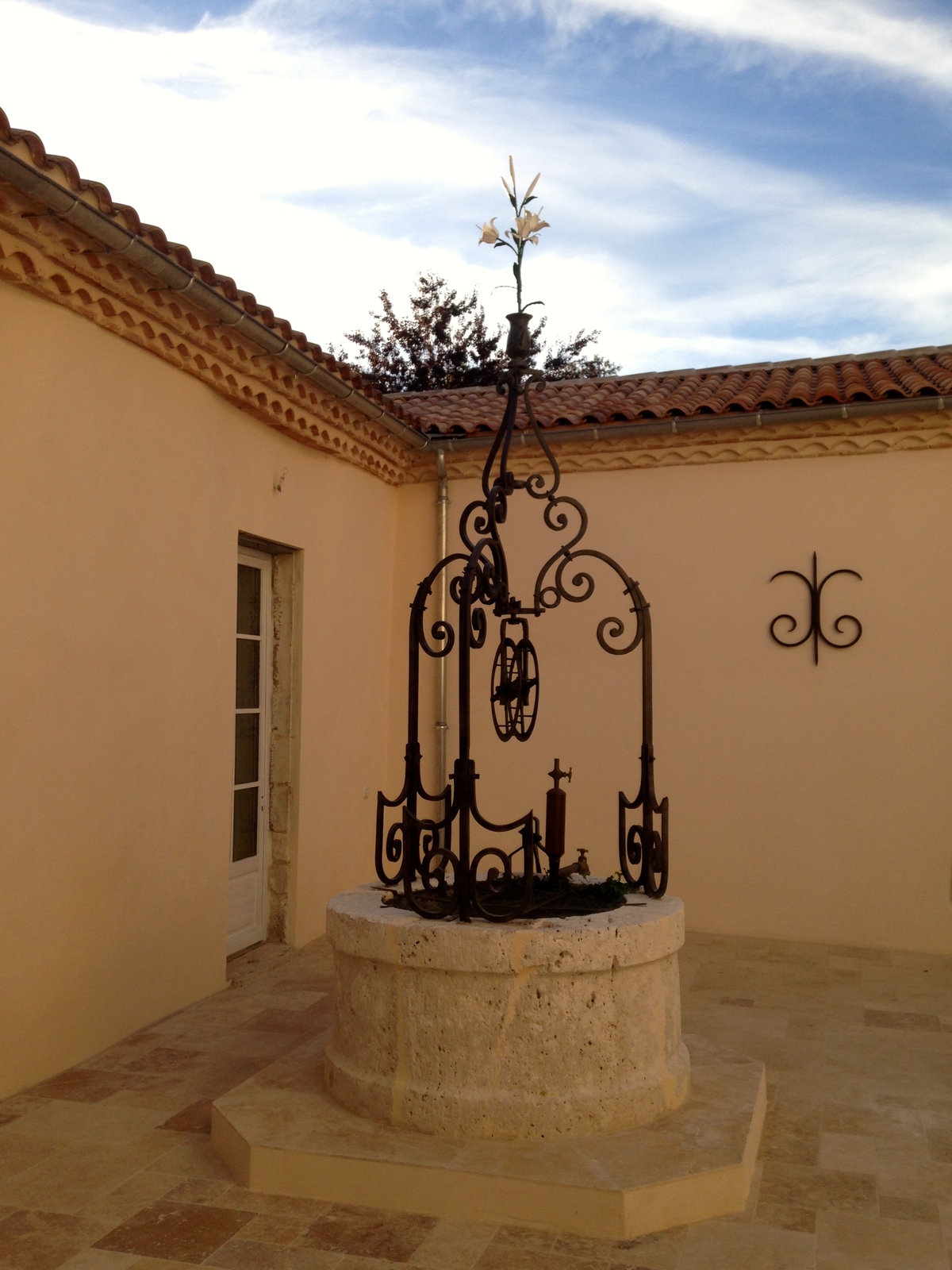
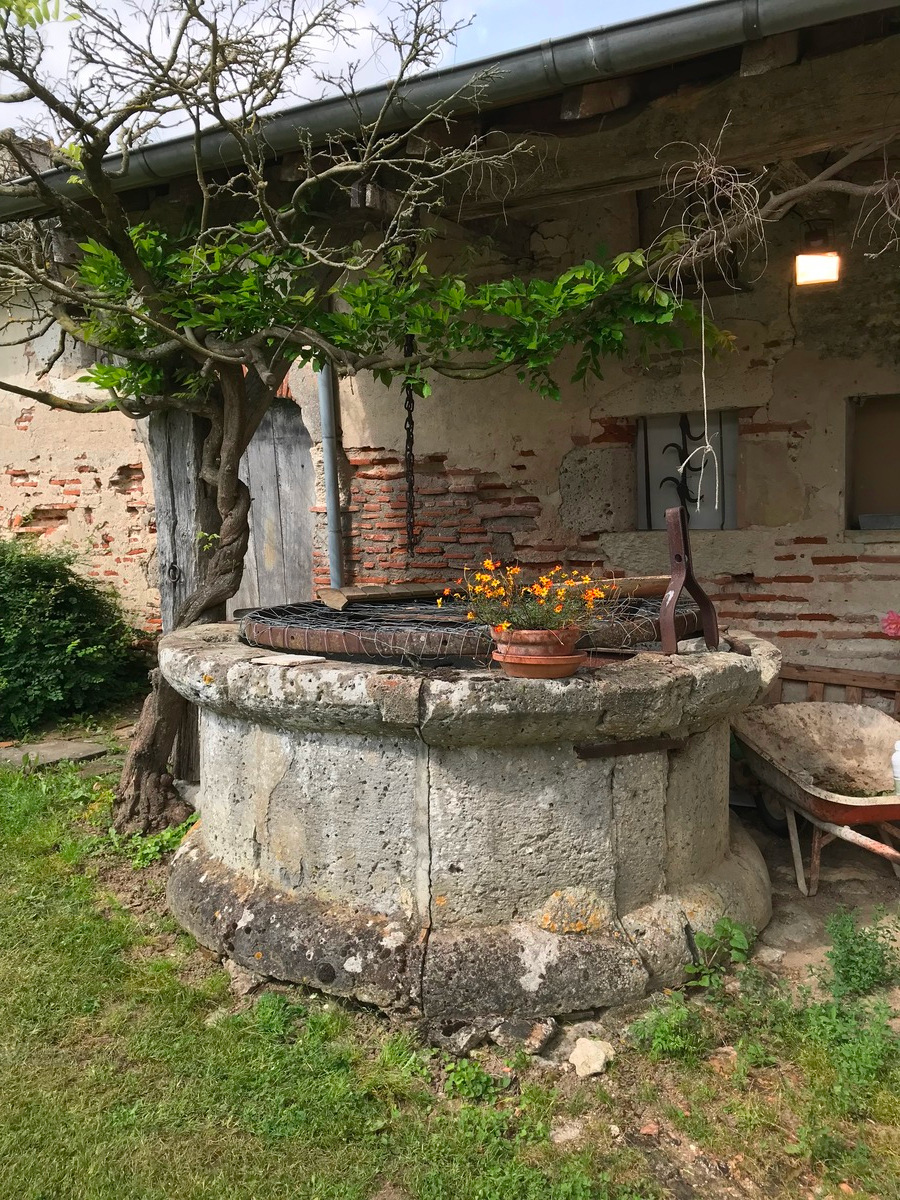
Outside the town, each house had its well. In the village only the mansions had their own.
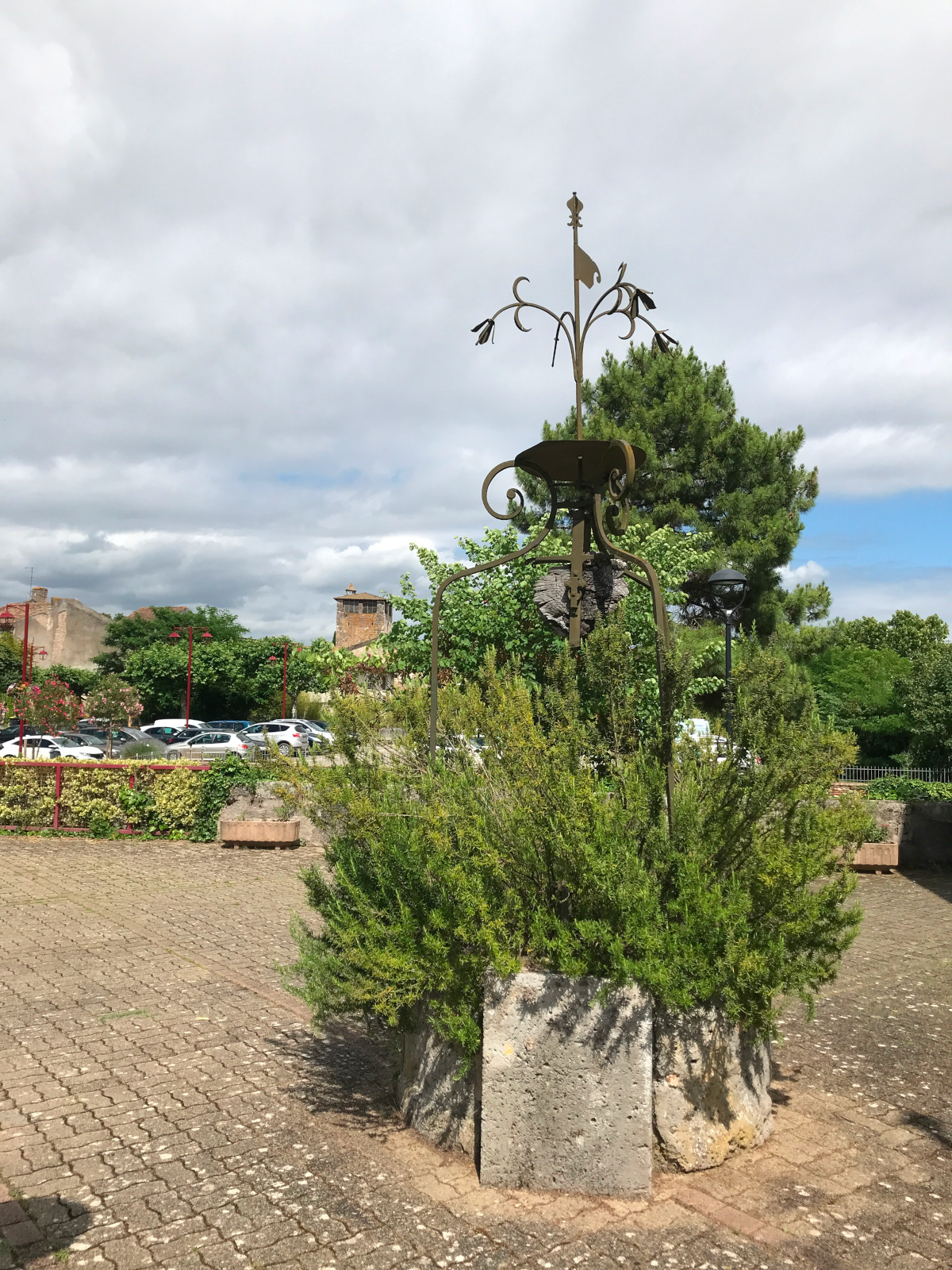
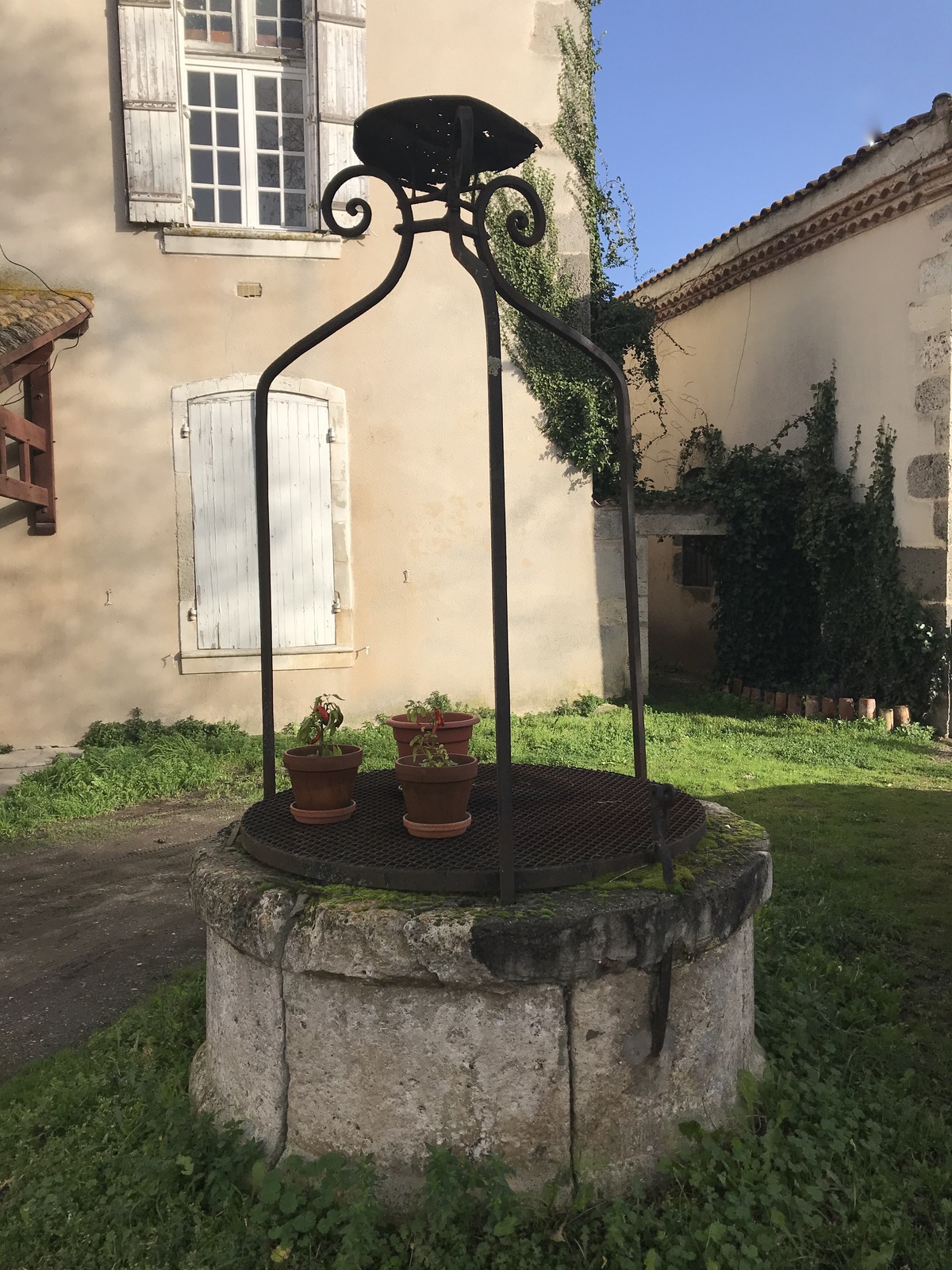
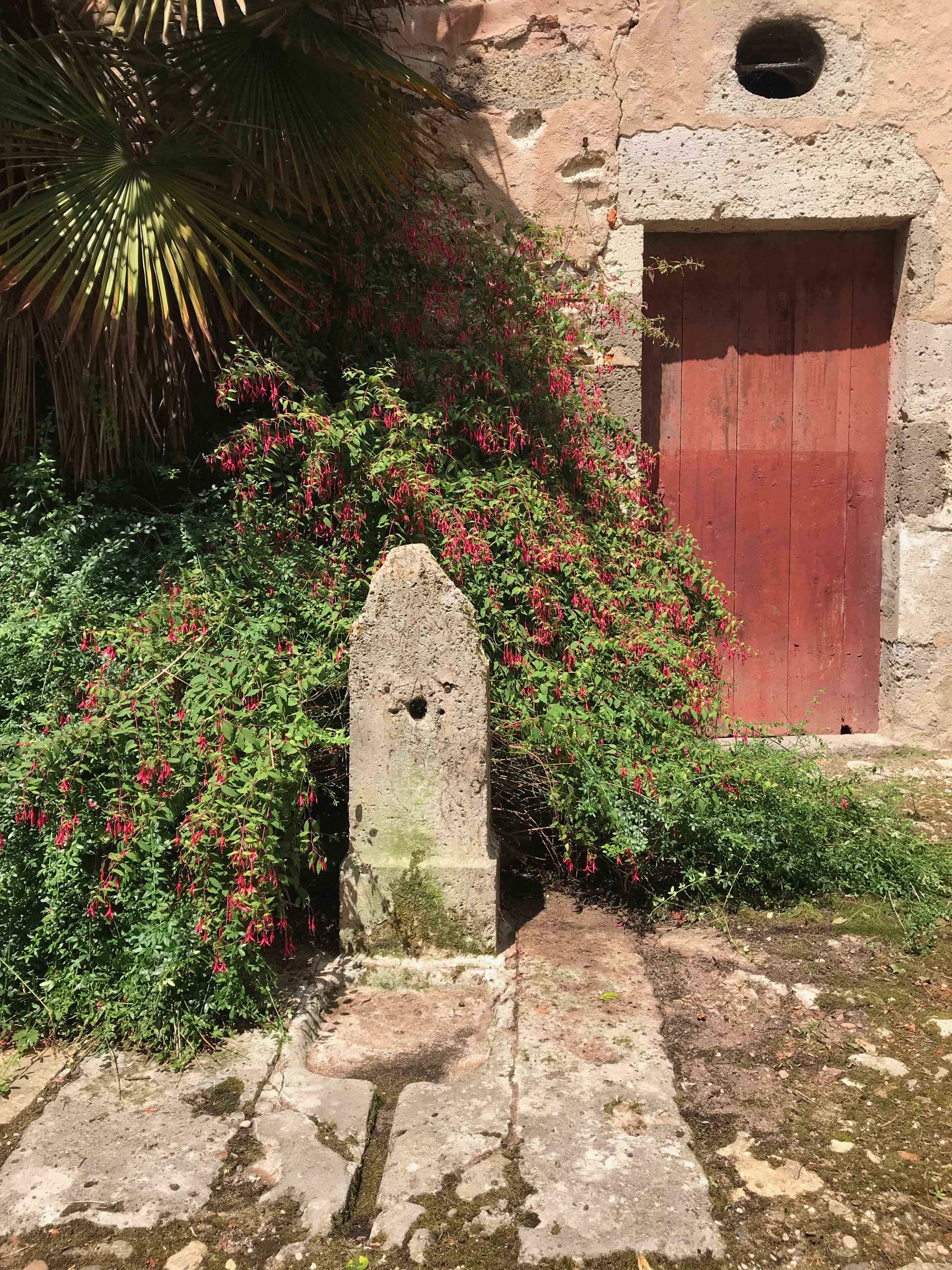
Sinange well.
Sinange well.
Well of Dimeuilh.
Well of Dimeuilh.
Well of the former Capuchin convent, now the Capuchin Ehpad.
Well of the former Capuchin convent, now the Capuchin Ehpad.
Well of the former Maleprade mansion, rue Puzoque.
Well of the former Maleprade mansion, rue Puzoque.
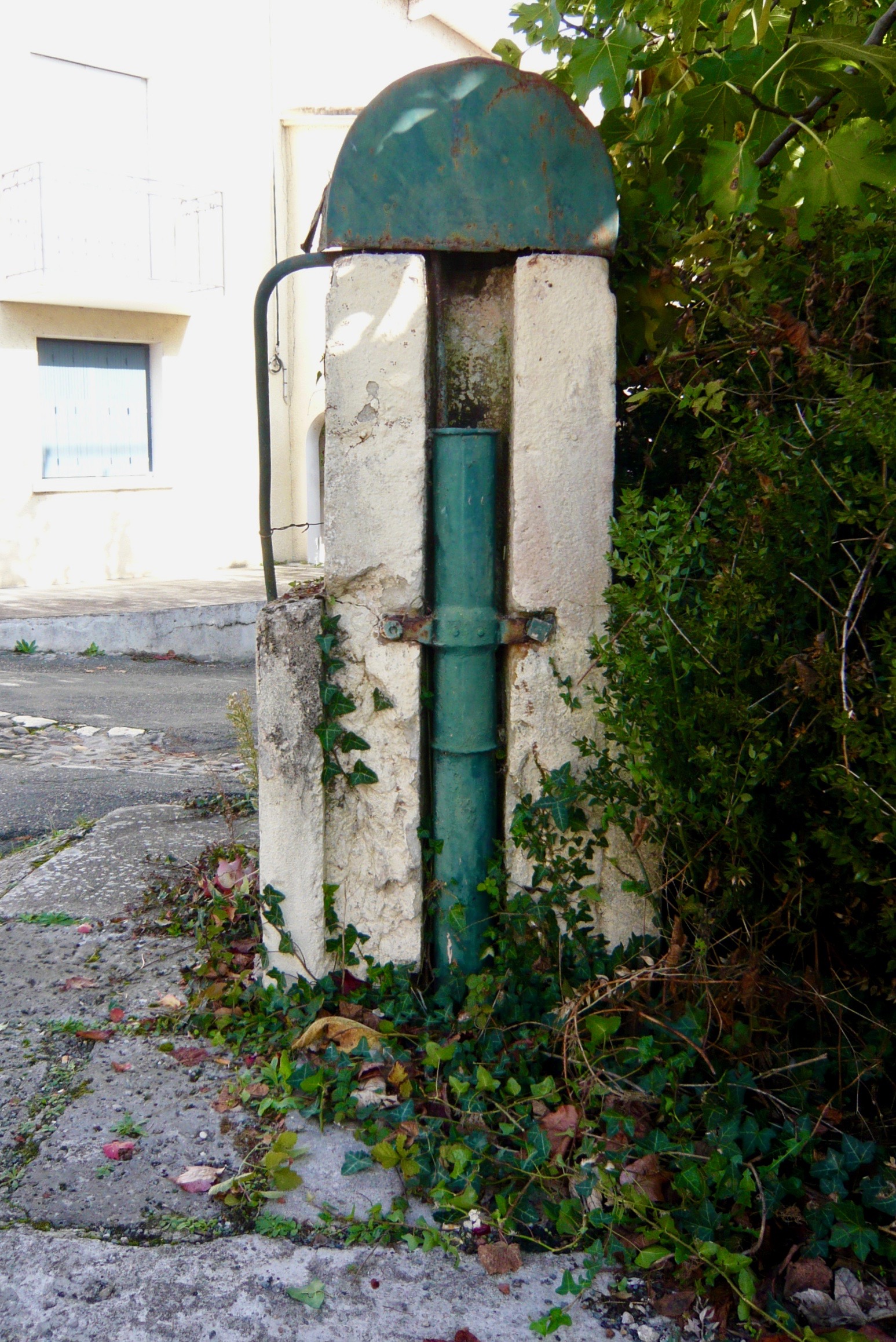
There were many pumps in the streets where everyone came to get their water.
Pump in the rue de La Fosse.
Pump in the rue de La Fosse.
Pump in Place Théophile de Viau.
Pump in Place Théophile de Viau.
Pump of the impasse du Clocher, formerly impasse Benjmain-Franklin.
Pump of the impasse du Clocher, formerly impasse Benjmain-Franklin.
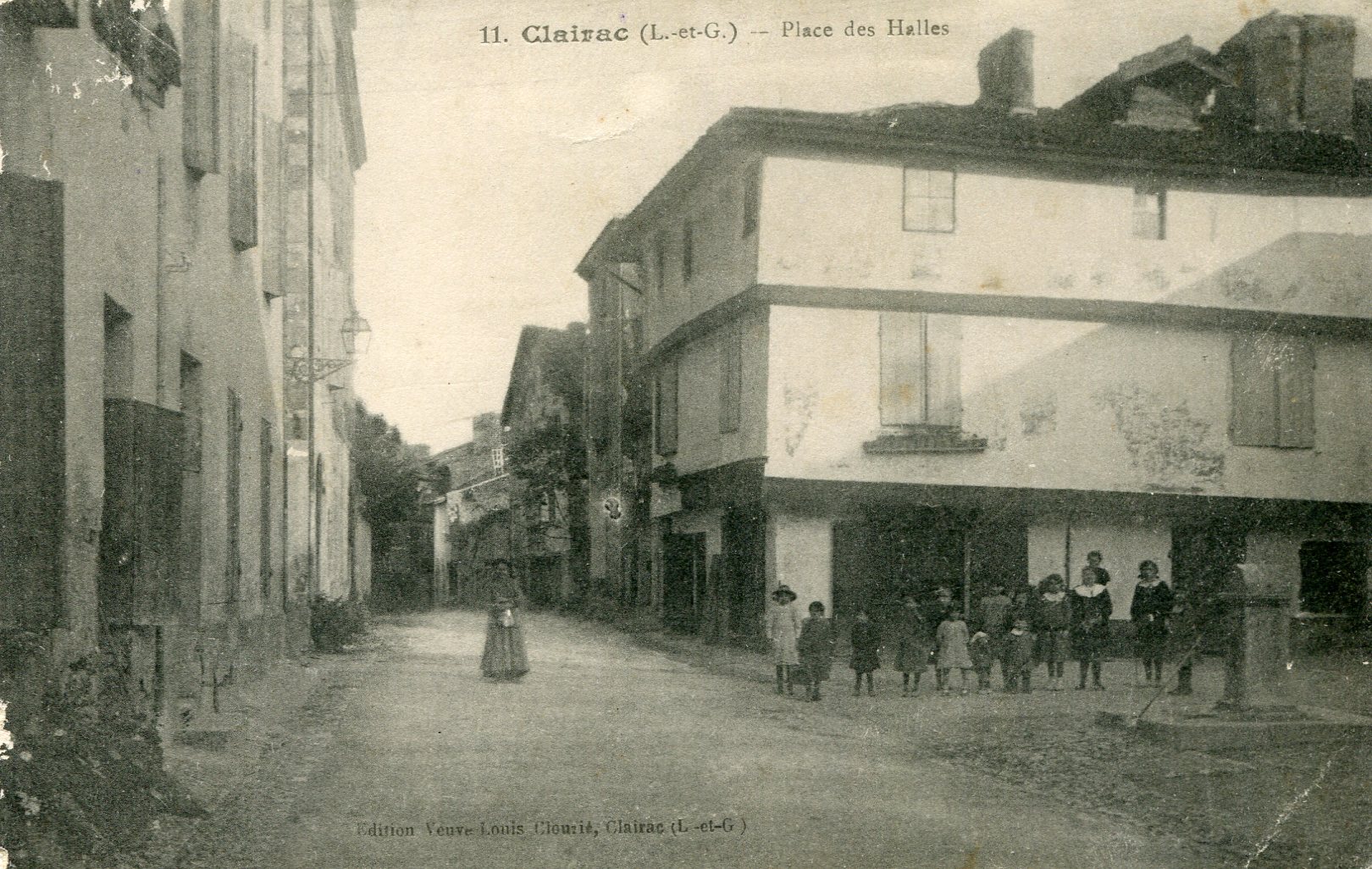
The Serres square pump.
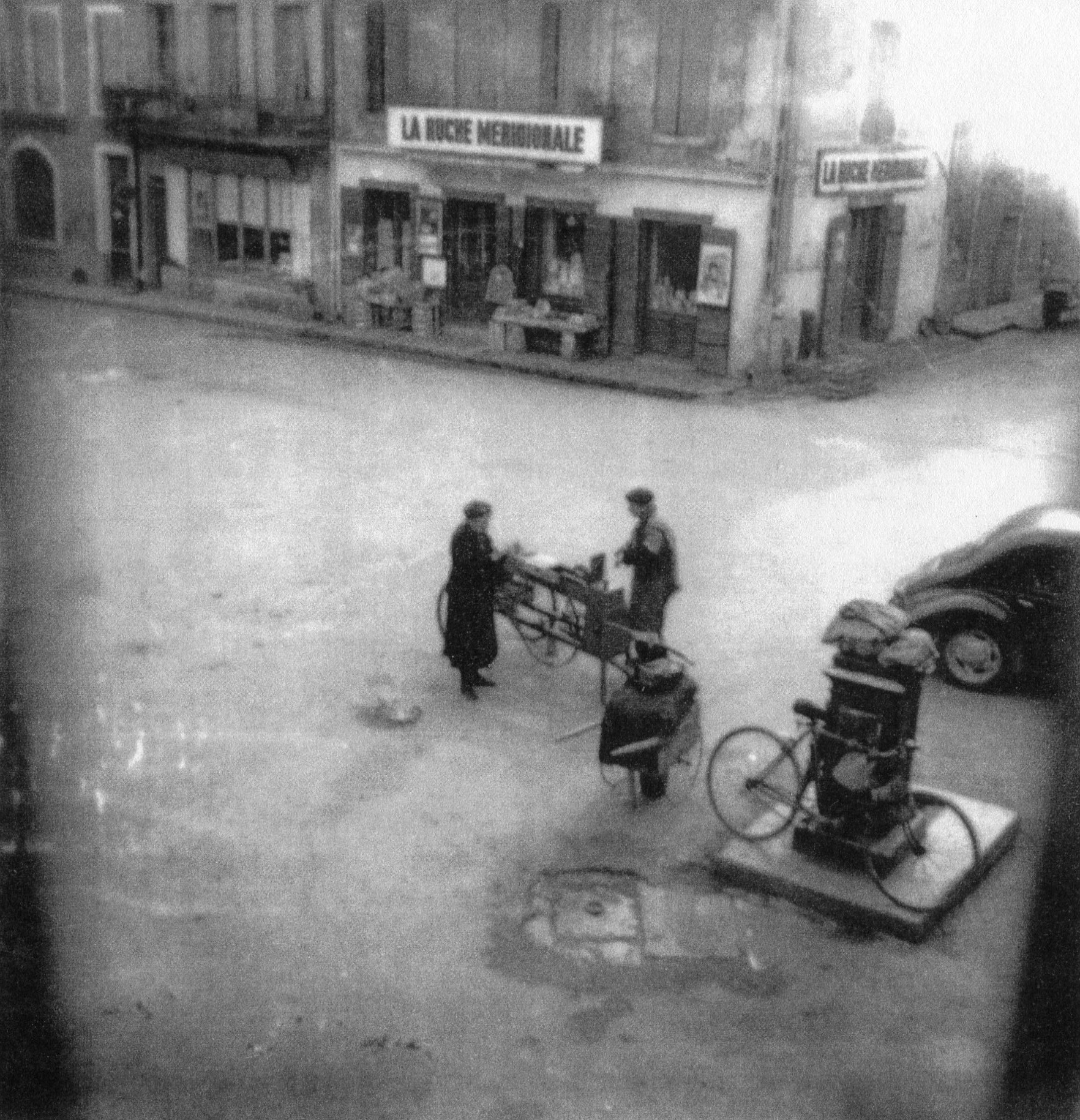
The traveling grinder in front of the pump in the 1950s.
The traveling grinder in front of the pump in the 1950s.
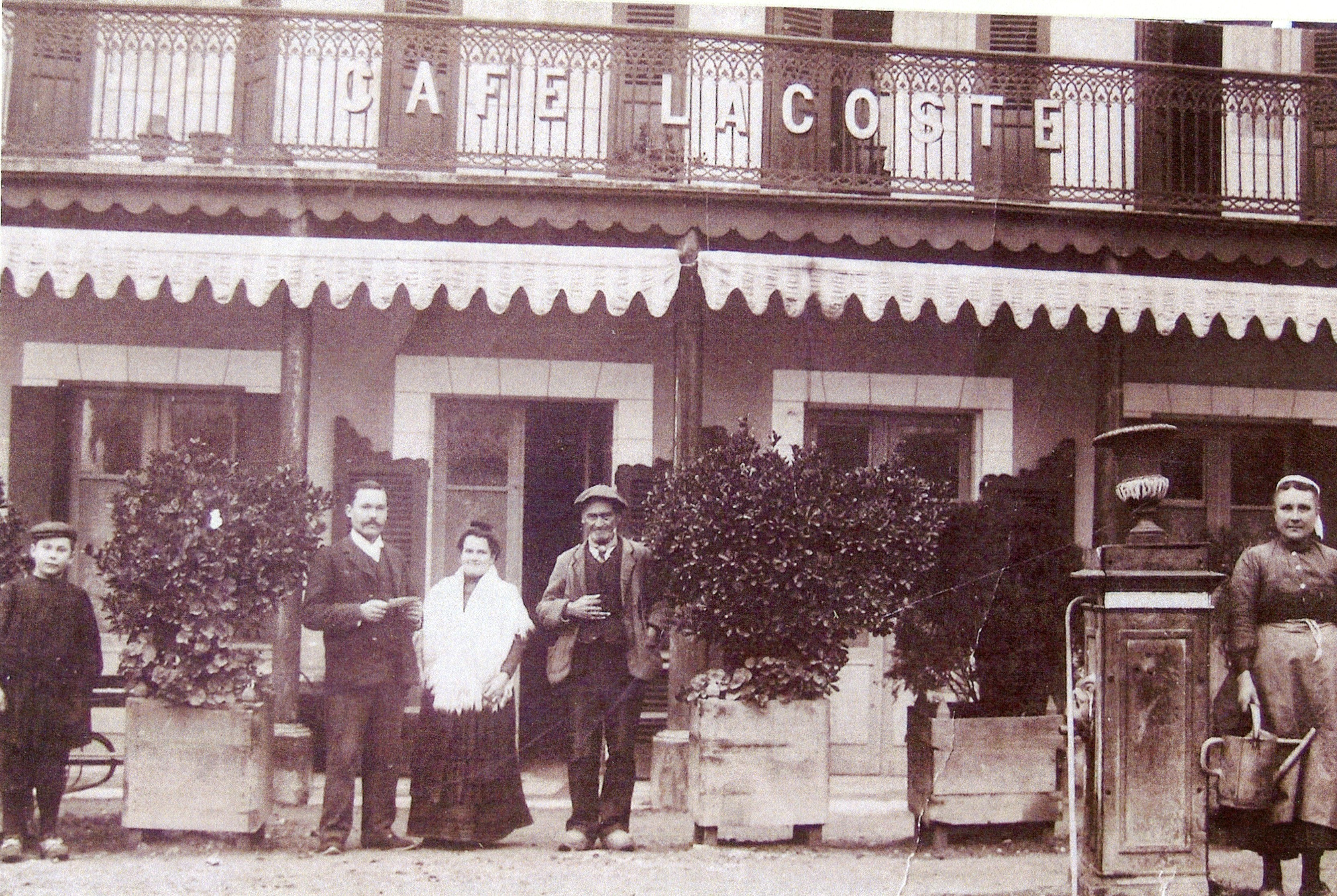
1915. The pump seems to stand guard in front of the Lacoste café.
1915. The pump seems to stand guard in front of the Lacoste café.
That of the place Aristide Briand.
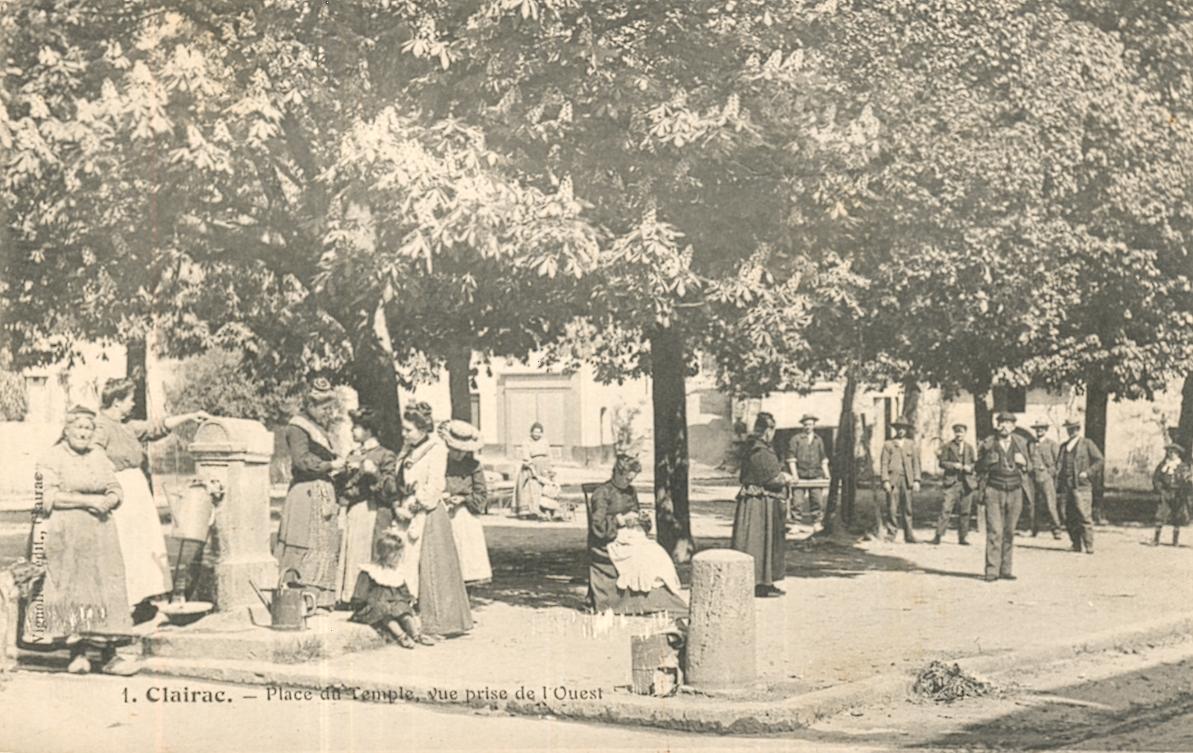
Around the 1900s, fetching water turned into lively discussion.
Around the 1900s, fetching water turned into lively discussion.
The pump was still in place in the early 1960s.
The pump was still in place in the early 1960s.
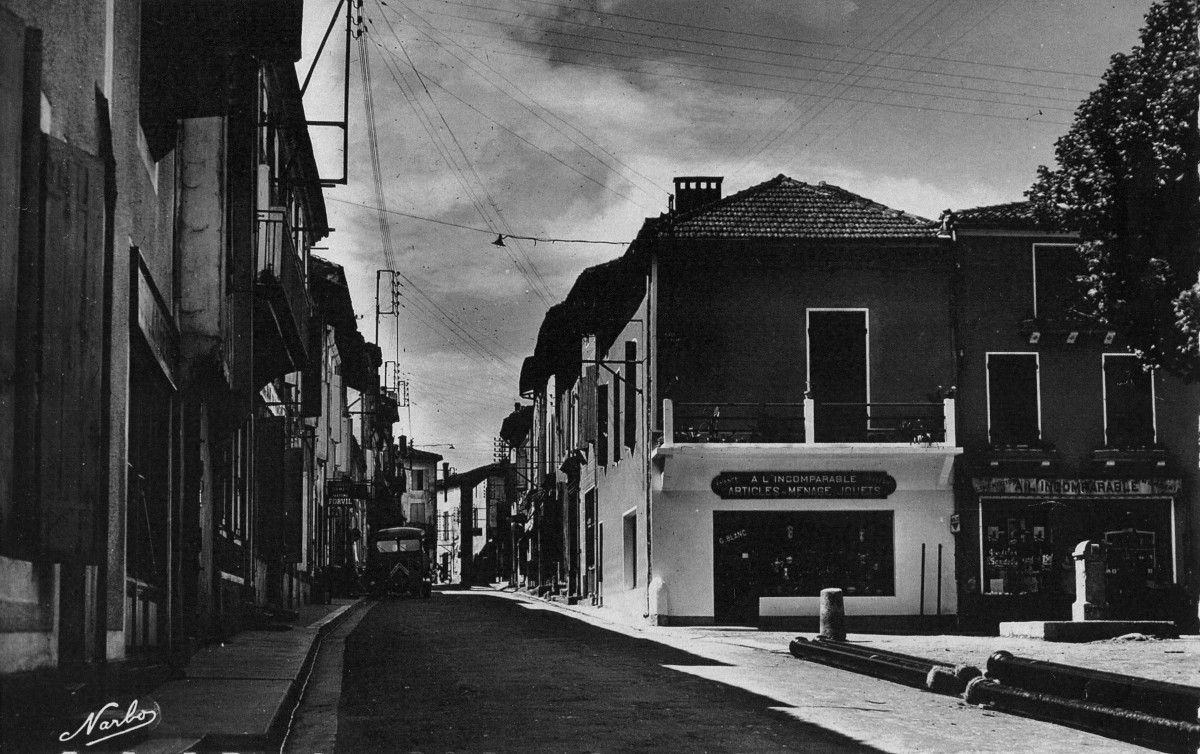
The pumps in rue Saffin and place Viçose.
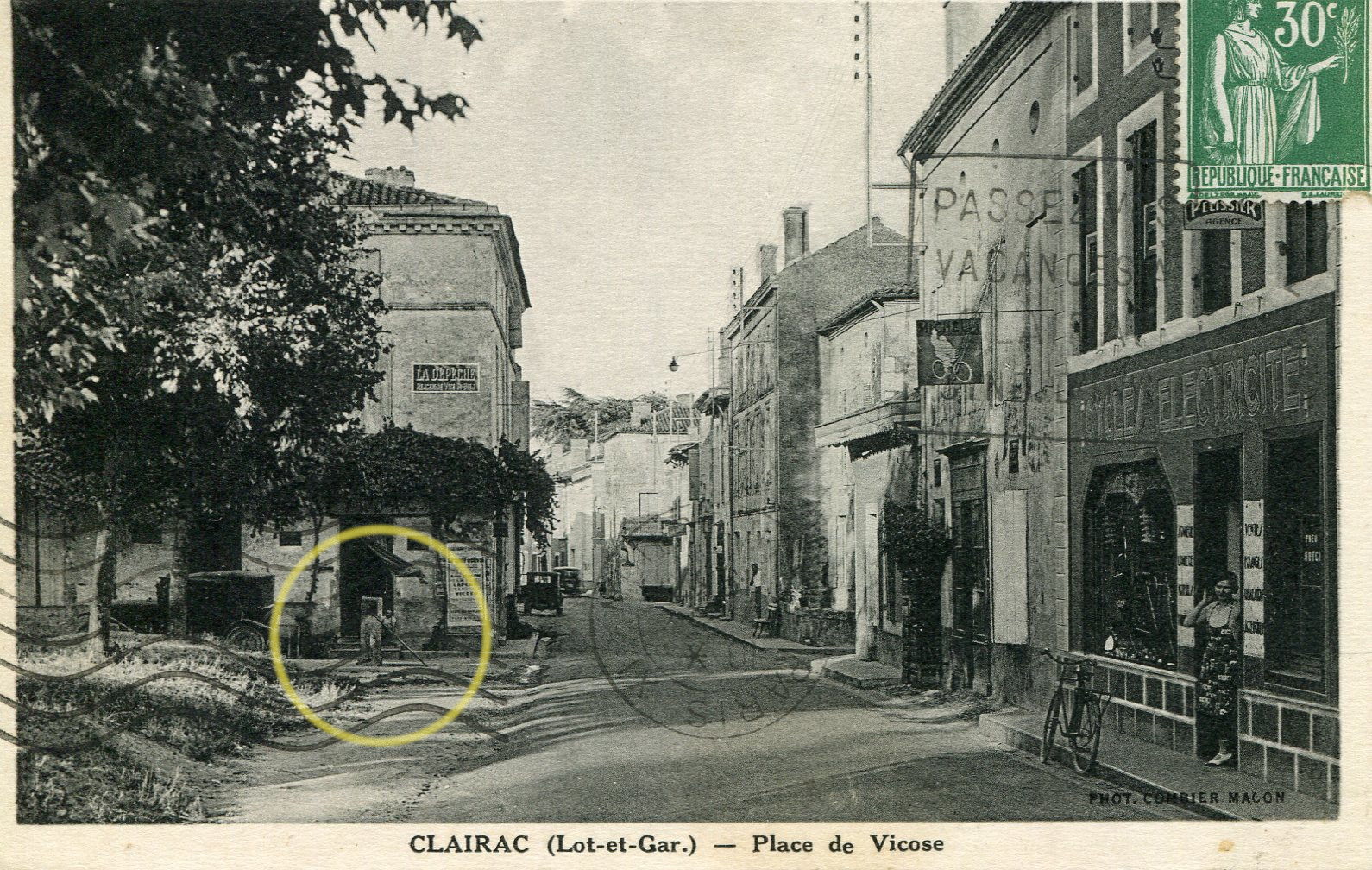
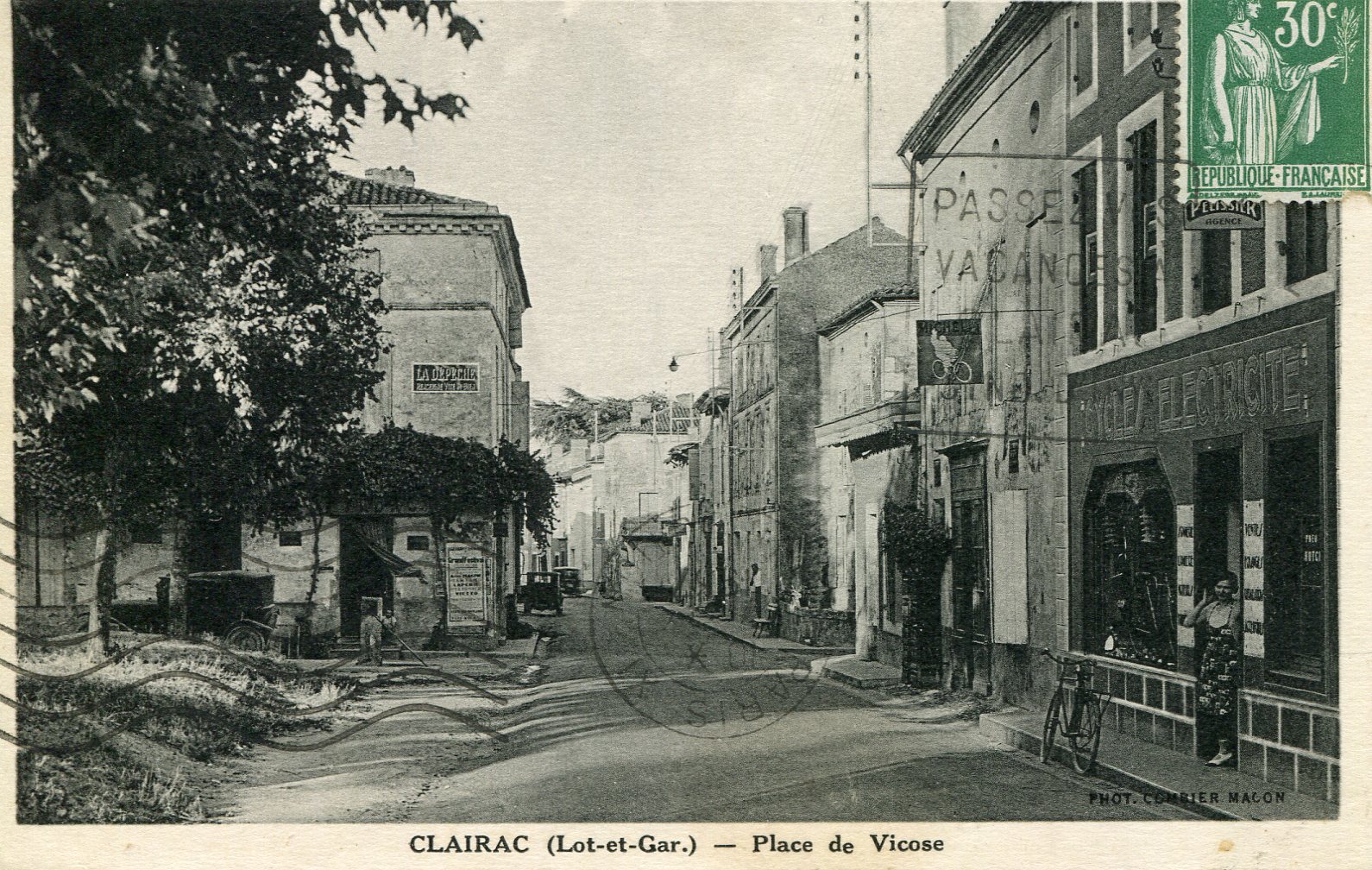
Between the two wars, the Lux cinema did not yet exist but the pump was in place.
Between the two wars, the Lux cinema did not yet exist but the pump was in place.
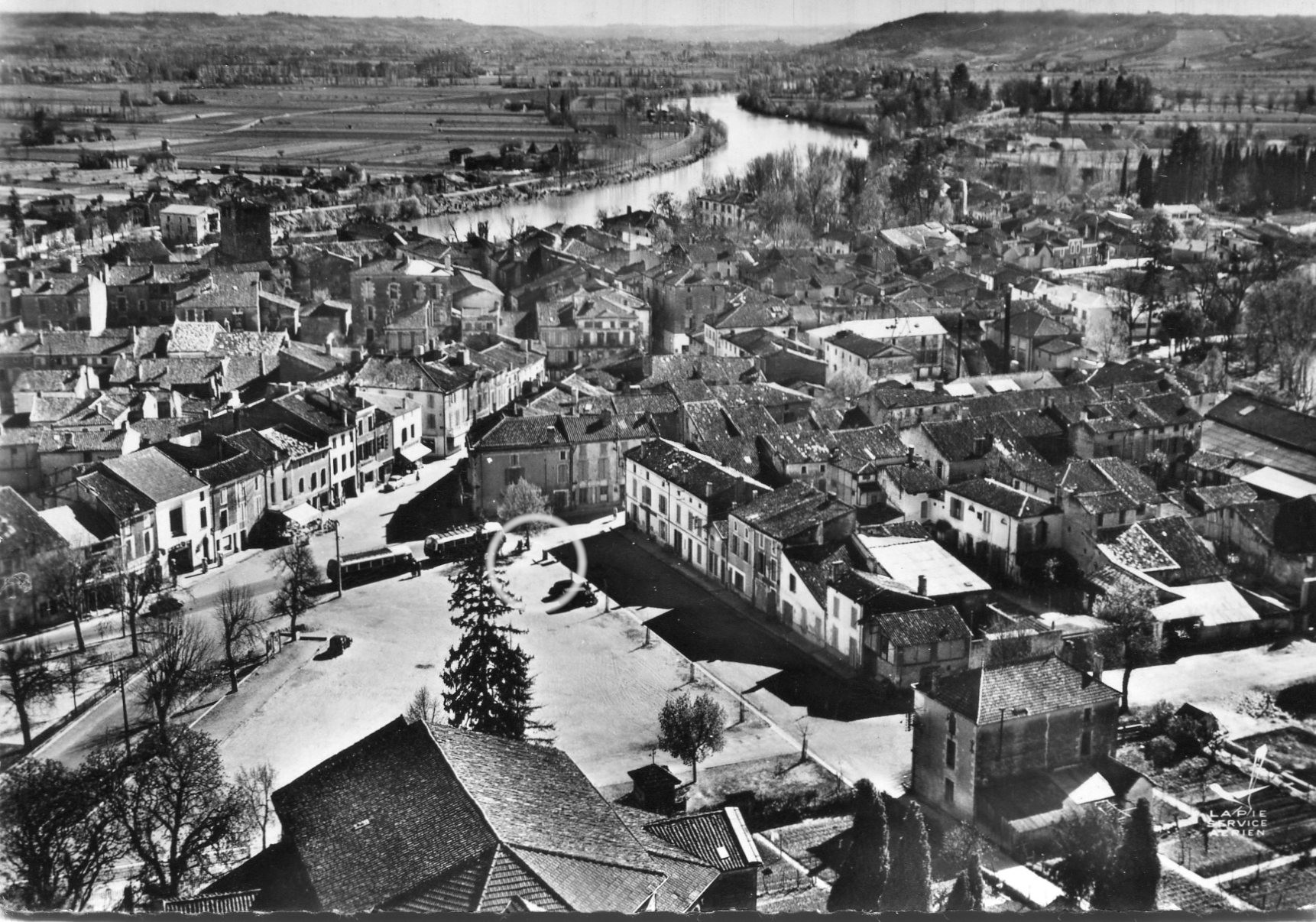
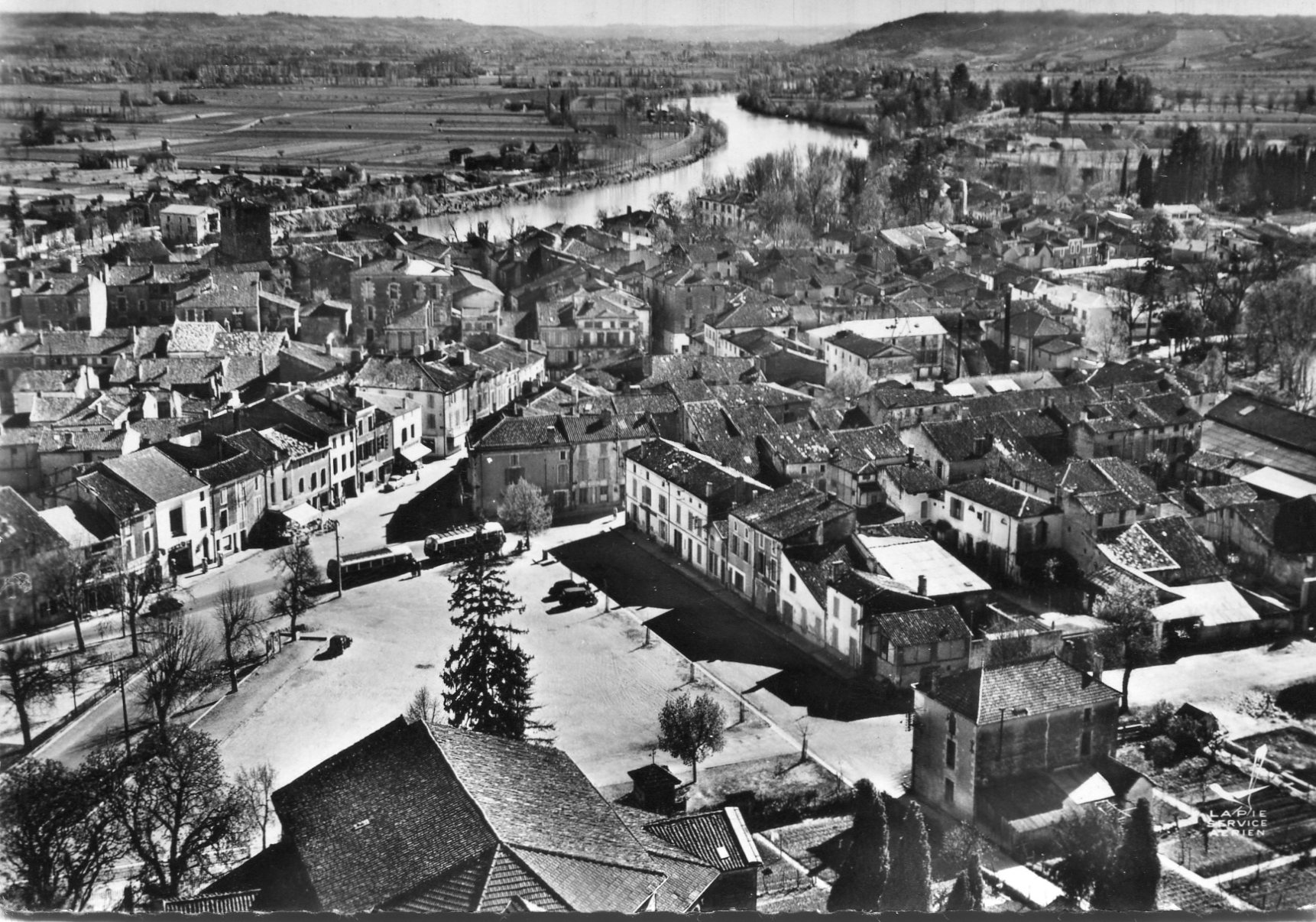
Hardly visible in this aerial photo, the pump is there, opposite the post office and in front of the bus stop.
Hardly visible in this aerial photo, the pump is there, opposite the post office and in front of the bus stop.
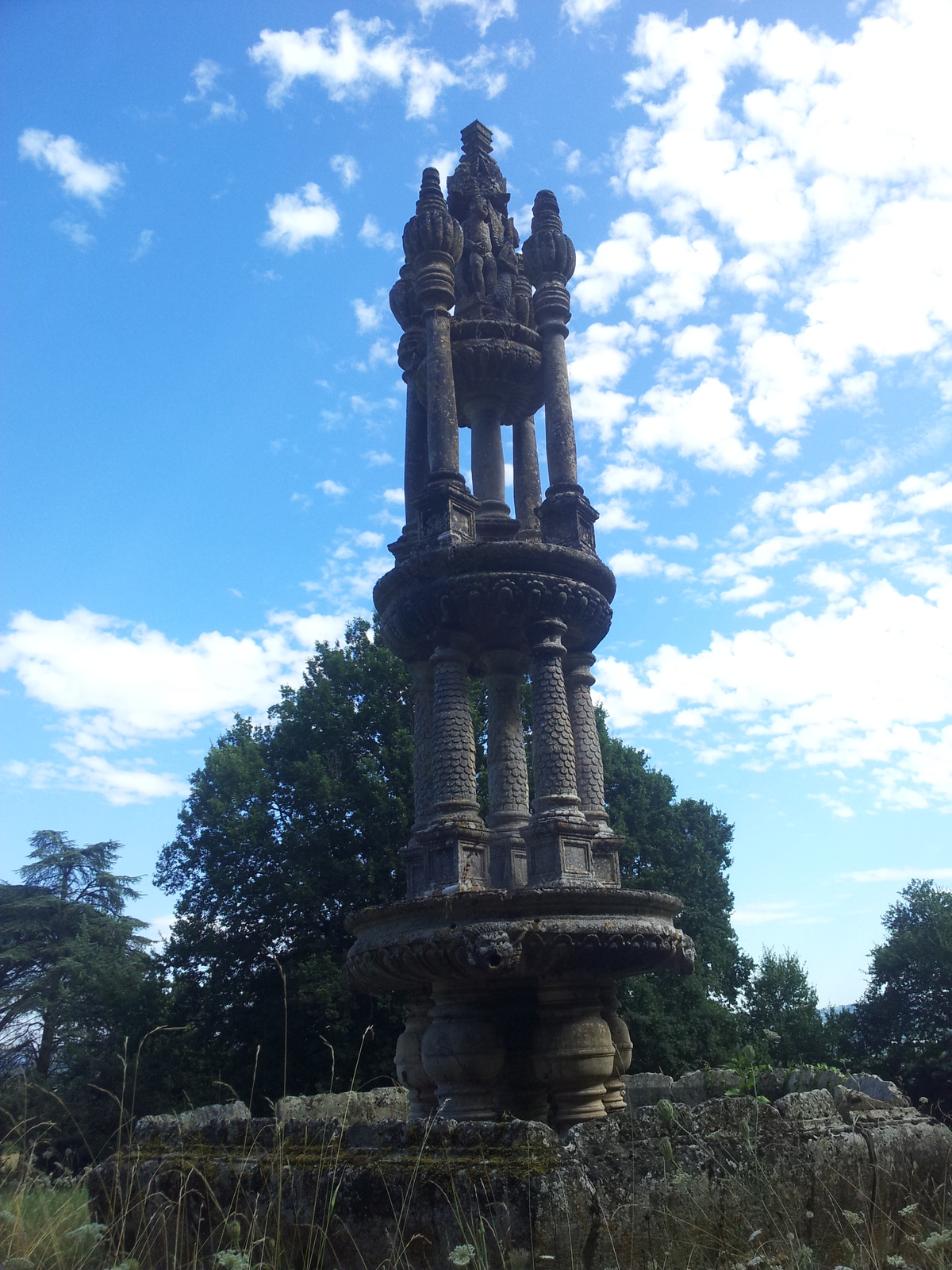
Finally, we cannot ignore the existence of the Roche fountain, a Renaissance fountain attributed to Nicolas Rambourg, even if Clairacaise water has never flowed on its stones.
Fountain moved from the Château de Sauvebœuf in 1926, classified as a historic monument in 2012.