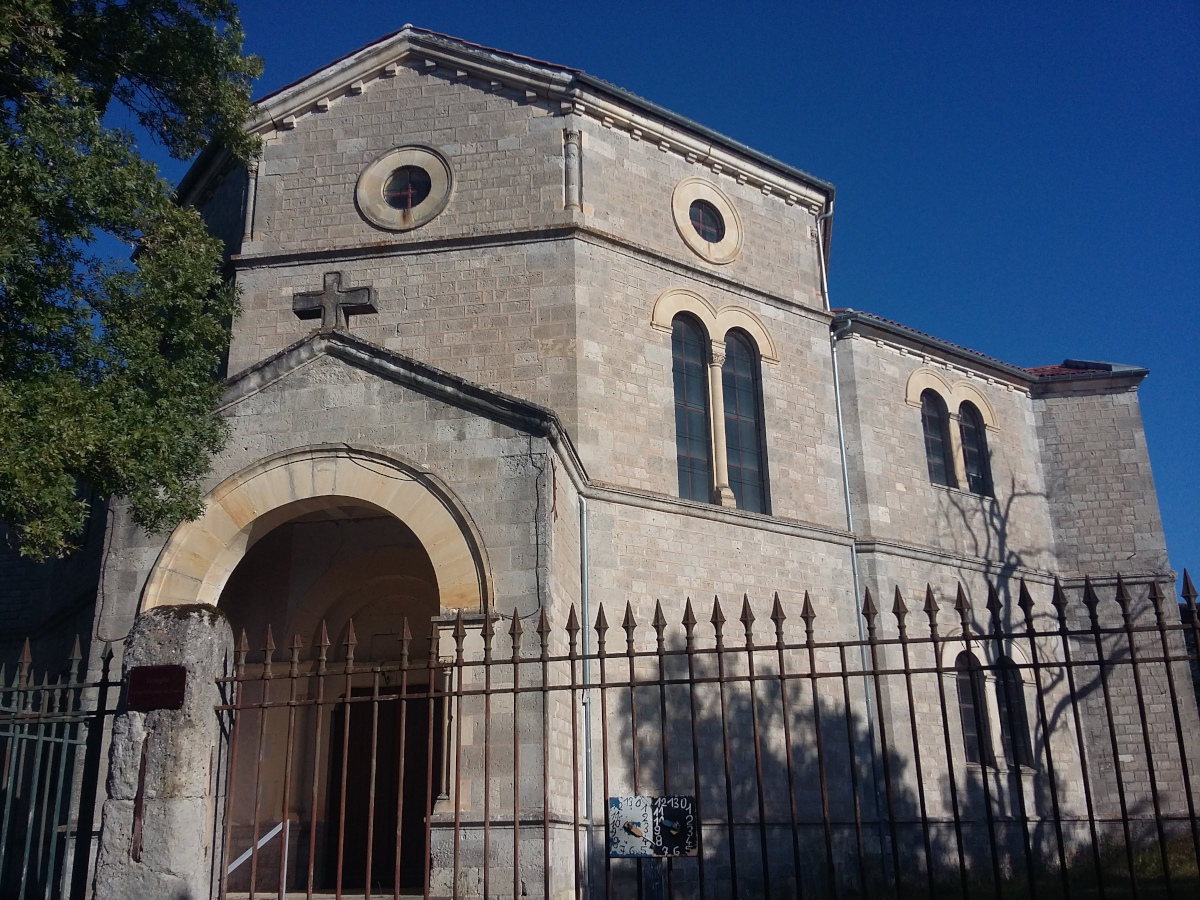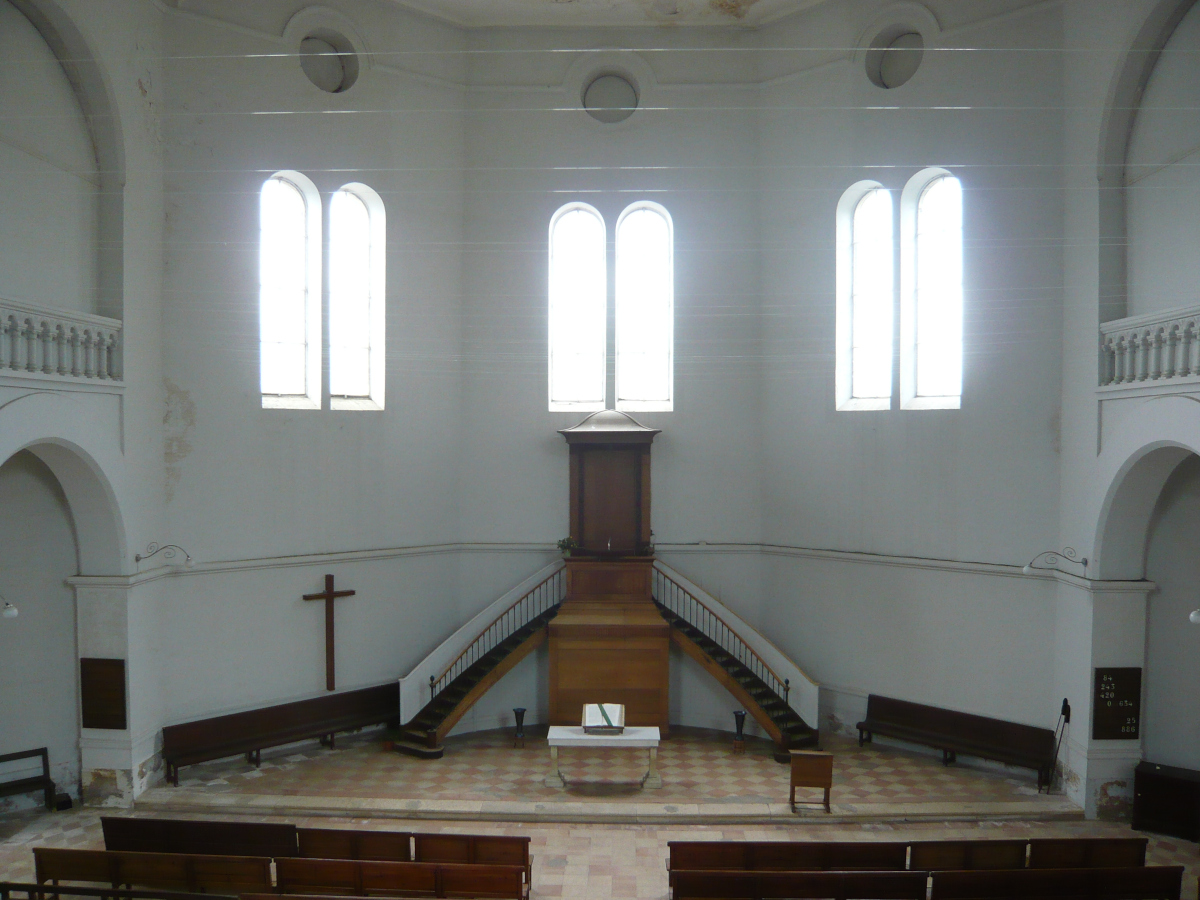
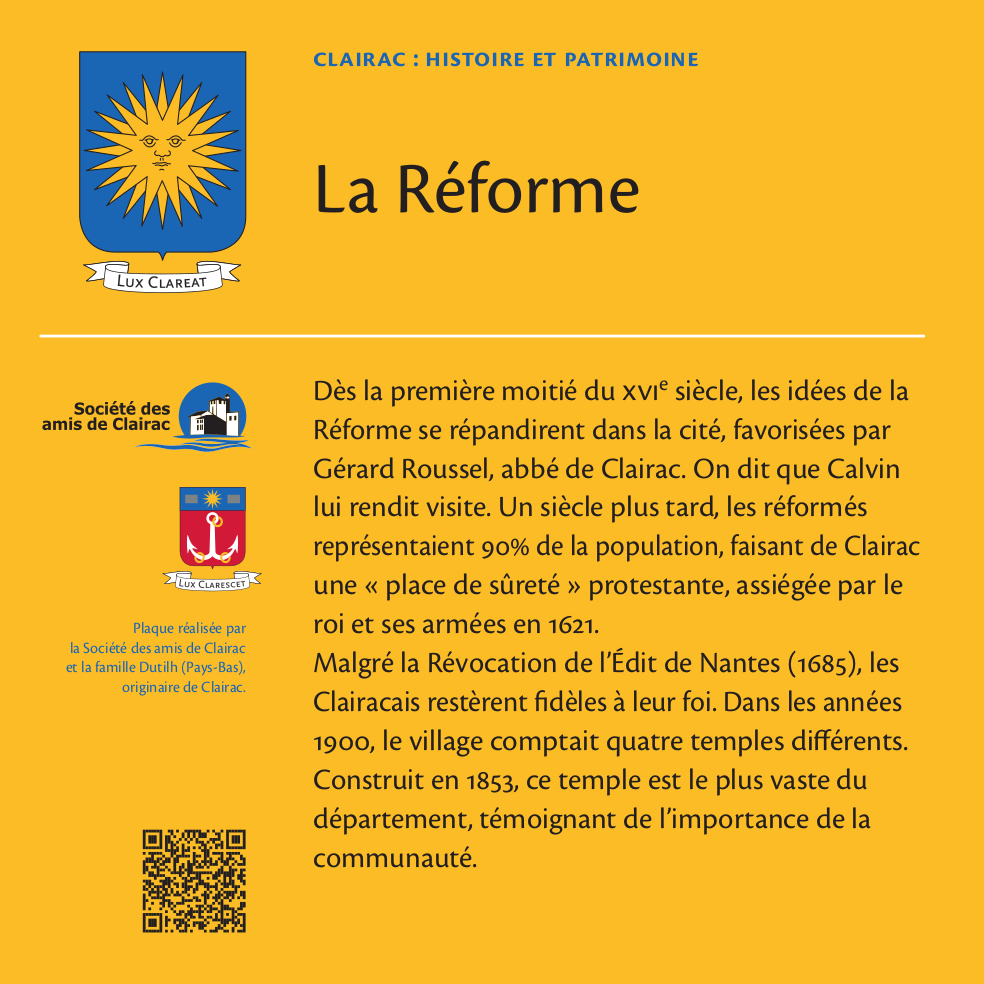
Despite the Revocation of the Edict of Nantes (1685), the Clairacais remained faithful to their faith. In the 1900s, the village had four different temples.
Built in 1853, this temple is the largest in the department, testifying to the importance of the community.
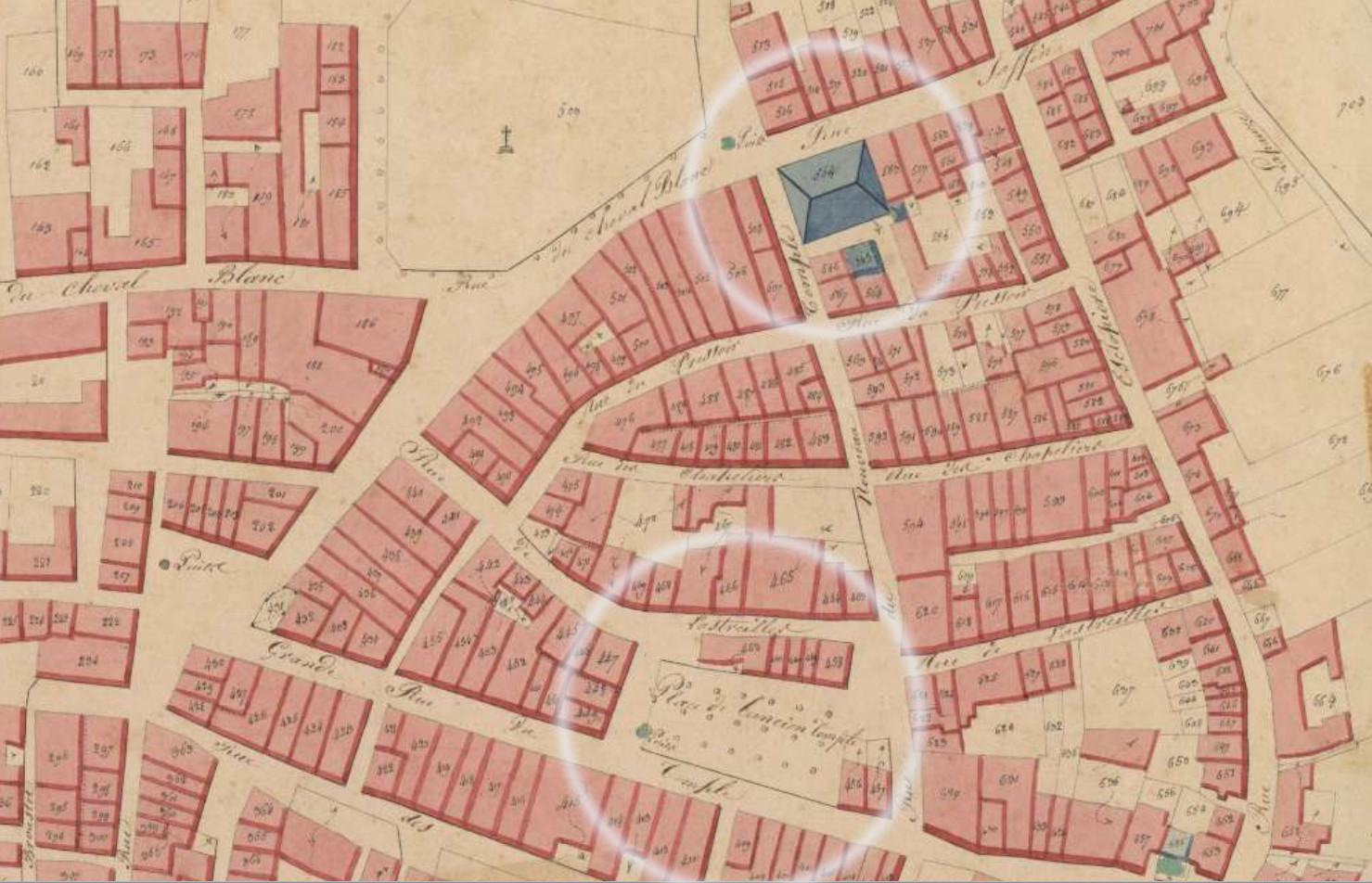
On the current Place Aristide Briand (then called Place du Temple) stood the first temple of Clairac, built at the beginning of the 16th century.
On October 18, 1685, the very day of the Revocation of the Edict of Nantes, a decision was made: the temple would be demolished. For the next 122 years, Clairac remained – officially – without a Protestant place of worship.
In 1807, a temple was built at the corner of rue Saffin and rue Anatole-Larrat (named on this occasion rue du nouveau Temple).
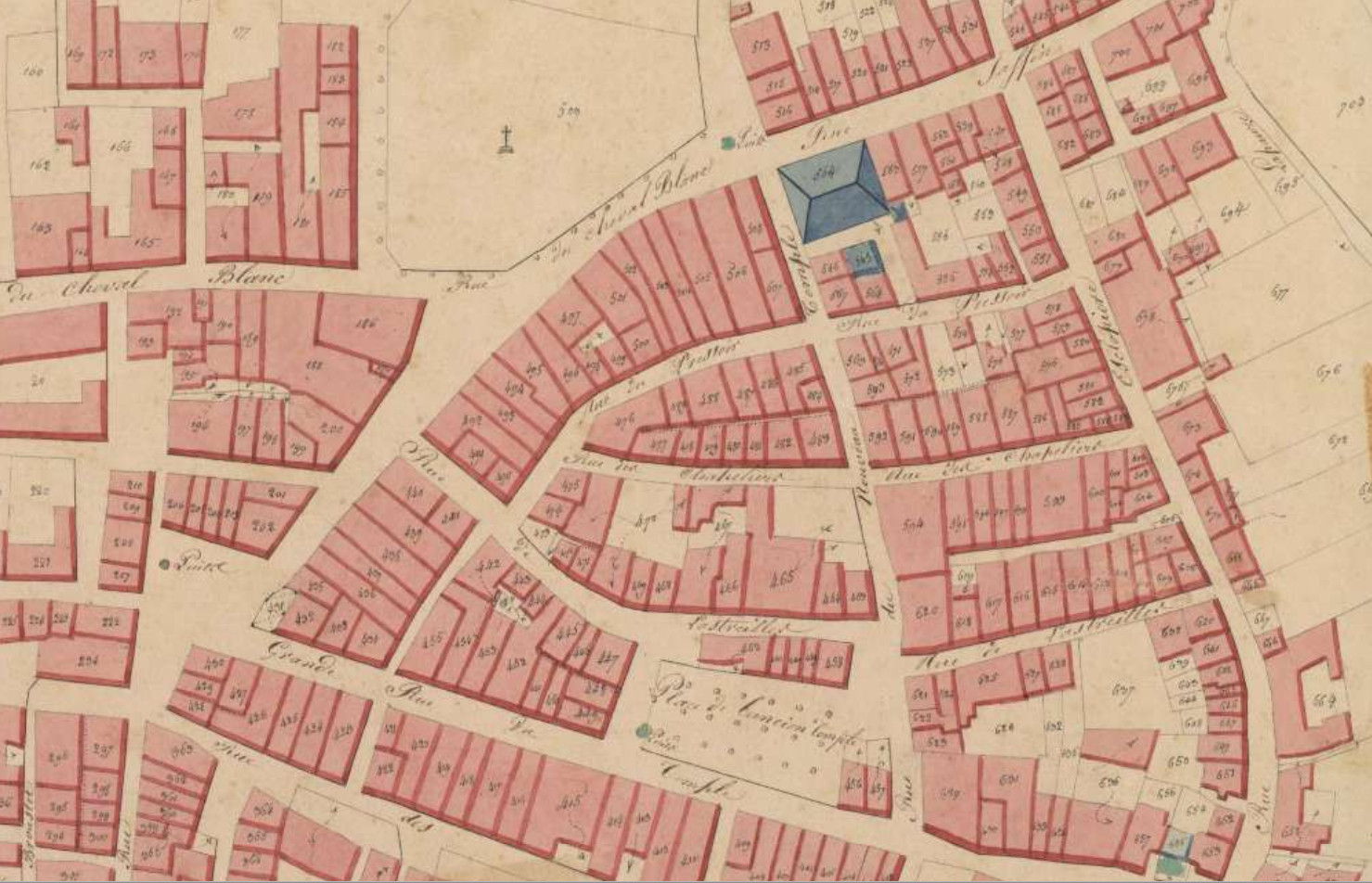
In the beginning of the 19th century, Clairac was a very active town, thanks in large part to the river trade. The town was expanding towards the north. The cemetery of the time, being enclosed, had to be transferred to its present location, thus freeing up a vast spacee. Recently deceased in 1815, Guy de Viçose had bequeathed a large sum of money to the commune and it was only natural that the new square should be named after him.
Poorly built and threatening to collapse, the 1807 temple was quickly demolished...
It was replaced in 1824 by a new temple erected on the Place Viçose. But the latter had to be demolished in its turn and, in 1853, the present temple, designed by the Parisian architect Léon Jossier, was built; Emperor Napoleon III participated in its financing, from his personal funds it is said. From then on, one can better understand the local tug-of-war between monarchists, imperialists and republicans, Lutherans and Calvinists...